What Happened
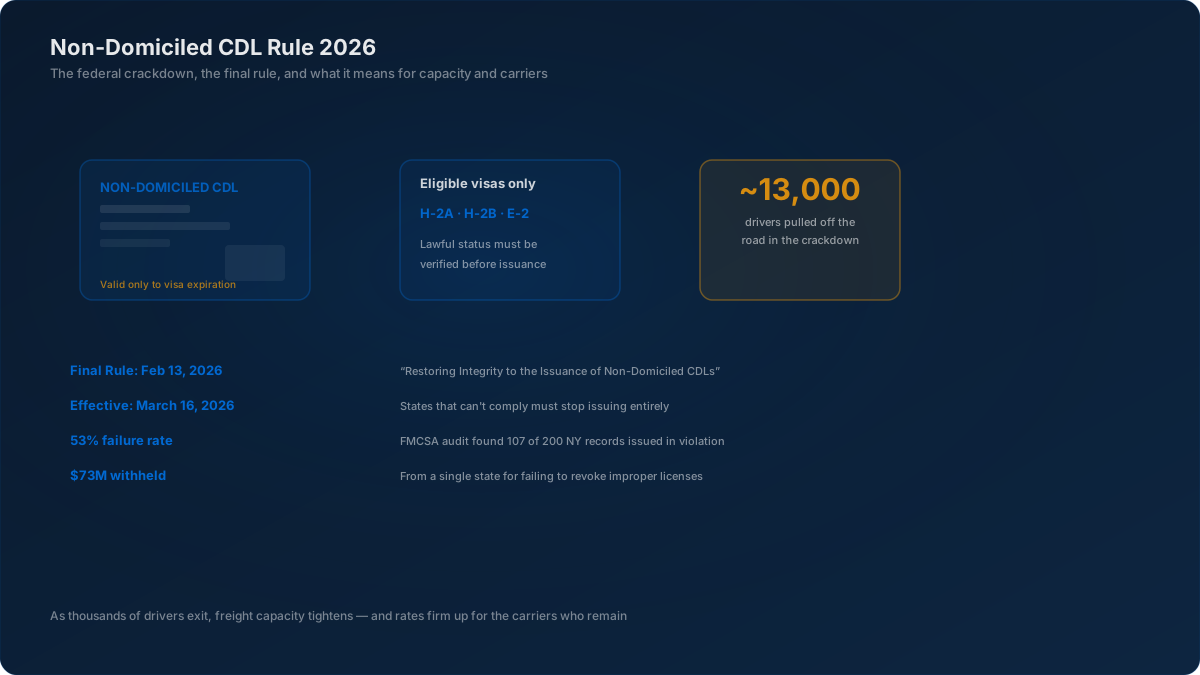
On February 13, 2026, FMCSA published a final rule with a deliberately pointed title: “Restoring Integrity to the Issuance of Non-Domiciled Commercial Drivers Licenses (CDL).” It took effect on March 16, 2026. The rule reflects a broader federal push to tighten who is allowed to operate a commercial truck in the United States, alongside the parallel English Language Proficiency enforcement that began in mid-2025.
A non-domiciled CDL is a commercial license issued to a person who is lawfully in the U.S. but lacks a permanent domicile here — historically, foreign nationals working under a range of visa categories. The 2026 rule dramatically narrows eligibility and forces states to clean up how they issue and maintain these licenses, backed by the threat of withheld federal funding for states that don't comply.
Feb 13, 2026
Final rule published
Mar 16, 2026
Effective date
~13,000
Drivers removed (early wave)
$73M+
Withheld from one state
What the Rule Changes
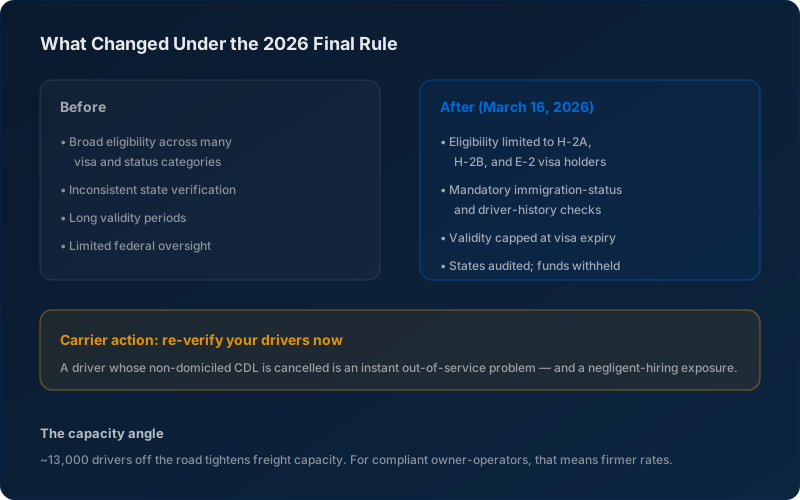
1. Eligibility is now limited to specific visas. Non-domiciled CLPs and CDLs may be issued only to foreign-domiciled individuals who hold employment-based nonimmigrant status under the H-2A, H-2B, or E-2 visa categories. The broad eligibility that existed before is gone.
2. States must verify status and history. Before issuing, states must verify lawful immigration status and conduct rigorous driver-history checks. This closes the gap that allowed inconsistent, under-verified issuance across states.
3. Validity is tied to the visa. A non-domiciled CDL can no longer outlast the immigration document it rests on. When the underlying status expires, so does the driving privilege — which means a credential that looked valid last quarter can lapse without warning.
4. Non-compliant states must stop issuing. Any state that could not meet the revised standards by March 16, 2026 had to immediately halt issuance of non-domiciled CDLs and CLPs — including transfers — until it can verify lawful status and follow the new credentialing standards. FMCSA is also strongly encouraging states to audit existing non-domiciled CDLs and revoke any that were improperly issued.
Enforcement Has Teeth
This rule is being enforced aggressively, and the federal government is using money as the lever. FMCSA's audit of one state's issuance practices found that 107 out of 200 sampled records — a 53% failure rate — had been issued in violation of federal law. On April 16, 2026, the U.S. DOT announced it was withholding more than $73 million from New York for allegedly failing to revoke illegally issued non-domiciled CLPs and CDLs.
When the federal government starts withholding tens of millions of dollars in highway funds, states act fast. That means more audits, more cancellations, and more drivers losing the credential they were operating on — often with little notice. As the crackdown rolled out, roughly 13,000 drivers were already removed from the road, and that figure represents the early wave, not the finish line.
What This Means for Your Operation
If you run drivers — or you are an owner-operator leased to a carrier — the most important move is to re-verify credentials now, before a roadside inspection or a state audit does it for you. A driver whose non-domiciled CDL is cancelled or quietly expires is an instant out-of-service problem and a negligent-hiring exposure for the carrier whose authority they run under.
Build a recurring check into your driver qualification process: confirm each non-domiciled driver falls within an eligible visa category, that the license is current and not tied to an expired document, and that the issuing state is still compliant. Catching an expiring credential a month early is the difference between a planned backfill and a load stranded mid-route.
The Capacity Angle — and the Opportunity
Step back from the compliance details and the market picture is straightforward. Pulling thousands of drivers off the road removes capacity from a freight market that is already short on drivers. Layer the non-domiciled CDL crackdown on top of ELP enforcement and the structural shortage, and 2026 is a year where supply is shrinking faster than demand.
For compliant, well-run carriers, that is a tailwind. Tighter capacity means firmer rates, more load options, and more negotiating leverage with brokers. The carriers who capture the upside are the ones who treat every load as a negotiation instead of accepting the first rate on a load board. Know your cost per mile, follow capacity data into the tightest markets, and keep your truck moving on the highest-paying freight — which is exactly the job a professional dispatcher does while you drive.
The Bottom Line
The 2026 non-domiciled CDL final rule narrowed eligibility to H-2A, H-2B, and E-2 visa holders, forced states to verify status and audit existing licenses, and is being backed by tens of millions in withheld federal funding. The early enforcement wave alone took roughly 13,000 drivers off the road, with more cancellations coming as state audits run their course.
For carriers, the playbook is to re-verify every affected driver now and plan for backfill — and then position to benefit from a tighter market. If you want help turning shrinking capacity into higher revenue per mile, talk to our dispatch team. No contracts, no pressure — just a clear read on where the freight is paying best right now.
Related Resources
- English Language Proficiency Enforcement 2026 — The parallel crackdown taking drivers off the road
- 2026 FMCSA Rules Roundup — Everything changing in federal trucking regulation this year
- The 2026 Driver Shortage — Why tightening capacity pushes rates up
- How to Pass a DOT Audit — Keep your driver qualification files airtight
- Carrier Exodus 2026 — How shrinking capacity is reshaping freight
- Cost Per Mile Calculator — Know your floor before you negotiate