What International Roadcheck Is
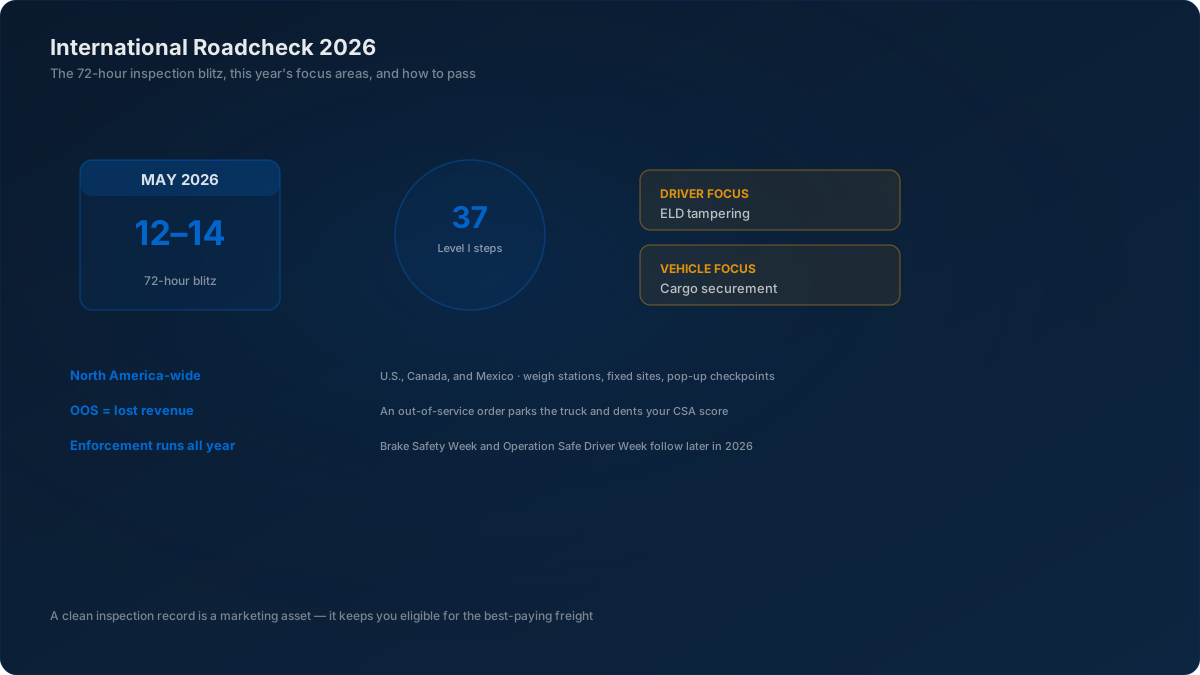
International Roadcheck is the largest targeted commercial-vehicle inspection program in the world. Organized by the Commercial Vehicle Safety Alliance (CVSA), it concentrates 72 hours of intensive inspection, enforcement, and data collection across the United States, Canada, and Mexico. The 2026 event ran May 12-14. Over those three days, inspectors at weigh stations, fixed sites, and pop-up checkpoints conduct thousands of inspections — the great majority of them the comprehensive North American Standard Level I.
Roadcheck gets the headlines, but the smart way to think about it is as a once-a-year spotlight on enforcement that actually happens all year long. The same inspectors run the same Level I inspections every week. If your operation is Roadcheck-ready, it is ready for any random inspection in July, October, or December.
May 12-14
2026 dates
72 hours
Inspection window
37 steps
Level I inspection
3 countries
U.S., Canada, Mexico
The 2026 Focus Areas
Driver focus — ELD tampering. Inspectors reviewed each driver's record of duty status and looked specifically for false or manipulated entries. With ELDs now standard, enforcement has shifted from “do you have one?” to “is it telling the truth?” Editing logs to hide hours-of-service violations, running unassigned driving time, or using devices designed to falsify records are all squarely in the crosshairs. If your ELD logs are accurate and your hours are in compliance, this focus area is a non-event for you.
Vehicle focus — cargo securement. Inspectors checked that cargo was properly contained, immobilized, and secured so it could not leak, spill, blow off, fall, or otherwise create a hazard. That means the right number and working-load rating of tiedowns, chains, straps, and binders for the load, plus proper blocking and bracing. Flatbed and step-deck operators get the most scrutiny here, but securement applies to every trailer type.
What an Out-of-Service Order Costs You
An out-of-service order is more than an inconvenient afternoon. The immediate cost is the stopped truck — a load that does not deliver on time, a frustrated broker, and possibly a missed appointment that pushes your next pickup. But the lasting cost is to your CSA score. Every violation feeds the Safety Measurement System, and a rising score in the Unsafe Driving, Hours-of-Service, or Vehicle Maintenance BASICs makes you less attractive to the brokers and shippers who screen on that data. The maintenance duty is the truck PM service page.
Higher CSA scores also raise your insurance exposure and can pull you into a DOT audit. The math is simple: avoiding one out-of-service order during Roadcheck is worth far more than the freight you would have hauled that day. Note too that since June 2025, failing an English language proficiency check is itself an out-of-service violation — another item to verify before you roll.
How to Be Ready — Any Day of the Year
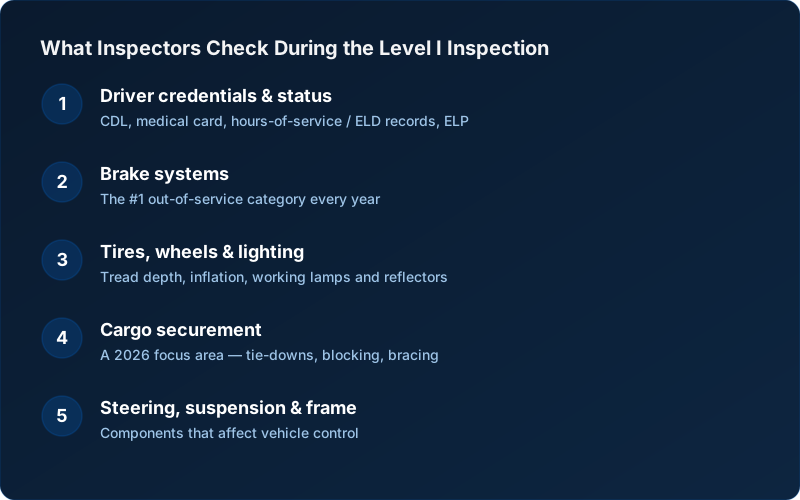
Run a real pre-trip. Brakes, tires, lights, steering, coupling, leaks, and reflectors — the same items inspectors check. A disciplined daily pre-trip catches almost everything that would put a truck out of service. Our DOT inspection guide walks through the full list.
Keep your logs honest and current. Make sure your ELD is functioning, your duty status is accurate, and you have no unassigned driving time hanging on the device. If you ever have a malfunction, document it and follow the required paper-log backup process.
Master cargo securement for your equipment. Know the working-load-limit math for your tiedowns, carry spares, and inspect securement at every stop — not just at the shipper. Loads shift.
Keep your paperwork in the cab and current. CDL, medical card, registration, insurance, IFTA credentials, and a clean rate confirmation for the load you are hauling. Disorganized paperwork invites a deeper look.
The Bottom Line
International Roadcheck 2026 is in the books, but the enforcement it represents never stops. The carriers who treat every day like Roadcheck — honest logs, secure cargo, a real pre-trip, and current paperwork — keep their trucks moving and their CSA scores clean, which is exactly what keeps them first in line for premium freight.
A clean safety record and a full load board go hand in hand. If you want a dispatch partner who keeps you booked on the best-paying freight while you keep your operation inspection-ready, reach out to our team — no contracts, no setup fees.
Related Resources
- How to Pass a DOT Inspection — The full roadside-readiness checklist
- ELD Violations and How to Fix Them — Keep your logs clean and compliant
- How to Fix a Bad CSA Score — Undo the damage an OOS order causes
- English Language Proficiency Enforcement 2026 — The newest OOS violation
- 2026 FMCSA Rules Roundup — Everything changing in federal regulation this year
- How to Pass a DOT Audit — Keep your records audit-proof