
Why Dry Van Dispatch Services Are Their Own Category
Dry van moves the majority of U.S. truckload freight. That abundance is a double-edged sword: there is always something to haul, and there is always someone willing to haul it cheaper. Dry van dispatch services earn their keep by refusing to treat your truck like a random matching algorithm. They understand drop-and-hook versus live load realities, which receivers chronically burn clocks, when produce-adjacent dry freight spikes, and how Friday empty positions in soft markets destroy Monday revenue.
In 2026, with tighter capacity and higher tender rejection rates on many contract networks, shippers lean on the spot market more often — but they still expect appointment precision. A dry van dispatcher who only chases the highest posted rate without reading the receiver's reputation will gift you detention drama and late fees that erase the "win."
If you are comparing all freight desks — not only dry van — start with our umbrella guide to freight dispatch services, then come back here for equipment-specific execution.
53'
Core equipment focus
6–8%
Common full-service fee
<12%
Deadhead goal
2 hrs
Typical free time start
What a Dry Van Dispatch Desk Handles That You Should Not
Headhaul vs network value
Choosing a $0.10/mi cheaper headhaul into a hot outbound market can beat a shiny dead-end rate into a parking-lot desert.
Appointment risk pricing
Tight multi-stop or night appointments deserve rate premiums — or an explicit decline when the clock math is impossible under HOS.
Broker credit & soft-pay filters
Dry van volume attracts shaky intermediaries. Specialists keep you off slow-pay lists that choke factoring.
Detention & lumper chase
Timestamp discipline, rate-con language, and follow-up so warehouse friction does not become your unpaid side hustle.
Trailer pool realities
Drop yard etiquette, pool trailer quality, and when to refuse a filthy or damaged unit that will cost you a washout and a claim.
2026 Rate Reality for Dry Van Carriers
Headline national averages hide lane violence. A Dallas–Atlanta run and a backhaul out of northern New England are different businesses that happen to share a trailer type. Through late 2025 into 2026, dry van spot strengthened as carrier exits and insurance barriers constrained capacity, while contract freight still tried to lag. Your dispatcher should show you lane sheets — not vibes — and explain when to lean spot versus honor a fair contract tender.
Cost-per-mile discipline still rules. If your all-in CPM is $1.85 and a backhaul pays $1.60 on total miles including deadhead, you are buying activity. Dry van dispatch services that celebrate "always moving" without margin math are entertainment, not management. Demand a weekly scorecard: loaded RPM, total RPM including deadhead, accessorials recovered, and empty days.
For broader market context, pair this page with load-to-truck ratio & tender rejection rates and reefer vs dry van profitability.
Lane Strategy: How Specialists Build a Dry Van Week
Strong dry van weeks are sequences, not one-off miracles. A typical specialist approach: start where outbound demand is deep (Texas, Southeast, Southern California when headhauls justify the reset), avoid delivering into chronic dead zones without a pre-planned exit, and protect Friday positioning so you are not choosing between a terrible rate and a weekend hotel in a soft market.
Regional vs OTR matters. Some dry van dispatch services shine inside a 500–800 mile radius with dense broker coverage; others run true coast-to-coast with team-capable planning. Match the desk to your home-time needs. A national desk that ignores your every-other-weekend home requirement will "succeed" on RPM while failing your retention — and you will churn back to self-dispatch angry.
Detention, Lumpers, and the Dry Van Paperwork Stack
Grocery and big-box freight will test your patience. Free time is often two hours; after that, detention should accrue at the rate on the confirmation — if it is on the confirmation. Dry van dispatch services worth hiring put that language in writing before you accept. Same for lumper expectations: who pays, how you get a code, and how reimbursement works if you lay out cash.
Your job in the cab: timestamped check-in, photos of the gate ticket, and immediate notice when the clock is burning. Their job on the desk: escalate while leverage still exists. Deep-dive the fee mechanics in lumper fees explained and detention recovery patterns across our resources library.
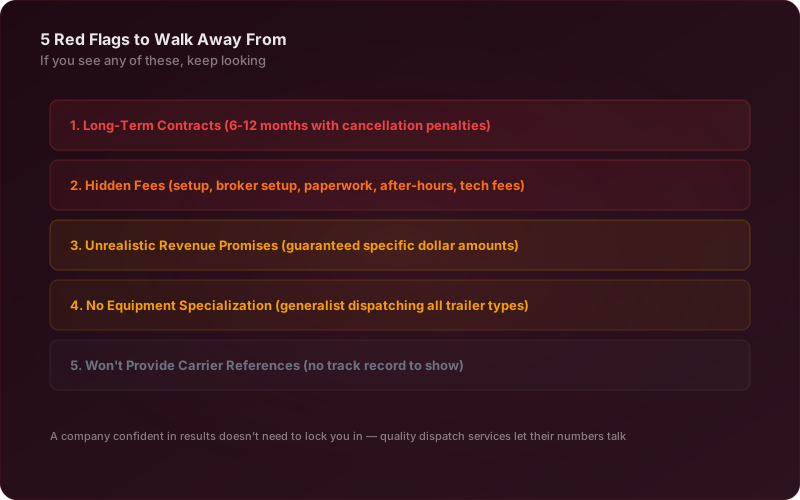
Checklist: Hiring Dry Van Dispatch Services Without Getting Burned
Ask for dry van references only
A glowing reefer customer does not prove dry van DC fluency. Talk to 53-foot operators in your region.
Inspect trucks-per-dispatcher
More than ~8–10 dry vans per desk usually means reactive booking and slow detention follow-up.
Demand fee transparency
Percentage base, what gross means, and whether canceled loads still incur fees. No mystery admin charges.
Confirm after-hours coverage
Dry van appointments break at night. Who answers when a receiver pushes you to 2 a.m.?
Keep authority control
No FMCSA login sharing. Month-to-month terms. Clear booking authority rules in writing.
Run a 30-day KPI trial
Compare after-fee net, deadhead, and empty days to your baseline. Renew only if the math wins.
Dry Van Dispatch vs Self-Dispatch vs In-House Hire
Self-dispatch maximizes control and minimizes fees when you have skill and spare hours. Outsourced dry van dispatch services maximize driving time and negotiation consistency. An in-house dispatcher makes sense around 5+ trucks when volume amortizes a salary plus tools. Many carriers graduate through all three stages across a career.
Read dispatch vs self-dispatch and how to choose a dispatch company before you sign. Pricing detail lives in truck dispatch rates.
Bottom Line
Dry van dispatch services are not about finding "a load." They are about building a profitable enclosed-freight week in a market where volume tempts you into cheap activity. Hire specialists, measure after-fee RPM and deadhead, protect your authority, and treat detention and lumper recovery as part of the product — not an afterthought.