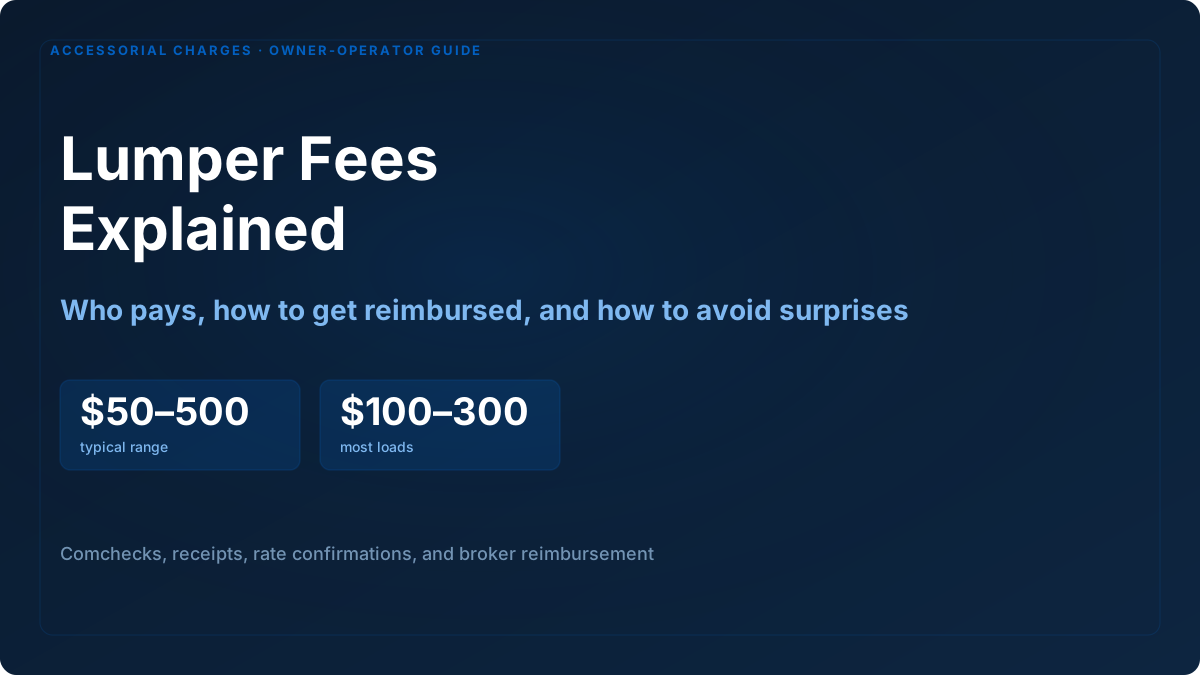
What a Lumper Fee Actually Is
A lumper fee is the charge for the labor that loads or unloads your trailer. Many large grocery, retail, and food-service distribution centers don't let drivers touch the freight themselves — instead they use third-party labor crews, called lumpers, and require you to pay that crew before they'll release your truck. The fee is purely for the loading or unloading work; it has nothing to do with the value of your freight or your rate per mile.
Lumper fees are most common at grocery and food distribution centers, and they typically run from about $150 to $400 per stop, sometimes more for large or multi-pallet loads. For a carrier running a lot of grocery freight, that adds up fast — which is exactly why knowing how to handle them is worth real money.
$150-$400
Typical per stop
Broker
Should ultimately pay
Receipt
Required to reclaim
$0
It should cost you
Who Pays — and Who Should Pay
Here is the distinction that saves owner-operators thousands: the lumper cost should ultimately fall on the shipper or broker, not on you. In practice you may pay the lumper company at the dock and get reimbursed — but it is a pass-through cost, not your operating expense. The moment you start treating lumpers as just another cost of doing business, you are donating money to the supply chain.
The carriers who lose money on lumpers almost always make one of two mistakes: they pay out of pocket without confirming reimbursement terms first, or they pay cash and walk away with no receipt. Both are avoidable. The reimbursement is yours to claim — but only if you set it up correctly before and during the stop. This is closely tied to how you read and negotiate your rate confirmation.
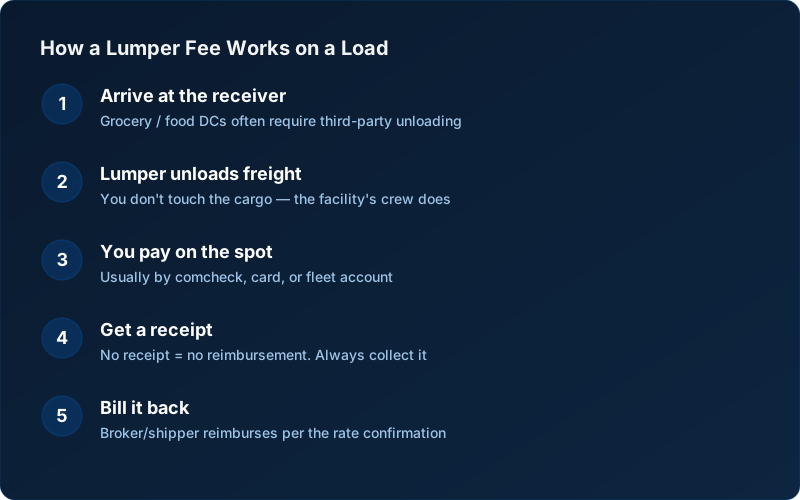
How to Get Reimbursed Every Time
1. Confirm terms before you book. Get it in writing on the rate confirmation: who pays the lumper, and how. If the broker won't put it in writing, that tells you something about the load.
2. Use a payment code when offered. Many brokers issue a one-time code — through Comdata, EFS, TCH, or similar — that you hand directly to the lumper. They redeem it; the broker is billed automatically; you never spend your own money. Always take the code over paying out of pocket.
3. Always get an itemized receipt. If you do pay, the receipt is your proof. No receipt almost always means no reimbursement — never leave the dock without one.
4. Submit promptly. Send the receipt with your invoice or through the broker's process right away, before any billing window closes. The faster you submit, the faster — and more reliably — you're made whole.
5. Track lumpers as reimbursables. In your bookkeeping, log lumper fees as pass-through reimbursables, not operating costs, so you can see at a glance whether every one has been recovered.
Lumpers, Detention, and the Bigger Picture
Lumper fees rarely show up alone. The same grocery and retail docks that charge lumpers are also where detention piles up — long waits to get a door, slow unloading, and appointment delays. Treat them as a package: when you negotiate a load into a known slow facility, make sure both lumper reimbursement and detention pay are spelled out before you commit. A broker who covers both cleanly is worth more than one offering a slightly higher line-haul rate but dodging the accessorials.
This is also a useful lens for choosing who to work with. Brokers who routinely dodge lumper and detention reimbursement are showing you how they operate — the same way the red flags in our dispatch scams guide reveal a bad actor. The best freight comes from relationships where the accessorials are handled fairly and automatically.
The Bottom Line
A lumper fee should never cost you a dime. Confirm who pays before you book, take the payment code when it's offered, always get a receipt, and submit it fast. Do that consistently and lumpers stay exactly what they should be — a pass-through cost that lands on the broker, not a slow leak in your settlement.
If you'd rather not chase lumper codes and reimbursement paperwork on every grocery load, that's a core part of what a dispatcher handles. Talk to our team — we negotiate the accessorials up front and keep the money where it belongs: with you. No contracts, no setup fees.
Related Resources
- How to Read a Rate Confirmation — Catch lumper and accessorial terms before you sign
- Detention Time Not Paid? — The accessorial that travels with lumpers
- Trucking Bookkeeping Guide — Track reimbursables so nothing slips through
- Rate Negotiation Tips — Negotiate the whole load, not just the line-haul
- Dispatch Scams & Red Flags — Spot the brokers who dodge accessorials
- Our Dispatch Service — We handle the accessorials so you don't have to