Freight Dispatch Services vs Trucking Dispatch Services vs Truck Dispatch Services
Search engines treat freight dispatch services, trucking dispatch services, and truck dispatch services as near-synonyms — and in the carrier world they usually are. All three describe a team that sits on your side of the transaction: finding freight, negotiating the rate confirmation, coordinating pickups and deliveries, and chasing the documentation that turns miles into settled cash.
What changes is specialization. Some desks are generalists across dry van, reefer, and flatbed. Others focus on one equipment type or one region. In a tight 2026 spot market — with elevated load-to-truck ratios and shippers fighting tender rejections — specialization is not a marketing flourish. It is the difference between booking the first available $2.05/mi load and holding for the $2.45/mi load that clears in the next two hours because your dispatcher knows which brokers actually need your truck.
Freight dispatch is not brokerage. Brokers sell capacity to shippers. Dispatch services help carriers buy better freight under the carrier's own authority. If a provider blurs that line, ask hard questions before you share a packet.
5–10%
Typical dispatch fee
<15%
Deadhead target
5–8
Trucks per dispatcher
30 days
Fair trial window
What Freight Dispatch Services Actually Do Day to Day
A competent desk does more than refresh DAT. The daily loop looks like this: monitor your empty time and HOS clock; post or match your truck against live demand; negotiate rate, fuel surcharge, and accessorial language; issue or confirm the rate confirmation; track check-call expectations; prepare documents for factoring or direct billing; and escalate detention, layover, and lumper reimbursement before the billing window closes.
The invisible work matters as much as the booked load. Credit-checking brokers, declining soft-pay freight, protecting you from double-brokering patterns, and sequencing backhauls so you do not die in a dead-end market — that is where trucking dispatch services earn their percentage. If your "dispatcher" only texts you screenshots of load-board posts and asks you to call the broker yourself, you are paying for a search assistant, not a dispatch service.
Rate negotiation
Pushing beyond the first offer using lane history, equipment scarcity, and appointment risk — often $0.15–$0.50/mi on contested freight.
Lane sequencing
Booking with the next empty in mind so you exit strong markets into strong markets instead of chasing one-off home runs.
Paperwork & accessorials
Rate cons, BOLs, PODs, detention clocks, lumpers, and trailer washes documented while you are still driving.
Broker filter
Avoiding slow-pay and problem brokers so your factoring approval and cash cycle stay clean.
2026 Pricing: Percentage, Flat Fee, and Hybrid Models
Percentage-of-gross remains the dominant model for truck dispatch services because incentives align: when you earn more, they earn more. In 2026, quality full-service desks commonly land between 6% and 8% for established dry van and reefer operators, with some flatbed or niche specialists at the high end of the 5–10% band. New-authority packs sometimes price a point higher until you clear the first 60–90 days.
Flat monthly fees ($400–$1,200 per truck) can favor high-gross weeks and punish soft weeks. Hybrids (for example $250 + 4%) try to split the difference. Run the math on your last 90 days of gross before you sign anything. A 7% fee on $18,000 weekly gross is $1,260 — expensive if RPM is mediocre, cheap if that desk is the reason you are at $18,000 instead of $14,500.
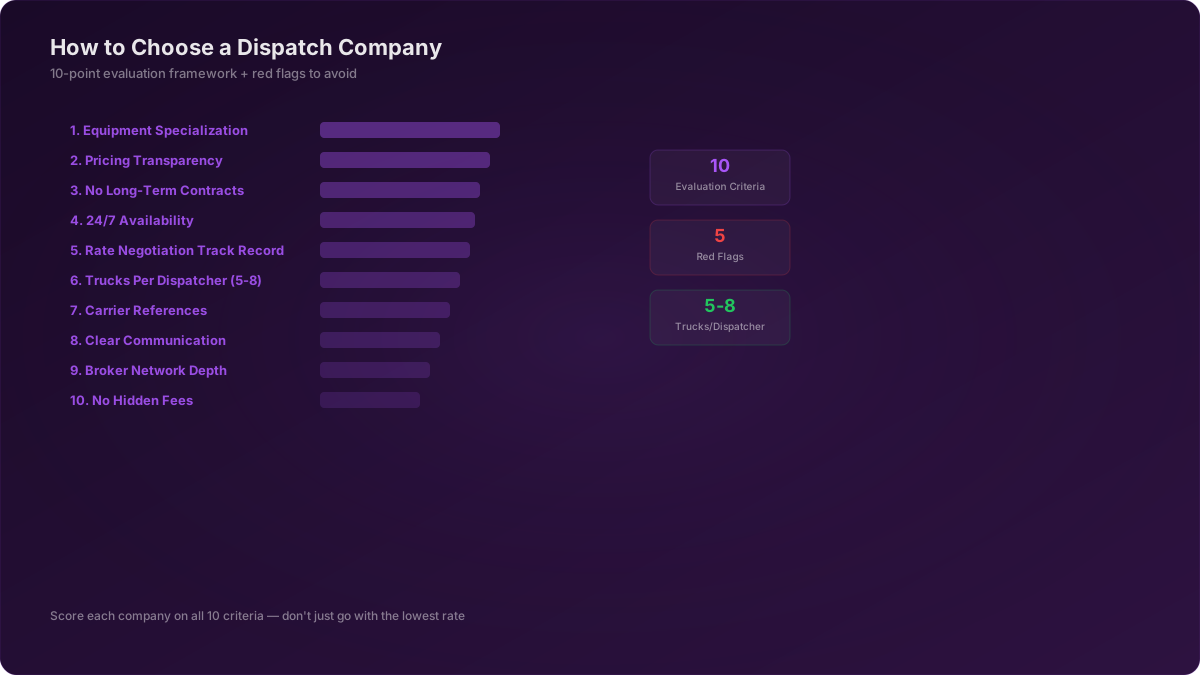
Compare structures in detail with our truck dispatch rates guide and the evaluation framework in how to choose a dispatch company.
Who Benefits Most From Freight Dispatch Services in 2026
Solo owner-operators running 2,200–2,800 miles a week usually capture the clearest ROI: every hour not spent on the phone is an hour of legal driving or legally required rest. Small fleets (2–10 trucks) benefit when one professional desk replaces inconsistent self-booking across multiple drivers. Specialized equipment — reefer, flatbed, step deck, hotshot — benefits when the desk lives in those broker networks daily.
Self-dispatch still wins for carriers with locked dedicated freight, mature direct shipper books, or a trained in-house dispatcher already on payroll. If that is you, keep it. If you are still building the book while also trying to drive full HOS clocks, freight dispatch services are often the bridge that keeps cash flow alive.
KPI Scorecard: How to Judge Trucking Dispatch Services in 30 Days
Do not judge a desk on vibes. Export settlements and score the relationship like a business unit.
| KPI | Weak | Acceptable | Strong |
|---|---|---|---|
| Loaded RPM vs market | Consistently below DAT mid | At market mid | Above mid after fee |
| Deadhead % | >20% | 12–15% | <12% |
| Empty days / month | 4+ | 2–3 | 0–1 |
| Detention recovery | Rarely filed | Filed when obvious | Proactive with timestamps |
| Response time | Hours | Under 60 min | Under 20 min on duty |
Contracts, Authority, and Control — Non-Negotiables
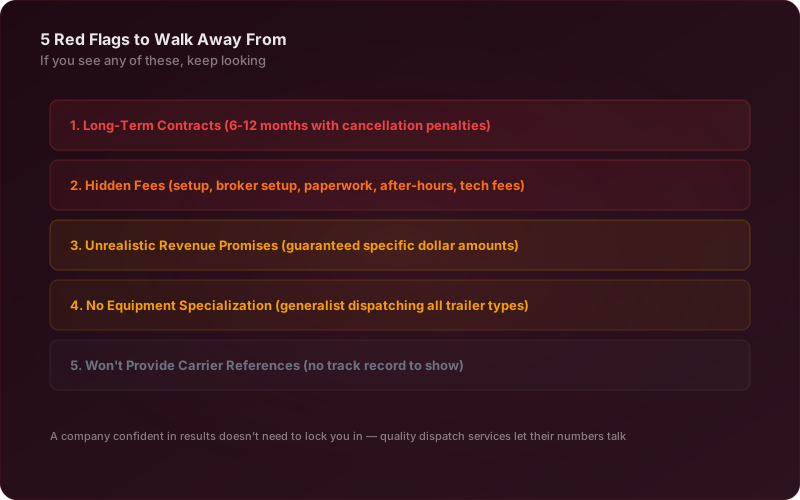
Keep your MC authority, insurance, and factoring relationship in your name. Your dispatcher should never require your FMCSA portal password. Prefer month-to-month or 30-day notice terms; multi-month lock-ins with termination fees are a classic weak-service retention tactic. Read how rate confirmations list the carrier, the broker, and any third party. If anything looks like the dispatch company is inserting itself as the carrier, stop and get counsel or a trusted industry association review.
For scam patterns and social-engineering traps aimed at carriers, read truck dispatch scams and red flags. For the operational mechanics of a healthy desk, see how truck dispatch works.
Equipment-Specific Freight Dispatch: Why One Desk Rarely Fits All
Dry van lives on volume, appointment discipline, and backhaul geometry. Reefer adds continuous temperature responsibility and produce-window chaos. Flatbed adds securement time, tarp weather, and permit complexity. A generalist trucking dispatch service can cover all three, but the best outcomes usually come from desks that talk your equipment's language every hour of the day.
If you pull a 53-foot dry van, go deeper with our dedicated guide to dry van dispatch services. Owner-operators comparing paths should also read the owner-operator dispatch guide and dispatch vs self-dispatch.
A Practical 7-Day Onboarding Checklist
Packet ready
MC authority, W-9, insurance certificates, voided check or factoring LOA, equipment list, preferred lanes and no-go states.
Meet the human
Talk to the actual dispatcher who will run your truck — not only a salesperson. Confirm trucks-per-desk and after-hours coverage.
Write the rules
Minimum RPM, max deadhead, home-time windows, hazmat yes/no, and who may book without a verbal confirm.
First-week cadence
Expect extra communication. Track every offer: rate, miles, deadhead, broker, and why you accepted or declined.
Day-30 review
Compare gross, net after fee, deadhead, and empty days to your prior 30 days. Keep, renegotiate, or leave.
Bottom Line on Freight Dispatch Services
Freight dispatch services are a margin tool, not a magic income guarantee. In 2026's tighter capacity environment, the carriers who win are the ones who combine clean authority, disciplined cost-per-mile math, and a booking process that does not leave money on the table at 6 p.m. when the driver is exhausted. Whether you call it freight dispatch, trucking dispatch, or truck dispatch — hire for specialization, measure with KPIs, and keep control of your authority.