Why Market Data Is Your Best Negotiation Tool
Most owner-operators negotiate rates based on gut feel, what their buddy got last week, or whatever number the broker throws out first. That is leaving money on the table. The freight market is driven by measurable supply and demand forces, and the data that tracks those forces is freely available. You just need to know which numbers to watch and what they mean.
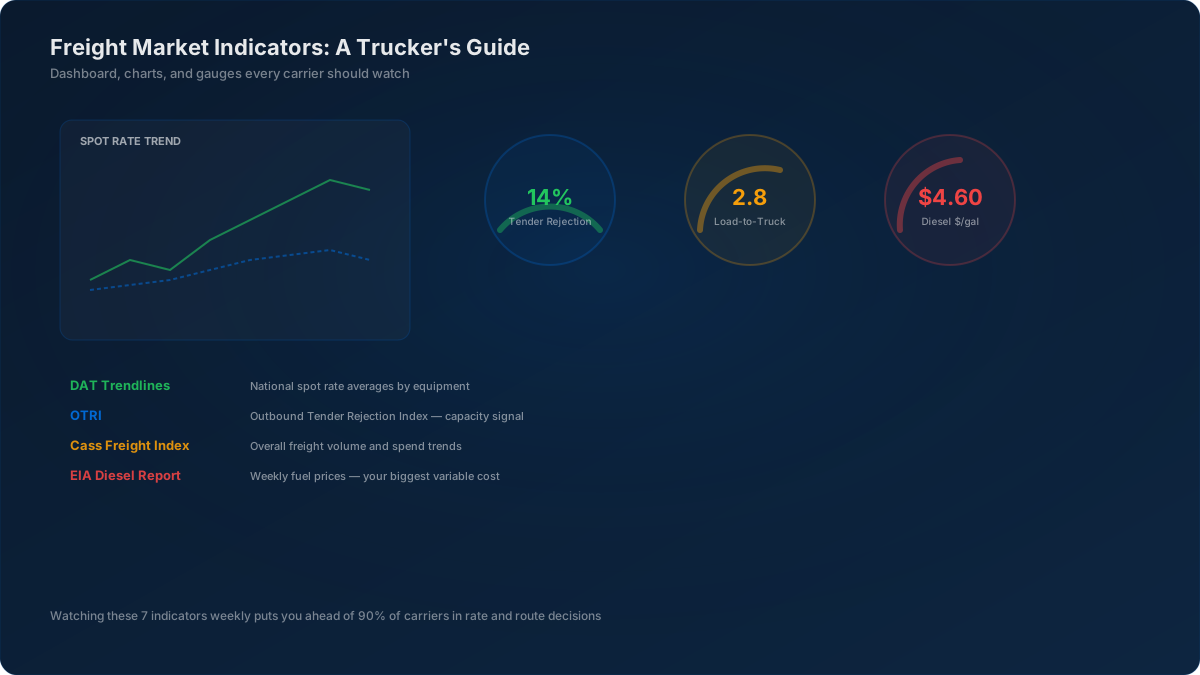
Here are the 5 indicators that professional dispatchers and fleet managers track daily. Each one tells you something specific about the market — and each one should influence how you price your truck, select loads, and plan your next move. Right now, in early 2026, these indicators are telling a clear story: the market favors carriers, rates are recovering, and the truckers who understand the data are earning significantly more than those who do not.
7.73
Load-to-truck ratio (Mar)
14%
Tender rejection rate (OTRI)
$2.41
DAT avg spot van rate
-8%
Cass volume YoY (Q4)
7
Consecutive rate gains
3.4%
PPI trucking YoY increase
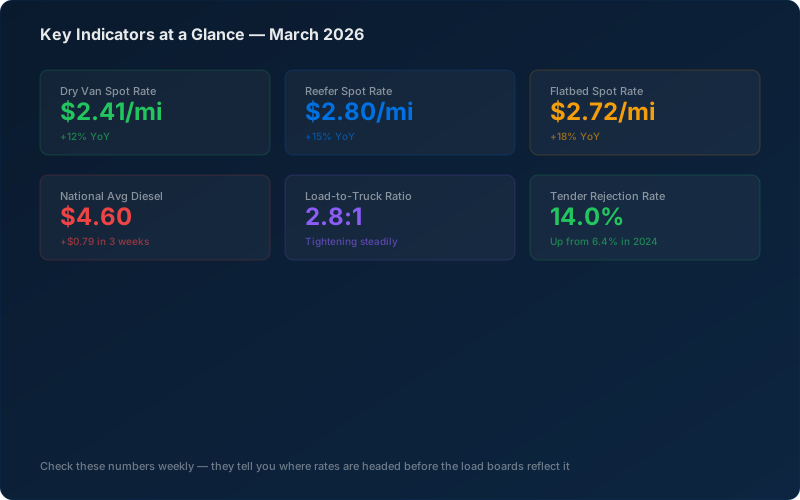
Indicator Dashboard — March 2026
| Indicator | Current | Trend | Signal | Free Source |
|---|---|---|---|---|
| Load-to-Truck Ratio | 7.73 | Rising | Strong carrier market | DAT Trendlines |
| OTRI (Tender Rejections) | 14% | Rising | Contract rates will rise | FreightWaves |
| DAT Spot Van Rate | $2.41/mi | 7th gain | Rate recovery confirmed | DAT Trendlines |
| Cass Freight Index | -8% YoY | Declining | Volume weak, supply tighter | cassinfo.com |
| Diesel (national avg) | ~$3.65/gal | Stable | Neutral — floor not falling | EIA.gov |
1. Load-to-Truck Ratio — The Instant Supply/Demand Read
What it is: The load-to-truck ratio counts how many freight loads are posted on load boards for every truck searching for freight. It is the most immediate measure of supply versus demand in the trucking market.
Where to find it free: DAT Trendlines publishes weekly load-to-truck ratios by equipment type (van, reefer, flatbed) at no cost. No subscription required.
Current reading: 7.73 as of March 2026. The ratio peaked at 9.9 in December 2025 — the highest since the 2021 freight boom. Even after easing from that peak, 7.73 is firmly in carrier-favorable territory.
What it signals: When the ratio is above 6.0, carriers have pricing power — there are more loads than trucks, so shippers compete for capacity by raising rates. Between 3.0 and 6.0 is a balanced market. Below 3.0 signals oversupply and falling rates (this is where the market was during the 2023-2024 recession). At 7.73, the market is telling you: be selective, negotiate firmly, and do not accept loads below your cost per mile.
How to act on it: Check the ratio every Monday morning on DAT Trendlines. When it is above 6.0, raise your rate minimums and be willing to wait for better loads rather than accepting the first offer. When it drops below 4.0, shift toward contract freight and accept reasonable rates quickly. Our spot vs. contract guide explains how to balance your load mix based on market conditions.
2. OTRI (Tender Rejection Rate) — The Contract Rate Predictor
What it is: The Outbound Tender Rejection Index (OTRI) measures the percentage of contracted freight loads that carriers decline to haul. It is tracked by FreightWaves SONAR using electronic tender data from major brokers and shippers.
Where to find it free: FreightWaves publishes OTRI readings in their free daily newsletter and news articles. The full SONAR platform requires a subscription ($500+/month), but the headline OTRI number is widely reported in industry media.
Current reading: 14% — the highest level since mid-2022. This means carriers are rejecting 14 out of every 100 tendered contract loads.
What it signals: OTRI is the best leading indicator for contract rate changes. When carriers reject contract freight, it is because spot rates are paying more — carriers would rather take a higher-paying spot load than haul at the contracted rate. This forces shippers to either raise contract rates or pay even more on the spot market to get their freight moved. Historically, when OTRI stays above 12% for 8 or more consecutive weeks, contract rate increases of 5-10% follow within one to two quarters.
How to act on it: At 14%, the market is firmly in carrier-pricing-power territory. If you have existing contract commitments, this is the time to renegotiate rates upward at your next contract cycle. If you are primarily running spot freight, OTRI above 12% confirms that spot rates have room to run — do not lock in long-term contracts at current rates, because rates are likely going higher. Our rate negotiation guide covers how to use market data in broker conversations.
3. Spot Rate Trends — Where the Money Is Moving
What it is: National average spot rates track the all-in or linehaul cost per mile for truckload freight booked through load boards and brokers. DAT, the largest load board network, publishes rates by equipment type: dry van, reefer, and flatbed.
Where to find it free: DAT Trendlines provides free weekly and monthly average spot rates by equipment type, including historical comparisons. Truckstop.com also publishes rate data in their market reports.
Current readings: DAT national averages for February 2026 — dry van $2.41/mile (all-in), reefer linehaul $2.21/mile, flatbed linehaul $2.07/mile. Spot rates have posted seven consecutive monthly gains, the longest streak since the 2020-2021 boom.
What it signals: Seven straight monthly gains is not a blip — it is a trend. The rate recovery that started in Q4 2025 is broadening across equipment types and geographies. Importantly, the gains are accelerating: the January-to-February increase was larger than the December-to-January increase. When rate momentum accelerates, it typically continues for 2-4 more months before stabilizing. The key lane-level differences are significant — Southeast produce corridors are paying $3.50-$4.50/mile while Midwest short-haul dry van is stuck at $1.80-$2.20. National averages mask these regional extremes.
How to act on it: Use DAT Trendlines to check rates on your specific lanes, not just national averages. If rates on your primary lanes are rising faster than the national average, you are in a hot market — raise your minimums aggressively. If your lanes are lagging, consider repositioning to a higher-paying region. See our best freight lanes for Spring 2026 for specific lane-by-lane rates and positioning strategies.
4. Cass Freight Index — The Volume Reality Check
What it is: The Cass Freight Index measures North American freight shipment volumes and expenditures based on actual freight bill data from major shippers. Published monthly by Cass Information Systems, it is the most widely cited measure of freight demand.
Where to find it free: Cass publishes the full monthly report at cassinfo.com at no cost, including detailed analysis of shipment counts, expenditures, and year-over-year trends.
Current reading: Shipment volumes were down approximately 8% year-over-year in Q4 2025 and declined another 7% in January 2026. The expenditure index tells a different story — flat to slightly up, meaning shippers are paying more per shipment even as they ship fewer loads.
What it signals: This is the most counterintuitive indicator right now. Volumes are declining, yet rates are rising. How? Because the supply contraction (100,000+ carrier exits) has been larger than the demand contraction. Fewer trucks chasing fewer loads — but the truck reduction was steeper. The Producer Price Index (PPI) for trucking confirms this: up 0.7% from January and 3.4% year-over-year from February 2025, showing that the market is repricing upward despite softer volumes. This supply-driven recovery is different from a demand-driven boom — it can sustain moderate rate increases even without volume growth.
How to act on it: Do not let declining volume headlines scare you into accepting low rates. The Cass Index tells you demand is soft, but other indicators (OTRI, load-to-truck ratio) tell you supply is tighter — and supply is what matters for pricing. Watch the expenditure index alongside the shipment index: when expenditures rise while shipments fall, it confirms that per-load pricing is increasing. If the Cass shipment index starts rising while supply remains tight, that would signal an even stronger rate environment ahead.
5. Diesel Prices — The Cost Floor Everyone Watches
What it is: The national average retail diesel price, published weekly by the U.S. Energy Information Administration (EIA). Diesel is the single largest variable cost for most trucking operations, typically representing 25-35% of total operating expenses.
Where to find it free: EIA.gov publishes weekly diesel prices every Monday by region and national average. DAT also includes fuel surcharge data in their free Trendlines reports. Both are free and require no subscription.
Current reading: National average diesel is approximately $3.50-$3.80 per gallon in early 2026 — moderate by recent standards. This is well below the $5.50+ peak from 2022 but above the sub-$3.00 levels that allowed marginal carriers to survive during the recession.
What it signals: At current levels, diesel is a neutral factor — not high enough to force rapid carrier exits, not low enough to encourage new market entry. Fuel surcharges on contract freight are adjusting predictably. The bigger risk is a spike: a $1.00/gallon increase in diesel adds approximately $0.15-$0.17 per mile to operating costs (assuming 6.5 MPG). If diesel surges above $4.50/gallon, expect accelerated carrier exits and a tighter market — which paradoxically supports higher rates for surviving carriers.
How to act on it: Check EIA diesel prices weekly and update your cost per mile calculation accordingly. Your minimum acceptable rate must cover fuel at current prices plus a margin — never accept a load where the rate does not cover your fuel cost per mile. Use our fuel cost calculator to model different diesel price scenarios. If diesel starts rising sharply, shift to shorter-haul, more fuel-efficient routes and renegotiate fuel surcharges on contract freight immediately.
Putting It All Together: Your Weekly Check-In
You do not need to obsess over these numbers daily. A 10-minute weekly review is enough to stay informed and make better decisions. Here is a simple routine:
Every Monday: Check DAT Trendlines for the load-to-truck ratio and spot rate trends on your primary lanes. Check EIA.gov for the latest diesel price. These two data points tell you whether the market is getting better or worse for carriers, and whether your fuel costs are changing.
Every month: Read the Cass Freight Index report (published mid-month for the prior month). Check FreightWaves or industry news for the latest OTRI reading. These data points tell you the broader direction of the market and whether contract rate increases are coming.
At contract renewal: Pull 90 days of historical rate data from DAT Trendlines for your primary lanes. Combine with the current OTRI reading and load-to-truck ratio to build your case for higher contract rates. Brokers and shippers track these same indicators — when you can cite the data, you negotiate from a position of knowledge, not hope.
What the March 2026 Numbers Are Telling Us
Reading all five indicators together paints a clear picture. The load-to-truck ratio at 7.73 says capacity is tight. OTRI at 14% says carriers are rejecting contract freight in favor of higher spot rates. Seven consecutive monthly spot rate gains say the recovery has momentum. The Cass Index decline with rising expenditures says this is a supply-driven recovery — fewer trucks matter more than fewer loads. Stable diesel prices mean the cost floor is not changing in either direction.
Translation for owner-operators: This is the best rate environment since 2022. Raise your rate minimums. Be selective about loads. Favor spot freight while spot premiums over contract rates remain elevated. Do not lock into long-term contracts at today's rates — they are likely going higher. And if you are working with a professional dispatch service, make sure they are tracking these indicators and adjusting your rate negotiations accordingly.
For deeper analysis of the current rate recovery, see our 2026 freight rate recovery breakdown and full industry forecast.
The Bottom Line
The difference between a trucker who earns $5,000/week and one who earns $8,000/week often comes down to information. Watching five free indicators — load-to-truck ratio, OTRI, spot rate trends, Cass Freight Index, and diesel prices — takes 10 minutes per week and gives you the same market intelligence that billion-dollar fleets use to price their trucks.
You do not need a $500/month SONAR subscription. You do not need a logistics degree. You need DAT Trendlines (free), EIA.gov (free), the monthly Cass report (free), and the discipline to check them weekly. In a market where rates can swing 30-40% between lanes and seasons, knowing where to put your truck and when to negotiate harder is worth thousands per month.
Our dispatch team tracks all five indicators daily and adjusts load selection and rate negotiations in real time. But even if you self-dispatch, building this weekly habit will make you a sharper operator and a tougher negotiator. The data is free — the only cost is the 10 minutes it takes to look at it.
Related Resources
- Freight Rate Recovery 2026 — Deep dive into the current rate recovery with equipment-by-equipment analysis
- Best Freight Lanes Spring 2026 — Top-paying lanes right now with specific rate data
- Spot vs. Contract Freight — When to chase spot and when to lock in contracts
- Rate Negotiation Tips — How to use market data in broker conversations
- Cost Per Mile Calculator — Know your true operating costs per mile
- Fuel Cost Calculator — Model diesel price impacts on your routes
- Trucking Industry Forecast 2026 — Full-year market outlook for all equipment types
Truck Dispatch Experts
Published Mar 21, 2026