Louisiana Truck Dispatch
Louisiana's freight market is dominated by energy and water. The Port of South Louisiana is the largest port by tonnage in the Western Hemisphere, the Mississippi River corridor is lined with refineries and petrochemical plants, and Louisiana's LNG export terminals are reshaping global energy trade. Add Gulf Coast seafood, sugarcane, and rice agriculture, and Louisiana offers a freight market unlike any other state.
#1 Western Hemisphere
Port Tonnage Rank
3.4M bbl/day
Refining Capacity
150+
Petrochemical Plants
#1 US
LNG Export Rank
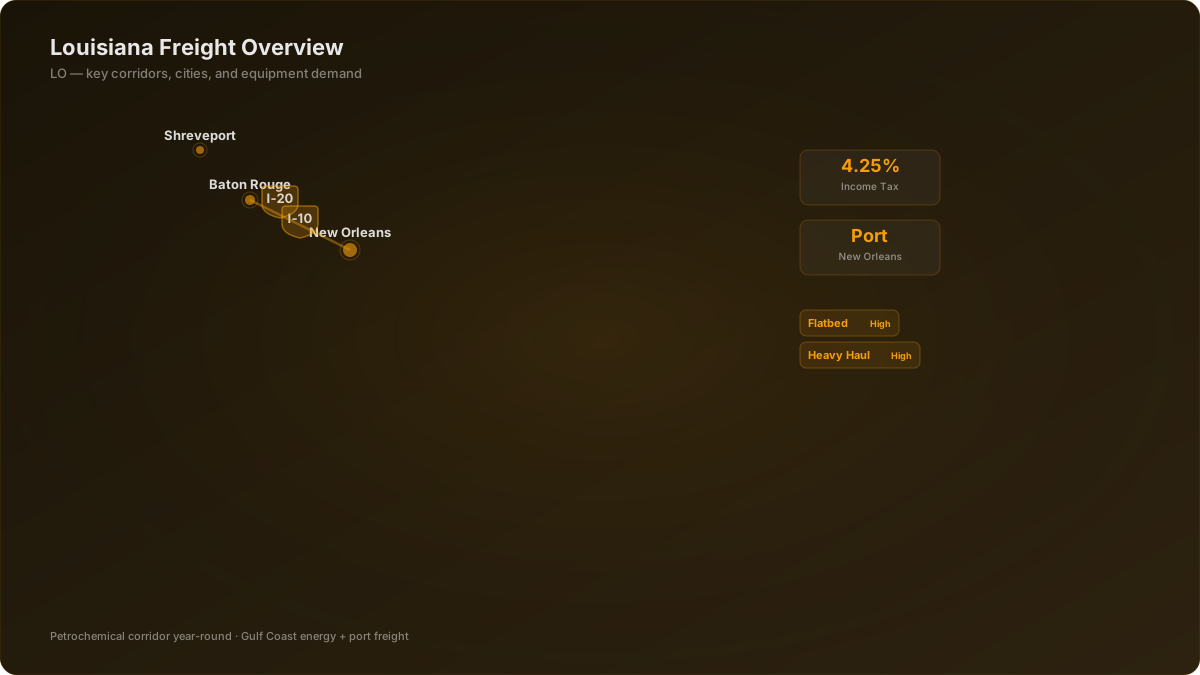
Major Freight Corridors
I-10 (Lake Charles → Baton Rouge → New Orleans → Mississippi)
Louisiana's primary east-west corridor running through the heart of the petrochemical corridor. Refineries, chemical plants, and LNG facilities line this route. Some of the highest hazmat truck concentrations in the US.
Mississippi River Corridor (Baton Rouge → New Orleans)
Known as 'Cancer Alley' for its density of chemical plants. This 85-mile stretch has over 150 petrochemical facilities, each requiring constant truck deliveries of raw materials, catalysts, and maintenance equipment.
I-20 (Shreveport → Monroe → Mississippi)
Northern Louisiana east-west corridor connecting the Haynesville Shale natural gas region to Mississippi and Texas. Oil/gas equipment and timber freight dominate.
I-49 (Shreveport → Alexandria → Lafayette)
North-south corridor connecting Northern Louisiana to Acadiana. Timber, agriculture, and oilfield services freight. Eventually planned to connect to New Orleans via future extension.
Key Industries & Freight
Equipment Demand in Louisiana
Major Distribution Centers
- 📦Port of South Louisiana — river port complex between Baton Rouge and New Orleans, largest by tonnage in Western Hemisphere
- 📦Refinery Complexes — Lake Charles (Citgo, Sasol), Baton Rouge (ExxonMobil — 2nd largest US refinery), Norco (Shell)
- 📦Amazon — fulfillment centers in Baton Rouge and New Orleans metro
- 📦Sabine Pass LNG — Cheniere Energy's export terminal in Cameron Parish
- 📦Avondale/Waggaman — industrial and logistics corridor west of New Orleans
Louisiana Trucking Regulations
Hazmat Concentration
Louisiana has one of the highest concentrations of hazmat freight in the US. Carriers hauling chemicals, refined fuels, or LNG-related materials must maintain proper hazmat endorsements, placards, and routing. Many petrochemical facilities require TWIC (Transportation Worker Identification Credential) for access.
Hurricane Season
June 1 through November 30 is hurricane season. Coastal Louisiana (New Orleans, Lake Charles, Houma) is highly vulnerable. Evacuations create massive freight surges (emergency supplies inbound) and disruptions (refinery shutdowns). Hurricane season significantly affects freight patterns and rates.
Oversize/Overweight Permits
Louisiana's petrochemical industry generates frequent oversized loads (refinery columns, heat exchangers). The state has a streamlined permit process for oversize/overweight moves. Route surveys and escort vehicles are typically required for loads exceeding 14' wide or 150,000 lbs.
Cities We Cover
- New Orleans
- Baton Rouge
- Shreveport
- Lafayette
- Lake Charles
- Kenner
Plus all surrounding metros and rural areas
Run Freight in Louisiana?
Our Louisiana dispatchers know every lane, every rate, and every seasonal trend.
Regional Freight Guide
🤠Texas & South Central GuideTop lanes, seasonal patterns, deadhead traps, and regulations for TX, OK, AR, LA, KS
Other Markets
Frequently Asked Questions
Louisiana is dominated by energy — petrochemicals, refining, and LNG — in a way no other state matches. The 85-mile stretch between Baton Rouge and New Orleans contains 150+ chemical plants and refineries, creating massive demand for tankers, flatbeds, heavy haul, and hotshot service. This industrial concentration means Louisiana's freight market is less seasonal and more specialized than typical consumer-goods states.
Extremely profitable. Louisiana's refineries and chemical plants need constant tanker service for raw materials, intermediates, and finished products. Chemical tanker rates in the Baton Rouge-New Orleans corridor are among the highest in the US due to hazmat requirements, specialized equipment needs, and the critical nature of keeping refineries supplied.
Top outbound lanes: New Orleans to Houston (I-10, 350mi), Baton Rouge to Jackson MS (I-55, 165mi), Lake Charles to Houston (I-10, 140mi), Shreveport to Dallas (I-20, 190mi), and New Orleans to Mobile (I-10, 150mi). Petrochemical and refined fuel tanker lanes between Gulf Coast facilities are the most consistent freight.
Significantly. When a hurricane threatens, emergency supply freight surges (water, generators, building materials) while petrochemical operations shut down. Post-storm, recovery freight (debris removal, reconstruction materials, utility equipment) can last months. Rates spike 50-200% during active hurricane events. Smart carriers position for both pre-storm supply runs and post-storm recovery.
Yes. Louisiana's petrochemical-heavy freight market requires specialized knowledge of hazmat routing, TWIC requirements, refinery access protocols, and seasonal hurricane patterns. We dispatch tankers, flatbeds, heavy haul, and hotshot across the petrochemical corridor, Gulf Coast ports, and Louisiana's agricultural regions.
Get Dispatched in Louisiana
Our dispatchers know the Louisiana freight market inside and out. Tell us your equipment type and preferred lanes — we'll keep your truck loaded and profitable.