Arizona Truck Dispatch
Arizona is one of the fastest-growing freight markets in the country. The Phoenix metro area is the #2 market nationally for new warehouse and distribution center construction, driven by population growth, nearshoring, and massive semiconductor investments from TSMC and Intel. The Sun Corridor mega-region (Phoenix-Tucson) and I-10/I-17 corridors position Arizona as a critical Southwest logistics hub.
#2 US
DC Growth Rank
+8.2%
Population Growth (2020-25)
$65B+
Semiconductor Investment
299
Sunny Days Per Year
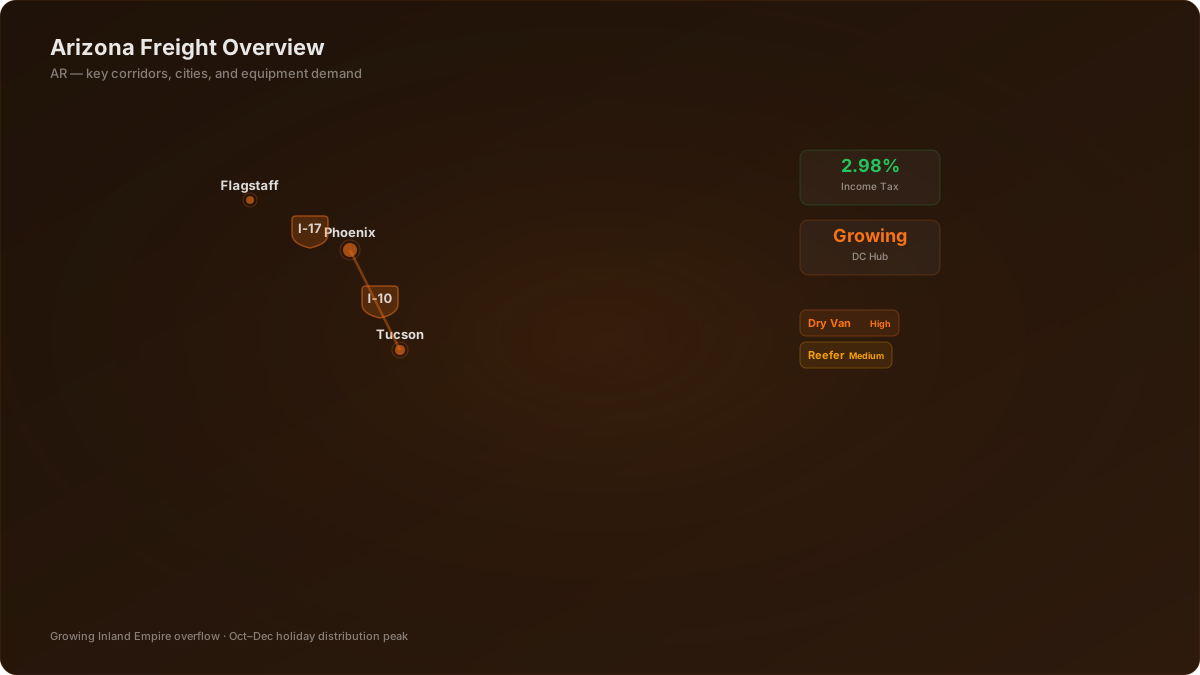
Major Freight Corridors
I-10 (Phoenix → Tucson → El Paso / LA)
Arizona's primary east-west artery connecting Phoenix to both California (west) and Texas (east). The I-10/I-17 interchange in Phoenix is one of the busiest freight junctions in the Southwest.
I-17 (Phoenix → Flagstaff → I-40)
North-south corridor climbing 6,000 feet from the Valley to Northern Arizona. Connects the Phoenix distribution hub to I-40 and the Four Corners region. Steep grades near Flagstaff challenge heavy loads.
I-40 (Flagstaff → Albuquerque)
Northern Arizona east-west corridor (historic Route 66). Connects to New Mexico, Texas, and the Southern Transcontinental route. Key corridor for intermodal and cross-country freight.
Loop 303 / West Valley Logistics Belt
The emerging freight corridor through Goodyear, Buckeye, and Surprise where massive new DCs (Amazon, Microsoft, Target) are being built. This is ground zero for Arizona's warehouse boom.
Key Industries & Freight
Equipment Demand in Arizona
Major Distribution Centers
- 📦Amazon West Valley — multiple fulfillment centers in Goodyear, Buckeye, and Tempe
- 📦Target — regional DC in Buckeye supporting Southwest stores
- 📦Intel Chandler — Fab 42 and Fab 52 semiconductor manufacturing campus
- 📦TSMC Phoenix — $40B advanced chip fab under construction, massive equipment logistics
- 📦Microsoft Goodyear — data center campus with ongoing expansion
Arizona Trucking Regulations
Extreme Heat Operations
Phoenix routinely exceeds 115°F June-September. Tire blowout risk increases dramatically above 110°F on hot pavement. Reefer units work harder and consume more fuel. Plan for driver rest and hydration requirements during summer months.
I-17 Mountain Grades
I-17 between Phoenix and Flagstaff climbs from 1,100' to 7,000' elevation with sustained 6% grades. Heavy loads require careful speed management. Runaway truck ramps are positioned along the route. Winter conditions near Flagstaff may require chains.
Arizona Fuel Tax
Arizona fuel tax is $0.26/gallon — below the national average and significantly lower than neighboring California ($0.681). This makes Arizona a cost-effective state for fueling and operating compared to the West Coast.
Cities We Cover
- Phoenix
- Tucson
- Mesa
- Chandler
- Scottsdale
- Goodyear
Plus all surrounding metros and rural areas
Run Freight in Arizona?
Our Arizona dispatchers know every lane, every rate, and every seasonal trend.
Regional Freight Guide
🌴West Coast & Pacific GuideTop lanes, seasonal patterns, deadhead traps, and regulations for CA, WA, OR, NV, AZ
Other Markets
Frequently Asked Questions
Arizona is experiencing a convergence of population growth (+8.2% since 2020), semiconductor investment ($65B+ from TSMC and Intel), and massive warehouse construction (#2 nationally). Companies are relocating distribution operations from expensive California to Arizona's lower-cost, business-friendly environment with access to the same I-10 corridor.
TSMC's $40B fab and Intel's $20B expansion require constant deliveries of ultra-pure chemicals, gases, cleanroom equipment, and wafer transport. These are high-value, specialized loads that command premium rates. The construction phase alone requires thousands of flatbed and heavy haul loads for equipment installation.
Top outbound lanes: Phoenix to LA (I-10, 370mi), Phoenix to Dallas (I-10, 1,065mi), Phoenix to Albuquerque (I-10/I-25, 450mi), Yuma to nationwide (winter produce reefer), and Phoenix to Las Vegas (US-93, 300mi). The I-10 corridor east and west provides the most consistent volume.
Absolutely. Surface temperatures on Arizona highways can reach 160°F+ in summer, dramatically increasing tire blowout risk. Reefer units consume 20-30% more fuel to maintain temperature. Our dispatchers factor heat-related costs and plan routes to minimize extended Phoenix-area stops during peak heat.
Yes. Arizona's explosive growth in warehousing, semiconductors, and construction creates year-round freight opportunities. We dispatch all equipment types across the Phoenix metro, Tucson, Yuma produce lanes, and I-10/I-17 corridors.
Get Dispatched in Arizona
Our dispatchers know the Arizona freight market inside and out. Tell us your equipment type and preferred lanes — we'll keep your truck loaded and profitable.