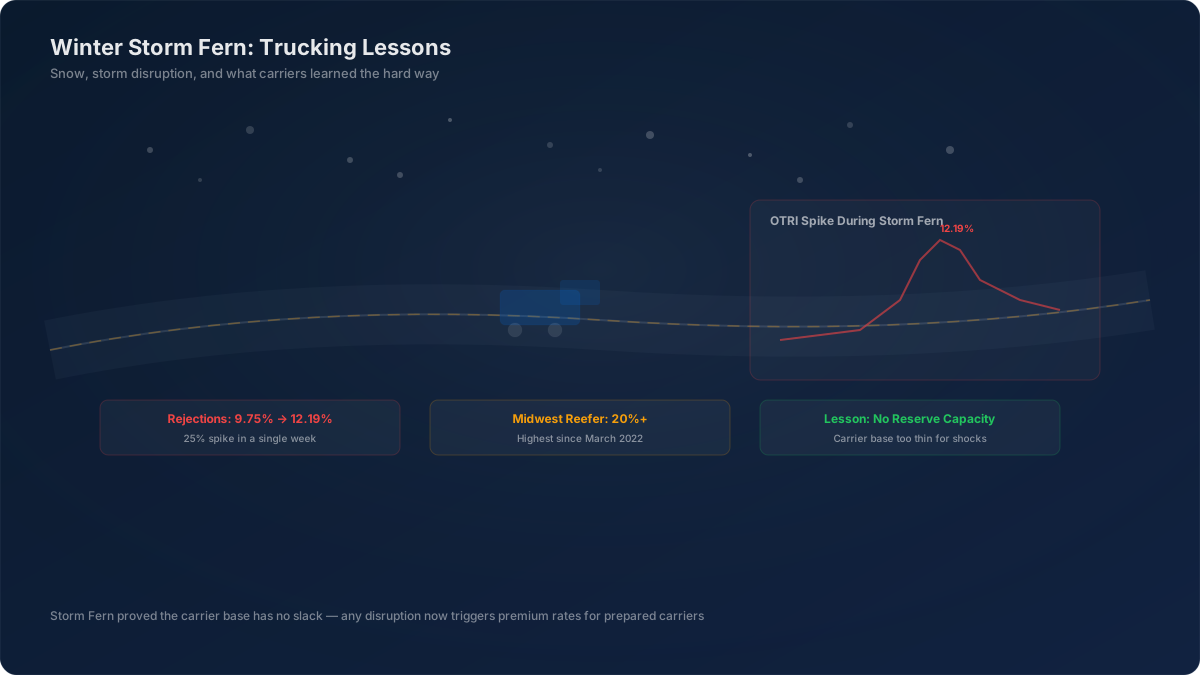
What Happened: Storm Fern by the Numbers
Winter Storm Fern swept across the central and southern United States in January 2026, blanketing major freight corridors with ice and snow. By itself, that is nothing new — winter storms hit trucking every year. What made Fern different was not the storm itself but what the storm revealed about the freight market underneath.
In a single week, the national Outbound Tender Rejection Index jumped from 9.75% to 12.19% — a 25% spike that caught shippers off guard. In the Midwest, reefer rejections exceeded 20%, the highest reading since March 2022. Carriers were not just declining loads because of unsafe roads. They were declining loads because they had better-paying options and fewer competitors to undercut them.
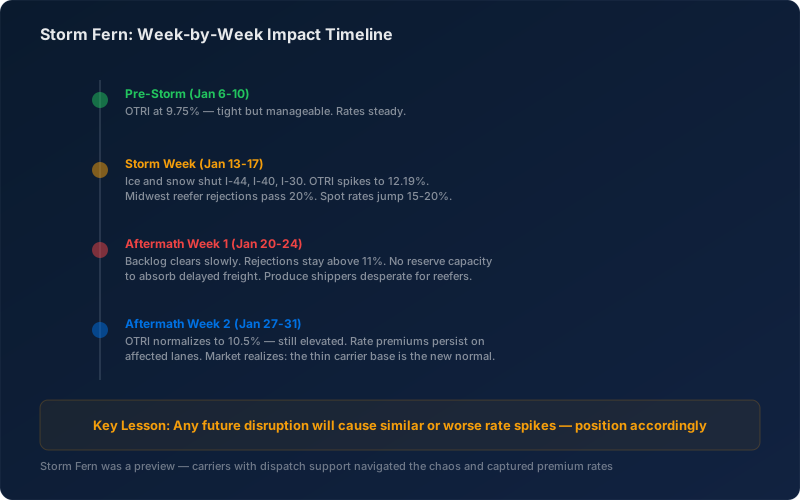
Here is the critical part: the rates never snapped back. In 2023 or 2024, a winter storm would cause a brief spike followed by a return to the depressed baseline within a week or two. After Fern, rejection rates stayed elevated. By February, the national OTRI hit 14% — and it has held there. Midwest rejections remained at 18% in early February. The storm did not cause a temporary blip. It exposed a structural reality: the carrier base is too thin to absorb even moderate disruptions.
Tender Rejection Timeline: Before, During, and After Fern
| Period | National OTRI | Midwest Reefer | Market Status |
|---|---|---|---|
| Pre-Storm (Early Jan) | 9.75% | ~11% | Normal |
| Storm Week (Mid-Jan) | 12.19% | 20%+ | Spike |
| Post-Storm (Late Jan) | 11.8% | ~16% | Elevated |
| February | 14% | 18% | New Baseline |
| March | 14% | ~15% | Sustained |
Source: FreightWaves SONAR, DAT Trendlines, January-March 2026.
25%
OTRI Spike in One Week
9.75% → 12.19%
20%+
Midwest Reefer Rejections
Highest since March 2022
5,500+
Operators Gone in 2025
No reserve capacity left
Why Rates Did Not Snap Back: The Thin Carrier Base
To understand why Storm Fern's rate impact was so persistent, you need to understand what happened to the carrier market between 2023 and 2026. The FMCSA revoked approximately 88,000 carrier authorities in 2023 alone — the largest single-year contraction in modern trucking history. Through 2024 and 2025, another 5,000 to 8,000 carriers exited the market. Net carrier capacity contracted by roughly 10,000 units in the first half of 2024.
In previous market cycles, a storm would sideline trucks for a few days, but there was always a pool of underutilized carriers ready to jump in when roads reopened. That pool no longer exists. The carriers who survived the 2023-2024 freight recession are already running at high utilization. When Fern took trucks off the road, there was no reserve fleet waiting to fill the gap.
Think of it like a highway during rush hour versus a highway at 2 AM. At 2 AM, you can close one lane and traffic barely notices — there is plenty of extra capacity. During rush hour, closing one lane creates a backup that lasts for hours because every lane is already full. The freight market in January 2026 was in rush hour. Fern closed a lane. And the backup never fully cleared because the underlying demand-to-capacity ratio was already tight.
For a deeper dive into the carrier exodus and its market implications, see our carrier exodus analysis and 2026 industry forecast.
5 Lessons Every Carrier Should Take from Storm Fern
Lesson 1: Weather events now have outsized rate impacts. In a thin-capacity market, even moderate disruptions cause significant rate spikes that persist well beyond the event itself. A storm that would have caused a 3-day rate blip in 2023 now causes a 3-week elevation because there is no reserve capacity to absorb the shock. This means weather events are now revenue opportunities, not just operational headaches. Carriers who are positioned to run immediately after a storm passes can capture premium rates for weeks, not days.
Lesson 2: Pre-positioning is worth more than post-storm hustle. The carriers who made the most money after Fern were not the ones who scrambled to get back on the road fastest. They were the ones who had positioned themselves at the edge of the storm zone — close enough to quickly access reopened high-demand lanes, but far enough south or east to avoid being trapped. This kind of strategic positioning requires watching weather forecasts 5-7 days ahead and making routing decisions based on where rates will spike, not just where the storm is today.
Lesson 3: Reefer and specialized equipment benefit most from disruptions. Midwest reefer rejections hit 20%+ during Fern because temperature-controlled freight cannot wait. Perishable goods spoil, pharmaceutical products require climate control, and food supply chains operate on razor-thin timing. When reefer capacity drops, rates spike harder and faster than dry van because the freight is time-critical. If you operate specialized equipment, disruption events are disproportionately profitable for you — but only if you are in the right region. For equipment-specific strategies, check our reefer vs dry van profitability analysis.
Lesson 4: Your dispatcher is your weather analyst. Owner-operators who self-dispatch are at a disadvantage during weather events because they cannot simultaneously drive safely and monitor weather radar, load board rates, road closures, and tender rejection data. A professional dispatcher is watching all of these inputs in real time and making routing and booking decisions based on where the opportunity is shifting hour by hour. During Fern, the carriers with dispatch support were rerouted around the worst-hit corridors, had loads pre-booked for the reopening window, and captured the post-storm rate premium immediately. Self-dispatched carriers were parked, waiting for roads to reopen, and then competing with everyone else for the same loads.
Lesson 5: Storm preparedness is a revenue strategy, not just a safety checklist. Most storm preparation advice focuses on safety: carry extra food, blankets, and fuel. That is all essential. But storm preparedness should also include revenue planning. Before a storm hits, review what freight will be backlogged and which lanes will spike. Fuel up in advance so you are ready to roll the moment roads reopen. Communicate with your dispatcher about your preferred post-storm positioning. Carriers who treat weather events as strategic opportunities — while still prioritizing safety — consistently outperform those who just hunker down and wait.
What This Means for the Rest of 2026
Storm Fern was the canary in the coal mine. The rate behavior during and after the storm confirmed what market data had been suggesting for months: the freight market has structurally shifted in favor of carriers, and this shift is not a temporary condition.
DAT data shows that spot van rates reached $2.41 per mile by late February — the seventh consecutive monthly gain since August 2025. The load-to-truck ratio climbed to 7.73 in March, and the national OTRI has held at 14%. These are not storm-driven anomalies. These are market fundamentals reflecting a carrier base that is structurally too small for current freight demand.
For owner-operators, the implication is clear: every disruption event — whether it is a hurricane season storm, a port strike, or a supply chain bottleneck — will now produce larger and longer rate spikes than in previous years. The capacity cushion that used to absorb these shocks has been permanently reduced by three years of carrier attrition.
This creates a compelling case for staying in the market if you survived the downturn. The carriers who endured 2023-2024's low rates are now the scarce resource. Insurance premiums at $0.102 per mile and high re-entry costs mean the competitive field is not expanding anytime soon. For the full market picture, read our 2026 freight rate recovery analysis.
How to Position for the Next Disruption
Fern will not be the last disruption of 2026. Hurricane season runs June through November. The seasonal freight calendar shows predictable demand surges around produce season, back-to-school, and holiday peak. And unpredictable events — port disruptions, trade policy changes, industrial accidents — can spike rates at any time.
Build a disruption playbook. Know which regions you want to be in when different types of events occur. A Gulf Coast hurricane means Florida and Gulf state capacity drops — be positioned in Georgia or the Carolinas to serve the aftermath. A Midwest blizzard means reefer capacity from Chicago to Minneapolis dries up — be south of the storm with a clear path in. A port disruption on the East Coast means inland freight from alternative ports spikes — know which corridors benefit.
Maintain financial reserves. Disruption events sometimes require waiting. You might need to park for 24-48 hours while a storm passes. The carriers who cannot afford to miss two days of revenue end up running in unsafe conditions or accepting terrible rates just to keep moving. A financial cushion — even one to two weeks of operating expenses in reserve — gives you the luxury of waiting for the storm to pass and then capturing the premium rates on the other side.
Partner with dispatch that watches the market. The difference between a good dispatcher and a great one is how they handle disruption events. A great dispatcher is calling you the day before a storm to adjust your routing, pre-booking loads for the reopening window, and negotiating premium rates while other dispatchers are still assessing the situation. If your current dispatch service was caught flat-footed by Fern, it might be time to evaluate alternatives. Learn how to choose the right dispatch company or reach out to our team to see how we handle weather events and market disruptions.
The Bottom Line
Winter Storm Fern was not just a weather event. It was a stress test that revealed the true state of the freight market. The result: a carrier base that is thinner than most people realized, rate sensitivity to disruptions that is higher than at any point since 2021, and a market environment where the carriers who survived the freight recession are now genuinely scarce.
If you made it through 2023 and 2024, you earned this. The market is rewarding survivors. But capturing the full value requires more than just showing up — it requires strategic positioning, rate discipline, and the ability to turn disruptions into revenue opportunities. Whether you handle that yourself or partner with a professional dispatch service, the key is being proactive rather than reactive when the next Fern hits.
Because in a thin-capacity market, every storm is a payday for carriers who are prepared.
Frequently Asked Questions
What was Winter Storm Fern and how did it affect trucking?
Winter Storm Fern hit the central and southern United States in January 2026, bringing ice, snow, and freezing temperatures across major freight corridors in the Midwest and Southeast. The storm's impact on trucking was dramatic: the national Outbound Tender Rejection Index spiked from 9.75% to 12.19% in a single week — a 25% jump that signaled sudden, severe capacity tightening. Midwest reefer rejections exceeded 20%, the highest reading since March 2022. Unlike typical winter storms that cause a brief disruption followed by a rapid return to normal, Storm Fern's effects lingered for weeks because the carrier base was already operating near maximum utilization. There was simply no reserve capacity to absorb the shock.
Why didn't freight rates snap back to normal after Storm Fern passed?
In previous years, freight rate spikes from weather events typically resolved within one to two weeks as sidelined trucks returned to service and the temporary backlog cleared. After Storm Fern, rates stayed elevated because the underlying market had changed. Between 2023 and early 2026, approximately 88,000 carrier authorities were revoked and another 5,000 to 8,000 carriers exited the market in 2025. The carrier base that remained was already running at high utilization before the storm. When Fern removed trucks from the road, there was no surge of reserve capacity waiting to fill the gap. The elevated post-storm rates became the new baseline, contributing to the broader rate recovery that pushed spot van rates to $2.41 per mile by late February.
How can owner-operators prepare for weather disruptions?
Preparation happens in three phases. Before the storm: monitor NOAA forecasts and FreightWaves weather alerts, position your truck in a safe location with fuel, food, and supplies, and communicate with your dispatcher about contingency plans. During the storm: do not drive in unsafe conditions — no load is worth your life or your truck. Park safely and wait it out. After the storm: this is where the revenue opportunity lives. As roads reopen, spot rates spike because shippers have backlogged freight and fewer trucks are available. Carriers who are positioned near the edge of the storm zone — close enough to quickly access reopened lanes but far enough to avoid being trapped — can capture rate premiums of 30-50% above normal. Having a dispatcher who monitors weather patterns and pre-positions you strategically is a significant advantage.
What do tender rejection rates above 12% mean for carriers?
When the Outbound Tender Rejection Index exceeds 12%, it signals that carriers are consistently declining contract freight in favor of higher-paying spot loads. This is a clear indicator that the market has shifted in favor of carriers — there are more loads than trucks, and carriers have the leverage to be selective. Historically, when OTRI stays above 12% for eight or more consecutive weeks, contract rate increases of 5 to 10 percent follow within one to two quarters as shippers are forced to raise their contract offers to secure reliable capacity. For owner-operators, OTRI above 12% means you should be pushing harder on rate negotiations, considering a heavier spot-market allocation, and positioning your truck in high-demand regions where the ratio is even higher.
Is the thin carrier base a temporary situation or a long-term trend?
The thin carrier base is a structural condition, not a temporary blip. The barriers to re-entry for exited carriers are substantially higher than in previous cycles. Insurance premiums have hit a record $0.102 per mile with a 5.8% year-over-year increase in Q1 2025. Lenders now require 3 to 6 months of operating capital reserves ($30,000 to $60,000) to underwrite new trucking loans. Used truck prices, while down from 2022 peaks, still run $65,000 to $90,000 for a serviceable vehicle, and financing rates of 8 to 12 percent add significant monthly costs. Most carriers who exited during the freight recession depleted their cash reserves. Rebuilding to a point where they can re-enter takes 12 to 24 months minimum. The dispatch market itself reflects this reality — growing from $688 million in 2024 to a projected $1 billion by 2031 — as surviving carriers invest in optimization rather than new capacity flooding the market.
How does a dispatch service help during weather events?
A professional dispatch service provides critical advantages before, during, and after weather disruptions. Before: dispatchers monitor weather forecasts and proactively adjust your routing and load bookings to avoid storm paths while positioning you to capture post-storm rate spikes. During: your dispatcher communicates with brokers and shippers on your behalf, managing expectations, rebooking loads, and handling the administrative burden so you can focus on safety. After: this is where dispatch value peaks — as roads reopen and backlogs create rate surges, your dispatcher is immediately negotiating premium spot loads while other drivers are still figuring out which roads are open. A dispatcher who is watching weather and market data 24/7 can capture rate opportunities that a driver who was parked during the storm would miss entirely. Professional dispatch typically increases revenue by 10 to 30 percent, and that margin widens significantly during disruption events.