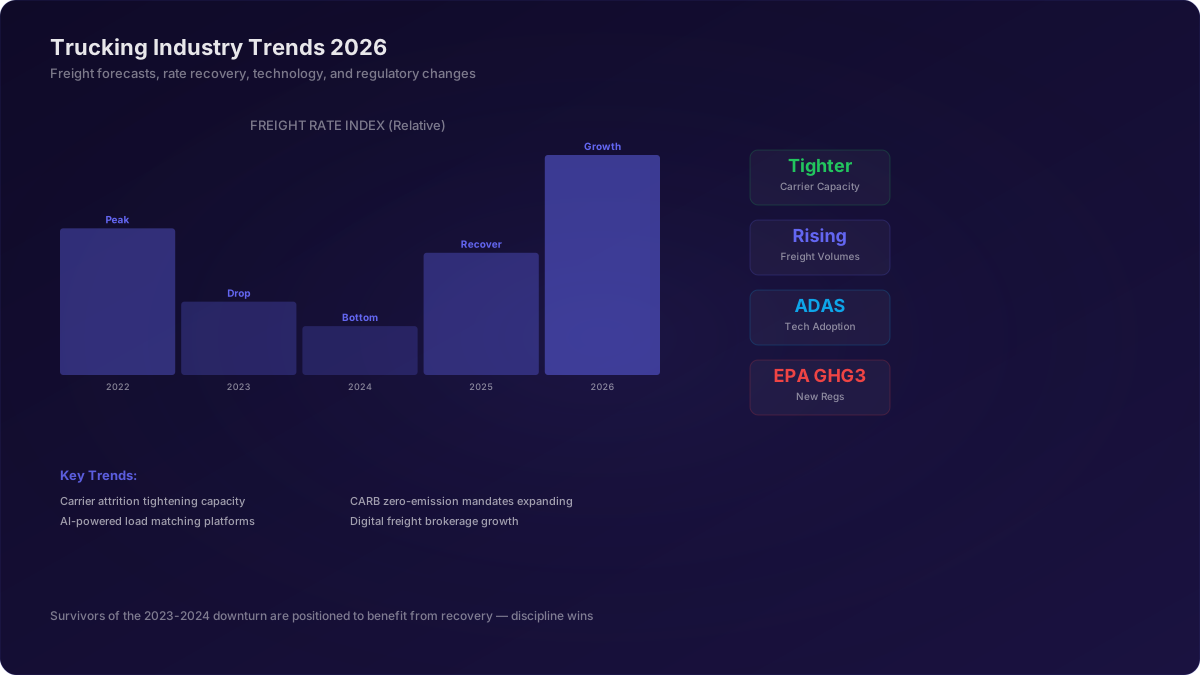
The Freight Market: Recovery Mode
The trucking industry enters 2026 in a different position than it was a year ago. The prolonged freight recession that began in late 2022 pushed thousands of carriers out of business — the FMCSA reported a net loss of over 88,000 carrier authorities in 2023-2024 combined. That capacity reduction is now starting to rebalance the market.
Freight volumes are showing signs of stabilization. Consumer spending, while not booming, has remained resilient. Manufacturing activity is mixed but trending upward in key sectors. E-commerce continues its steady growth trajectory, supporting consistent demand for parcel and LTL carriers.
For owner-operators and small fleets, the key takeaway: the operators who survived the downturn are now in a stronger competitive position. Less capacity means more negotiating power on rates — if you know how to use it.
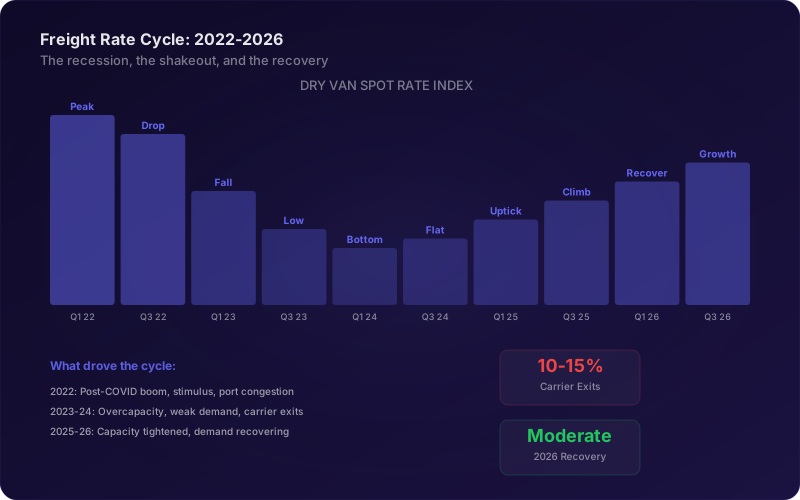
Rate Trends by Equipment Type
Rate recovery isn't uniform across all equipment types. Here's what we're seeing in 2026:
Dry Van
Moderate recovery
Spot rates recovering from 2024 lows. Contract rates stabilizing. Lane-specific variation is significant — strong corridors like Southeast to Northeast are outperforming.
Reefer
Strong demand
Temperature-controlled freight continues to command premiums. Produce season creates predictable surges. Carrier attrition hit reefer hard, tightening capacity significantly.
Flatbed
Infrastructure boost
Federal infrastructure spending is driving demand for construction materials, steel, and equipment. Flatbed rates are among the strongest in the market.
Specialized/Heavy Haul
Premium and stable
Specialized equipment consistently commands premium rates due to limited carrier supply. Energy sector and infrastructure projects are primary drivers.
See current rate ranges for all equipment types on our Services page.
Technology Trends Reshaping Trucking
AI-Powered Load Matching
Platforms like DAT and Truckstop are integrating AI to predict optimal loads based on carrier preferences, historical performance, and market conditions. Professional dispatchers combine this technology with human judgment and relationship knowledge.
Predictive Maintenance
Telematics and sensor data are enabling maintenance predictions before breakdowns occur. Fleets using predictive maintenance report 20-30% reduction in unplanned downtime — directly improving revenue.
Digital Freight Platforms
The line between traditional brokerage and digital platforms continues to blur. Convoy's acquisition by Flexport signaled industry consolidation. Carriers benefit from more options and greater transparency in pricing.
Real-Time Freight Visibility
Shippers and brokers increasingly require real-time load tracking. Most ELD providers now offer integrated tracking. This trend benefits reliable carriers — visibility builds trust and leads to preferred carrier status.
Strategies for Carrier Profitability in 2026
The carriers who thrive in 2026 will share these characteristics:
- Know your numbers — Use our Cost Per Mile Calculator to know your exact breakeven. Never book below it.
- Minimize deadhead — Target under 10% empty miles. Use our Deadhead Calculator to evaluate every load before committing.
- Build lane expertise — Specialize in 3-5 profitable lanes rather than chasing loads everywhere. Consistency builds broker relationships and market knowledge.
- Invest in relationships — Direct shipper relationships and preferred carrier status with brokers lead to consistent, high-paying freight.
- Leverage professional dispatch — A good dispatcher pays for themselves many times over through better rates, less deadhead, and time savings.
Industry Resources
- American Trucking Associations (ATA) — Industry data, advocacy, and research
- Bureau of Transportation Statistics — Federal freight data and transportation analysis
- Rate Negotiation Tips — Maximize your rates as the market recovers
- Dispatch vs. Self-Dispatch — Compare your options for 2026
Truck Dispatch Experts
Published Jan 5, 2026 · Updated Feb 15, 2026