The Current Price Landscape: What Trucks Actually Cost in 2026
Let's start with the numbers you actually need. If you're shopping for a truck in 2026, here's what you'll find on dealer lots and at auction — no sugarcoating, no theoretical pricing, just what carriers are actually paying.
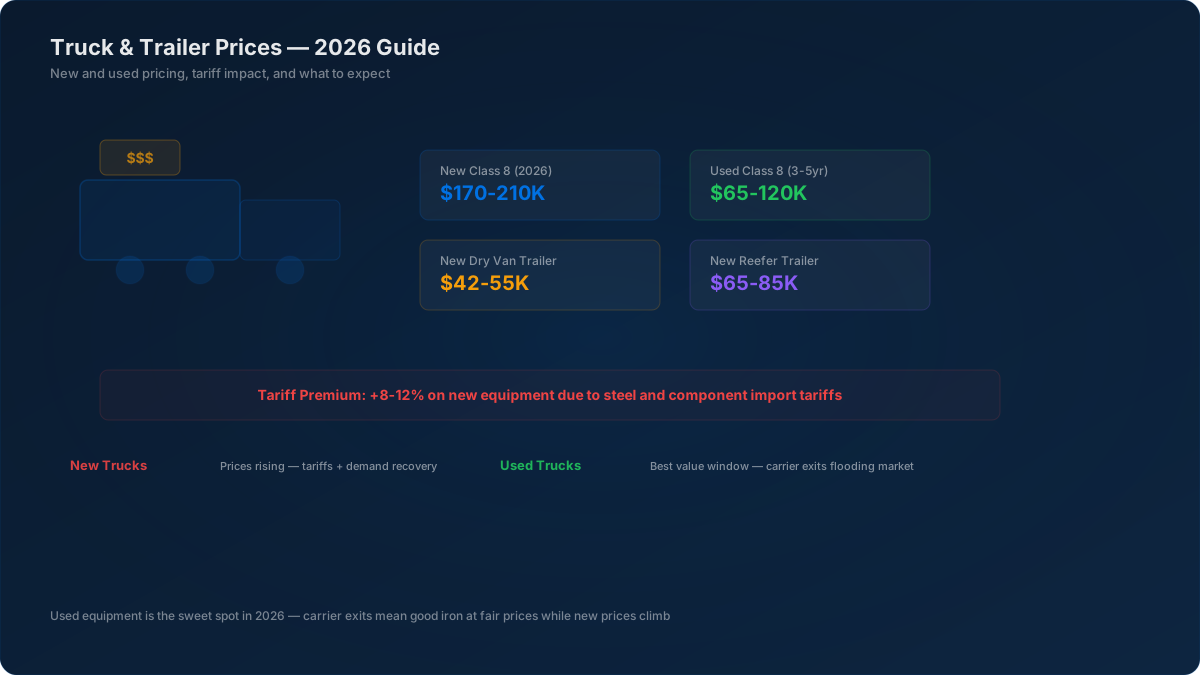
ACT Research confirms that Class 8 truck prices have increased approximately $10,000 due to tariffs, pushing new sleeper configurations past the $170,000 mark for the first time as a sustained baseline rather than a peak anomaly. Meanwhile, the used market has corrected significantly from its 2022 highs, creating a pricing environment that favors buyers — if you know where to look and when to pull the trigger.
| Equipment Type | New Price (2026) | Used Price (2026) | 2022 Peak (Used) |
|---|---|---|---|
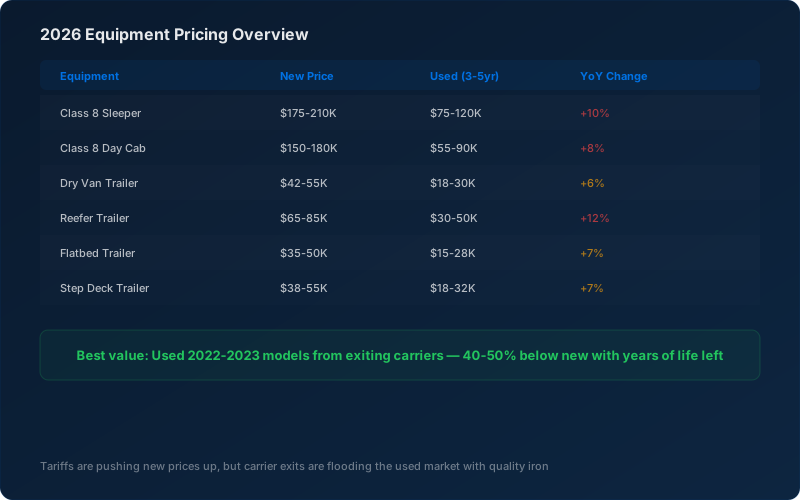
| Class 8 Sleeper | $170,000-$172,000 | $60,000-$80,000 | $85,000-$110,000 |
| Class 8 Day Cab | $139,000+ | $45,000-$65,000 | $65,000-$85,000 |
| Dry Van Trailer (53') | $38,000-$48,000 | $18,000-$28,000 | $35,000-$45,000 |
| Reefer Trailer (53') | $65,000-$80,000 | $28,000-$45,000 | $50,000-$70,000 |
| Flatbed Trailer (48'-53') | $35,000-$50,000 | $15,000-$25,000 | $30,000-$42,000 |
The key takeaway: used equipment is at or near cycle-bottom pricing, while new equipment is at cycle-high pricing due to tariffs. That spread — the widest gap between new and used truck pricing in over a decade — has significant implications for your buying strategy.
The Tariff Factor: How the 15% Surcharge Changes Your Math
The 15% tariff surcharge on imported truck components and raw materials has added approximately $10,000 to the sticker price of a new Class 8 truck. That surcharge, applied by most major OEMs since late 2024, is baked into the $170,000+ pricing you see on dealer lots today.
Here's what matters for your buying decision: the surcharge is currently set to expire in July 2026. If it expires on schedule, new truck pricing could drop $10,000-$15,000 almost overnight. But "could" is doing a lot of work in that sentence. There are three scenarios:
Scenario A: Surcharge Expires
New truck prices drop $10,000-$15,000. Dealers with existing inventory may hold prices temporarily, but competition will force adjustments within 60-90 days. The best window would be August-October 2026 as dealers clear surcharge-era inventory and new non-surcharge orders arrive. This is the scenario that favors waiting — but only if your current equipment is reliable enough to get you there.
Scenario B: Surcharge Extended
Prices stay at current levels. The $170,000+ new sleeper becomes the new normal, and carriers waiting for relief find themselves in the same market with 6 more months of depreciation on their current equipment. This scenario favors buying used now at cycle-bottom prices rather than betting on a policy change. The used market doesn't move on tariffs — it moves on supply and demand.
Scenario C: Partial Reduction
The surcharge drops from 15% to 5-10%, yielding a savings of $3,000-$7,000 per truck. This is arguably the most likely outcome based on current trade policy signals. The savings are real but not transformative — not enough to justify waiting 6 months if you need equipment now. In this scenario, the buying decision should be made on operational needs, not tariff speculation.
Our take: Don't make a $170,000 purchase decision based on tariff speculation. If your current truck is costing you money in maintenance and downtime, the carrying cost of waiting ($2,000-$4,000/month in lost revenue from breakdowns, plus repairs) often exceeds the potential $10,000-$15,000 savings. If your current equipment is solid and you can wait until August, you might get lucky. But "might" is not a business plan.
For a broader look at how tariffs are impacting trucking beyond equipment, see our analysis: Tariffs and Trucking Rates in 2026.
New vs Used: Where the Value Is in 2026
The pricing gap between new and used trucks in 2026 is the widest it's been in over a decade. A new Class 8 sleeper at $170,000 versus a used 2020-2021 model at $65,000-$75,000 represents a $95,000-$105,000 difference — enough to buy a second used truck, fully insure it, and still have cash left over.
That doesn't mean new is always wrong or used is always right. The decision depends on your operating profile, financial position, and how long you plan to keep the equipment.
| Factor | New ($170K+ Sleeper) | Used ($60K-$80K Sleeper) |
|---|---|---|
| Monthly Payment | $2,800-$3,400 (60-72 mo, 10% down) | $1,200-$1,800 (48-60 mo, 15% down) |
| Warranty | Full factory, 3-5 yr / 250K-500K mi | Limited or none (verify remaining) |
| Annual Maintenance | $3,000-$5,000 (mostly PM services) | $8,000-$15,000 (depends on age/mileage) |
| Fuel Efficiency | 7.0-8.5 MPG (latest powertrain tech) | 5.5-7.0 MPG (varies by generation) |
| Depreciation (Yr 1) | $20,000-$30,000 (steep first year) | $5,000-$10,000 (already depreciated) |
| Downtime Risk | Low (warranty + new components) | Medium to High (age-dependent) |
The sweet spot for most owner-operators in 2026 is a used 2019-2021 model year truck with 350,000-500,000 miles. You get a truck that's already taken its biggest depreciation hit, has several years of useful life remaining, and costs $100,000 less than a new equivalent. At $65,000-$75,000, the monthly payment difference versus new ($1,200-$1,500 vs $2,800-$3,400) frees up $1,300-$2,000 per month for maintenance reserves, insurance, and cash cushion.
The exception: if you're running 130,000+ miles per year and plan to keep the truck 5+ years, the fuel efficiency gains of new powertrains (1.0-2.0 MPG improvement) can offset the higher purchase price. At 130,000 miles/year and diesel at $3.80/gallon, going from 6.0 to 7.5 MPG saves approximately $11,000/year in fuel. Over 5 years, that's $55,000 — which closes much of the new-vs-used price gap.
Use our Cost Per Mile Calculator to run the numbers on your specific situation.
Lease vs Buy: The Full Financial Comparison
Leasing a new truck typically runs $2,200-$3,500 per month, depending on the make, model, and whether maintenance is included. Buying a used truck at $70,000 with $15,000 down at 9% over 5 years results in payments of approximately $1,140/month. Over 5 years, the total cost comparison looks like this:
| Cost Category | Lease (New, 5 yr) | Buy Used ($70K, 5 yr) | Buy New ($170K, 5 yr) |
|---|---|---|---|
| Monthly Payment | $2,800 | $1,140 | $3,120 |
| Total Payments | $168,000 | $68,400 | $187,200 |
| Down Payment | $0-$5,000 | $15,000 | $17,000 |
| Maintenance (5 yr est.) | Included ($0) | $50,000-$60,000 | $18,000-$25,000 |
| Residual Value | $0 (you return it) | $15,000-$25,000 | $60,000-$80,000 |
| Net 5-Year Cost | $163,000-$173,000 | $108,400-$128,400 | $142,200-$149,200 |
Buying used is the clear financial winner over 5 years — $35,000 to $65,000 cheaper than leasing, even accounting for higher maintenance. The risk is downtime: a used truck with 400,000+ miles will have more unexpected repairs than a new or leased truck. That risk is manageable with a $500-$800/month maintenance reserve fund and a good relationship with a reliable shop.
Leasing makes financial sense in exactly two scenarios: (1) you cannot qualify for truck financing due to credit issues, or (2) you value the certainty of fixed monthly costs with maintenance included and accept that you're paying a premium for that certainty. In every other case, buying wins.
One critical warning: avoid lease-purchase programs offered by carriers. These programs typically charge $600-$800/week ($2,400-$3,200/month) for trucks worth $50,000-$70,000, require mandatory use of the carrier's fuel card and dispatch, and often have walk-away penalties. Over 3-4 years, you pay $100,000-$130,000 for a truck you could have bought outright for $60,000-$70,000. We cover the full comparison in our lease vs buy guide.
Financing Your Truck in 2026: Rates, Requirements, and Negotiation
Interest rates for truck financing in 2026 range from 8% to 12% APR depending on your credit profile, down payment, and the age of the truck. Here's what different rate tiers look like on a $65,000 used truck purchase:
| Credit Profile | Typical Rate | Down Payment | Monthly (60 mo) | Total Interest |
|---|---|---|---|---|
| 700+ Score, 2+ yr authority | 8-9% | 10-15% | $1,080-$1,150 | $11,800-$13,500 |
| 650-700 Score, 1+ yr authority | 9.5-11% | 15-20% | $1,050-$1,130 | $13,000-$16,800 |
| Below 650, new authority | 11-12%+ | 20-25% | $990-$1,070 | $15,400-$19,500 |
The 2-3 percentage point spread between the best and worst rates translates to $3,600-$6,000 over the life of a loan. That's real money — and it's entirely negotiable. Here are tactics that actually work:
Get At Least 3 Quotes
Never accept the first offer. Get quotes from dealership financing, a credit union (Navy Federal, PenFed, and local CUs often have competitive commercial vehicle rates), and a specialized truck lender. Tell each lender you have competing offers. The rate spread between lenders on the same deal can be 2-3 percentage points — that's $60-$100/month on a $65,000 loan.
Increase Your Down Payment If Possible
Going from 10% to 20% down on a $65,000 truck reduces your financed amount by $6,500 and typically drops your rate by 0.5-1.0 percentage points. The combined savings on monthly payment and total interest can exceed $5,000 over the loan term. If you can swing 25% down, some lenders will drop into their best rate tier regardless of credit score.
Negotiate the Truck Price Separately
Dealers bundle truck price and financing into one negotiation to obscure the true cost of each. Negotiate the purchase price first, get it locked in writing, and only then discuss financing. A $3,000-$5,000 reduction in purchase price saves you money on the truck AND reduces your total financed amount, reducing interest charges over the entire loan.
If you're building credit for a truck purchase, our trucking credit guide covers the specific steps to get into a better rate tier. And if you're deciding between financing a truck and starting with a lease, check our owner-operator vs lease-purchase comparison.
What to Inspect Before Buying Used: The Carrier Liquidation Market
The 88,000+ carrier exits since 2023 have flooded the used truck market with inventory. That's creating opportunities — but also risks. Many exited carriers deferred maintenance in their final months of operation, trying to squeeze every possible dollar before shutting down. Others maintained their equipment well but simply couldn't survive the rate environment. Telling the difference is critical.
Engine and Powertrain
Get a full engine diagnostic printout. Look for fault codes, especially aftertreatment (DPF/DEF) issues which cost $3,000-$8,000 to repair. Check oil analysis records if available. Compression test is worth $200-$300 and can reveal problems that save you $15,000-$25,000 in engine rebuild costs. Turbo condition, injector timing, and coolant integrity (head gasket health) are your three biggest cost risks.
Frame and Structural
Inspect for rust, cracks, and previous accident damage. Frame damage is expensive and dangerous. Check the fifth wheel for wear — replacement costs $1,500-$3,000 installed. Look at the air ride bags, bushings, and king pin. These are wear items that tell you how hard the truck was worked and how well it was maintained. A truck that ran heavy loads consistently will show different wear patterns than a standard dry van hauler.
Tires and Brakes
Tires are a $4,000-$6,000 replacement cost for a full set. Check tread depth on all positions — minimum 4/32 on steer, 2/32 on drive. Brakes should have at least 50% pad/shoe remaining. DOT-required brake adjustment check is critical: automatic slack adjusters that are out of spec indicate a truck that hasn't been properly serviced. Budget $2,000-$4,000 for a full brake overhaul if needed.
Title and Documentation
Verify clean title — no liens, no salvage. Run the VIN through FMCSA records to check accident history. Get the maintenance records if the seller has them — a truck with documented oil changes every 25,000 miles is worth $5,000-$10,000 more than one with no records. Ask for the DOT inspection history: a truck that passed annual inspections consistently is a safer buy than one that hasn't been inspected.
Pro tip: Spend $200-$500 on a pre-purchase inspection at an independent shop (not the selling dealer). That investment can save you $10,000-$30,000 in unexpected repairs. If the seller refuses to allow an independent inspection, walk away. There's plenty of inventory in this market. For a full pre-purchase checklist and what to budget for maintenance, see our maintenance schedule guide.
Timing Your Purchase: When to Pull the Trigger
Here's the uncomfortable truth about market timing: nobody times it perfectly. The carriers who bought trucks at the 2022 peak thought rates would stay high forever. The ones who waited too long in 2020 missed the boom entirely. What you can do is make an informed decision based on current data and your operational reality.
For used trucks: Q1-Q2 2026 is a strong buying window. Carrier liquidations are still feeding quality inventory into the market, but as rates recover and the carrier population stabilizes in H2 2026, remaining operators will hold onto their equipment rather than selling. The supply of quality used trucks is likely at or near its peak right now. If you see a well-maintained 2019-2021 sleeper in the $65,000-$75,000 range with documented maintenance, don't wait for it to get cheaper — it probably won't.
For new trucks: If the tariff surcharge expires in July, the August-October window could offer the best pricing. But factor in 4-8 month order-to-delivery timelines — if you order in August, you may not take delivery until Q1 2027. Dealer inventory available for immediate purchase will be limited in the post-surcharge window as pent-up demand absorbs existing stock.
Whatever you decide, the most important thing is having the dispatch support to generate the revenue that makes your truck payment work. A truck sitting at a truck stop waiting for a load is just a depreciating asset. A truck running 85-90% loaded miles with professional dispatch is a revenue-generating machine. That's where the ROI on your equipment investment actually comes from. Learn more about how dispatch impacts your bottom line: How Professional Dispatch Boosts Owner-Operator Revenue by 10-30%.
Related Resources
- Leasing vs Buying a Truck — Full financial comparison for owner-operators
- The Capacity Squeeze — Why 88K carriers left and what it means for you
- Tariffs and Trucking Rates 2026 — Trade policy impact on equipment and freight
- How to Start a Trucking Business — Complete guide including equipment selection
- Truck Maintenance Schedule Guide — Preventive maintenance that protects your investment
- Cost Per Mile Calculator — Know your real operating cost per mile
Truck Dispatch Experts
Published Mar 21, 2026