The Fleet Owner's Dispatch Problem
When you had one truck, you could handle everything — drive, find loads, negotiate rates, do paperwork. Add a second truck and suddenly the math breaks. You can't drive Truck A while finding loads for Truck B. You can't negotiate a rate while making a delivery. Every hour you spend dispatching is an hour you're not generating revenue behind the wheel.
This guide covers the transition from self-dispatching owner-operator to multi-truck fleet — when to bring in professional dispatch, how to structure it, what it costs, and how to avoid the mistakes that sink small fleets.
Why 2 Trucks Is the Breaking Point
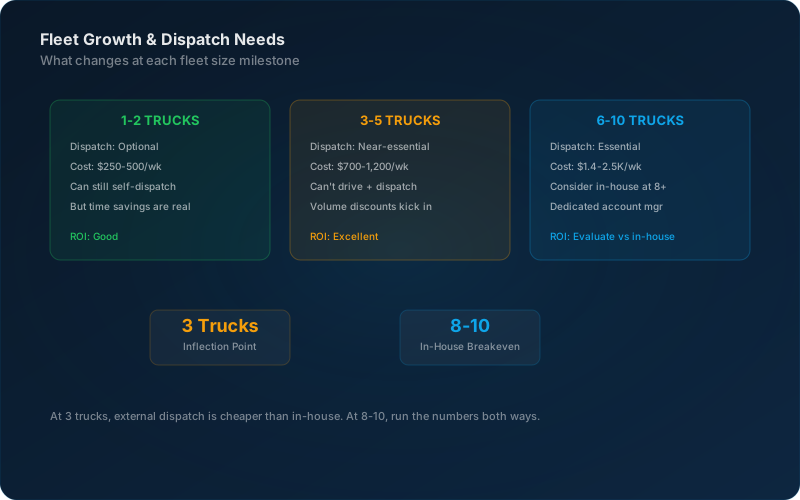
The jump from 1 truck to 2 trucks isn't 2× the work — it's closer to 3-4× because you're now managing two separate schedules, routes, load pipelines, and driver needs simultaneously. Here's what changes:
| Task | 1 Truck | 2-3 Trucks | 5-10 Trucks |
|---|---|---|---|
| Load searching | 2-3 hrs/day | 4-6 hrs/day | Full-time job |
| Rate negotiation | 1-2 calls/day | 3-6 calls/day | 10-20 calls/day |
| Paperwork | 30 min/day | 1-2 hrs/day | 3-5 hrs/day |
| Driver coordination | N/A (you drive) | 1-2 hrs/day | Constant |
| Route planning | Simple | Complex | Multi-variable |
| Total admin time | 3-5 hrs/day | 8-12 hrs/day | 16+ hrs/day |
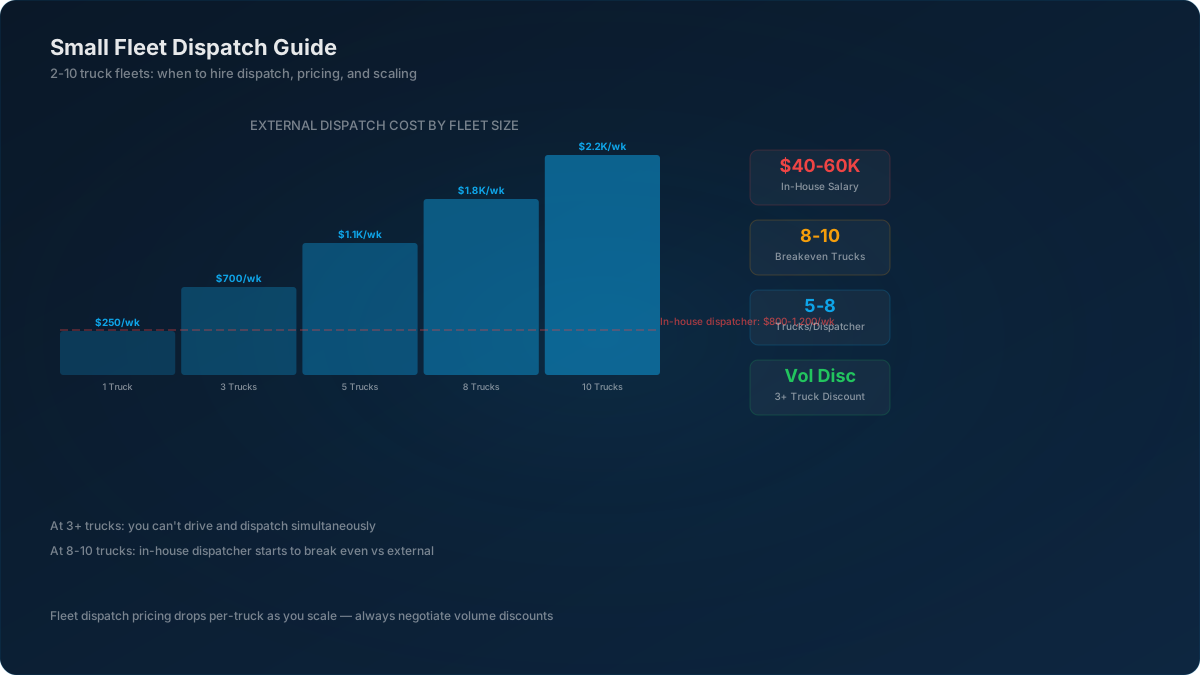
At 2-3 trucks, dispatch admin alone becomes a full-time role. At 5+, it's impossible for one person.
Three Dispatch Options for Small Fleets
Option 1: Self-Dispatch Everything
You handle dispatch for all trucks yourself. Works for 1-2 trucks if you have a non-driving partner or spouse helping with the office side.
Monthly Cost
$100-300 (load boards)
Max Trucks
2-3 (realistic limit)
Limitation: You become the bottleneck. Trucks sit empty while you search. Revenue drops per truck as fleet grows.
Option 2: Hire an In-House Dispatcher
Hire a full-time employee to dispatch your fleet. Makes sense at 8-10+ trucks when the volume justifies a salary.
Annual Cost
$50,000-80,000 all-in
Per-Truck/Month
$5,000-8,000 (at 10 trucks)
Limitation: High fixed cost. One person covers 8 hours, not 24. If they quit, you're scrambling. Training takes months.
Option 3: Professional Dispatch Service
External dispatch handles load finding, negotiation, and paperwork for your fleet. Most cost-effective for 2-10 trucks.
Monthly Cost (5 trucks)
$5,000-6,000
Coverage
24/7 with backup
Advantage: Variable cost (scales with fleet), no HR overhead, 24/7 coverage, specialized expertise, no contract.
Cost Comparison: In-House vs External Dispatch
This is the math that determines when it makes sense to hire internally vs. use a service:
| Fleet Size | External (6%) | External (Flat) | In-House | Winner |
|---|---|---|---|---|
| 2 trucks | $1,440/mo | $2,000/mo | $4,500/mo | External |
| 3 trucks | $2,160/mo | $3,000/mo | $4,500/mo | External |
| 5 trucks | $3,600/mo | $5,000/mo | $4,500/mo | Close call |
| 8 trucks | $5,760/mo | $8,000/mo | $5,000/mo | In-house |
| 10 trucks | $7,200/mo | $10,000/mo | $5,500/mo | In-house |
Based on $12,000/truck/month gross revenue. In-house cost includes salary ($50K), benefits, software, load boards. External % assumes fleet discount. Actual fleet pricing available on request.
Fleet Dispatch Best Practices
Standardize Equipment When Possible
A fleet of 5 dry vans is easier and cheaper to dispatch than 2 dry vans, 2 flatbeds, and 1 reefer. Each equipment type needs different expertise. If you're growing, consider standardizing on one or two equipment types for dispatch efficiency.
Define Clear Lane Preferences Per Truck
Don't let every truck chase the same hot lane. Assign regions or corridors to each driver based on their home base, preferences, and the truck's position. This reduces deadhead fleet-wide and ensures coverage across multiple profitable lanes.
Establish Minimum Rate Standards
Set per-mile rate floors by equipment type and lane. Your dispatcher shouldn't be negotiating from scratch on every load — they should know your minimum and focus their time on loads that exceed it. Use our Cost Per Mile Calculator to determine your true floor.
Build a Communication System
Daily driver check-ins, load status updates, and issue escalation procedures. Many fleets use group text threads or apps like KeepTruckin for real-time fleet visibility. Your dispatcher should be able to reach any driver within minutes.
Track Per-Truck Profitability
Know which trucks (and drivers) are generating the most revenue and which are underperforming. If Truck 3 consistently deadheads 20% while Truck 1 is at 8%, something is wrong — either the driver's lane preference, the truck's position, or the dispatch strategy.
Plan for Growth Before You Need It
Adding a truck should never mean scrambling for dispatch capacity. Before bringing on truck #4, ensure your dispatch solution (internal or external) can handle the additional volume without quality dropping on trucks 1-3.
Fleet Growth Timeline: When to Level Up Dispatch
Self-dispatch or use dispatch service
Either works. Dispatch service frees your time to drive. Self-dispatch saves the fee if you're disciplined.
External dispatch service (recommended)
You can't drive and dispatch simultaneously. External service with fleet pricing is the sweet spot.
External dispatch with dedicated account manager
Your fleet needs specialized attention. A dedicated account manager who knows all your trucks, drivers, and preferences.
Evaluate in-house vs external or hybrid
The economics start favoring an in-house hire. Some fleets use a hybrid: in-house for primary dispatch + external for overflow/after-hours.
In-house dispatch department
At this scale, you need full-time dispatchers (1 per 6-8 trucks), dispatch software, and dedicated phone lines. You're now a fleet operation.
5 Mistakes Small Fleet Owners Make with Dispatch
Growing trucks before dispatch is ready
Adding your 4th truck when you can barely dispatch 3 means all 4 trucks underperform. Solve dispatch before adding iron.
Choosing dispatch based only on price
A 4% service that averages $2.80/mi costs you more than a 6% service averaging $3.40/mi. Focus on net revenue, not the fee.
Not tracking per-truck metrics
If you don't know each truck's revenue per mile, deadhead %, and utilization rate, you can't fix underperformance.
Using a generalist dispatcher for specialized equipment
A dry van dispatcher won't get top rates on your flatbed. Match dispatcher expertise to your equipment type.
Signing long-term contracts when starting out
You don't know if a dispatch service fits until you've run with them for 4-8 weeks. Always start no-contract.
Related Resources
- Truck Dispatch Rates 2026 — Complete pricing breakdown including fleet discounts
- Is Dispatch Worth It? — ROI analysis for owner-operators
- New Authority Checklist — Starting your trucking company from scratch
- Cost Per Mile Calculator — Know your per-truck breakeven rate
- Fleet Pricing — Custom volume pricing for 3+ trucks
Truck Dispatch Experts
Published Feb 10, 2026 · Updated Mar 1, 2026