Why Freight Is Seasonal
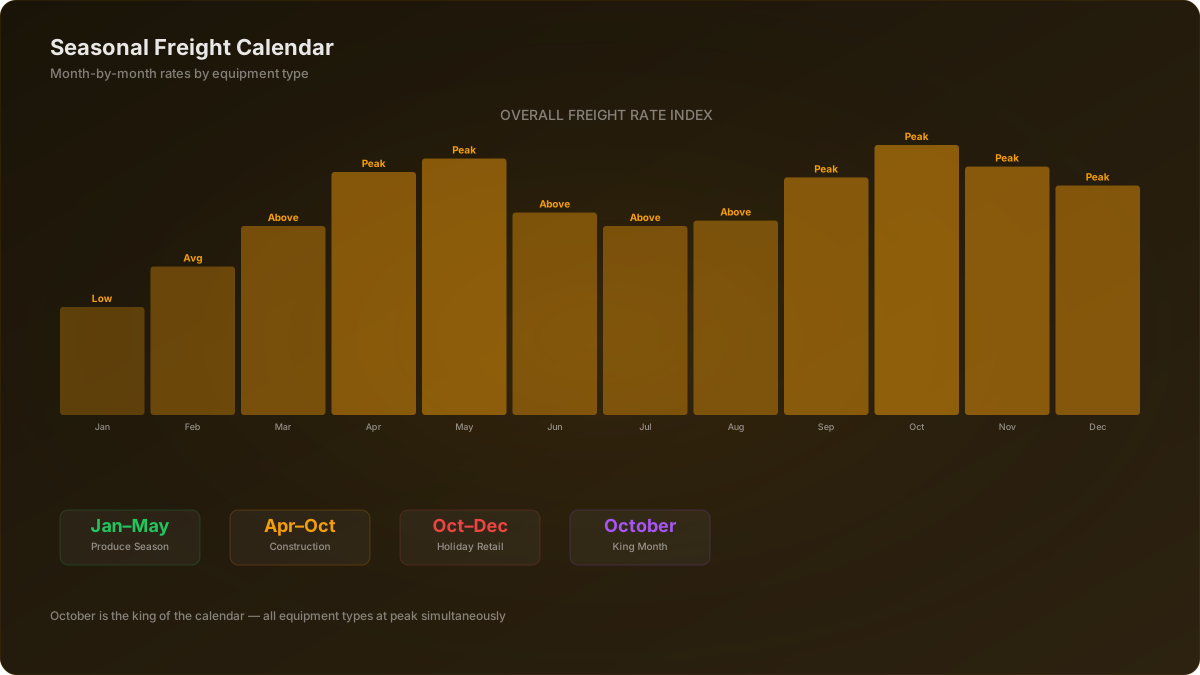
Freight doesn't move at the same pace year-round, and understanding why is the foundation of maximizing your revenue as an owner-operator or fleet. The single biggest driver of seasonality is agriculture. Produce season starts in South Florida every January and migrates northward through the spring and summer — tomatoes, strawberries, onions, peaches, cherries, apples — each crop creating a wave of reefer demand that follows the harvest north. By the time Florida winds down in May, Georgia is peaking, and by the time Georgia slows, Washington cherries are just getting started. This northward produce migration is the most predictable and profitable seasonal pattern in all of trucking.
Construction is the second major seasonal force. Ground-breaking, road work, and building projects require massive volumes of steel, lumber, concrete, heavy equipment, and prefabricated materials — all of which move on flatbed, step deck, and heavy haul equipment. Construction follows weather: it starts earliest in the South (February-March), peaks nationwide in summer, and contracts in northern states by November. This creates a clear flatbed rate curve that mirrors the construction calendar almost perfectly.
Retail is the third force, and it dominates the fourth quarter. Holiday shopping drives an enormous surge in dry van freight from September through December as imported goods flow from ports to distribution centers and then from distribution centers to retail stores. This Q4 retail wave is why October through November typically has the highest dry van spot rates of the entire year. Layer in weather disruptions — winter storms that strand trucks, spring flooding that closes lanes, hurricane season in the Gulf — and you have a freight market that fluctuates significantly month to month. Carriers who understand these patterns and position accordingly can earn 20-40% more annually than carriers who simply take whatever loads come their way.
Month-by-Month Freight Calendar
Below is a month-by-month breakdown of what drives freight demand, which regions are active, and which equipment types are in the strongest position. Use this as your planning guide for when and where to position your truck throughout the year.
January
Below AvgJanuary is the quietest month on the freight calendar for most equipment types. The post-holiday slowdown hits dry van hardest — retailers have overstocked during Q4 and are now working through inventory rather than ordering more. Flatbed is nearly dormant as winter weather halts construction projects across the northern half of the country. The bright spot is South Florida, where produce season kicks off. Reefer demand rises steadily as tomatoes, peppers, strawberries, and early citrus shipments ramp up out of Homestead, Immokalee, and Plant City. If you run reefer, head south. If you run dry van, use January for maintenance, tire replacements, and DOT inspections while rates are low.
February
AverageFlorida produce season is now in full swing, pushing reefer rates in the Southeast to peak levels. Strawberries out of Plant City, tomatoes from Homestead, and bell peppers from Immokalee are all shipping heavy volume. The Rio Grande Valley in Texas begins its citrus and vegetable shipments. Meanwhile, dry van is still sluggish nationally — though you will see slight improvement as some shippers begin spring inventory planning. Oilfield activity in the Permian Basin typically restarts after the holiday slowdown, creating flatbed and heavy haul demand in West Texas and eastern New Mexico. Construction remains minimal in the Midwest and Northeast due to weather.
March
Above AvgMarch marks the real inflection point where freight starts moving upward. Florida produce hits peak stride — blueberries join the mix alongside continued tomato and pepper shipments. The Rio Grande Valley is shipping citrus and vegetables at high volume. Spring weight restrictions begin in the Upper Midwest (Minnesota, Wisconsin, Michigan, the Dakotas), which limits truck weights on rural roads and creates capacity constraints as some carriers avoid affected states. Construction materials begin moving as the thaw hits the mid-South and mid-Atlantic states. Dry van improves noticeably as retailers begin their spring inventory push. Flatbed carriers positioned in the Southeast and Southwest see rates climb as building season starts in earnest.
April
PeakApril is where the freight calendar gets serious. This is peak produce season — Florida blueberries, Georgia Vidalia onions, California strawberries, and Carolinas early crops all ship simultaneously. Reefer demand outstrips supply in the Southeast, driving spot rates to their highest levels of the year for refrigerated equipment. Flatbed hits its stride as construction season is fully underway from the mid-South through the Northeast. Road projects, bridge work, and commercial building all require steel, lumber, concrete, and heavy equipment. Dry van benefits from spring retail and general freight increases. This is the first month where all three major equipment types see strong rates at the same time. If you are going to reposition your truck for seasonal advantage, April is the month to be in the Southeast or California.
May
PeakMay continues the strong freight trends that began in April. Produce season peaks across the Southeast — Georgia peaches and blueberries, Carolinas sweet potatoes, and the tail end of Florida shipments keep reefer rates elevated. Central California enters its busiest period with lettuce, broccoli, cauliflower, and early stone fruit. Flatbed remains strong as construction is in full swing across most of the country, and the residential building season drives lumber and materials demand. Dry van continues to improve as summer retail inventory building begins — outdoor furniture, garden supplies, grills, and seasonal merchandise all need to move from warehouses to stores. Capacity tightens across most major corridors. May often ranks as the best overall month for reefer carriers when considering both rate and volume.
June
Above AvgJune sees a transition in the produce calendar as the center of gravity shifts from the Southeast to California and the Pacific Northwest. Washington state cherry season begins — one of the most time-sensitive (and highest-paying) reefer commodities in the country. California stone fruit (peaches, nectarines, plums) and grapes begin shipping from the San Joaquin Valley. Southeast produce winds down as Georgia and the Carolinas finish their harvests. Construction remains at peak levels, keeping flatbed rates strong. The automotive industry is typically in full production mode, generating consistent dry van freight from manufacturing hubs in Michigan, Ohio, Kentucky, Indiana, and Tennessee. Overall, June is a solid month across all equipment types, though reefer rates in the Southeast dip as produce moves west.
July
Above AvgJuly presents a mixed picture. Washington cherries are at peak volume, California grapes and stone fruit are shipping strong, and summer produce generally keeps reefer rates respectable. Construction is at its annual peak with the longest daylight hours allowing extended work schedules, which means flatbed demand remains high. However, the automotive industry traditionally shuts down for two weeks (usually the first two weeks of July) for model-year changeovers and planned maintenance. This automotive shutdown can soften dry van rates on Midwest lanes that depend heavily on auto parts and finished vehicle components. Some carriers use the slight July softening to take vacation time while rates are not at their absolute peak. Independence Day holiday also creates a short disruption in freight movement around the 4th.
August
Above AvgAugust is the bridge between summer freight patterns and the fall surge. Late-summer produce continues from California and the Pacific Northwest — Washington apples begin their long harvest season. Back-to-school retail creates a noticeable uptick in dry van freight as clothing, electronics, supplies, and furniture ship to stores and dorms across the country. This is often the first clear sign of the Q4 freight wave building. Construction remains strong but some projects begin wrapping up in anticipation of fall. Smart carriers start pre-positioning for the Midwest harvest — grain elevators, ethanol plants, and agricultural processors in Iowa, Illinois, Indiana, Ohio, and Nebraska will need significant truck capacity starting in September. Reefer carriers should consider moving toward the Midwest or staying in the Pacific Northwest where apple and berry harvests continue.
September
PeakSeptember marks the beginning of the fall freight surge — the most intense and sustained period of high demand on the freight calendar. Midwest harvest season kicks off in earnest. Corn, soybeans, wheat, and other grains begin moving from fields to elevators, processors, and export terminals. This creates massive demand for hopper trailers and dry van in rural Midwest corridors. Simultaneously, holiday import season ramps up at major ports — Los Angeles/Long Beach, Savannah, Charleston, Newark, and Houston see container volumes spike as retailers receive goods ordered months ago for the holiday season. These containers need to be drayed to warehouses and then distributed inland, creating cascading demand across intermodal, dry van, and reefer. Rates across all equipment types begin climbing and will generally continue upward through November.
October
PeakOctober is the king of the freight calendar. It is typically the highest-rate month across all equipment types, and for good reason — three massive demand drivers converge simultaneously. Midwest harvest is in full swing, with corn and soybean yields moving at maximum capacity. Holiday import freight from ports is flooding distribution centers nationwide as retailers scramble to stock shelves before Black Friday. And general retail restocking hits its annual peak as consumer spending ramps toward the holidays. California produces continue year-round, adding reefer demand on top of everything else. Flatbed benefits from the final push of construction season before winter, plus heavy equipment moves as projects wrap up. Capacity is genuinely tight in October — if you are on the road with available hours, you are in a strong position to negotiate premium rates on virtually any lane in the country.
November
PeakNovember sustains the October peak with some shifts in composition. Holiday retail freight is at its absolute zenith — Black Friday, Cyber Monday, and the entire Thanksgiving-to-Christmas shopping rush create relentless demand for dry van capacity from distribution centers to retail locations. Washington apple harvest wraps up, ending one of the longest produce seasons in the country. Midwest harvest winds down as corn and soybean fields empty, though grain transport to export terminals and processors continues. Flatbed begins its seasonal slowdown as construction projects close for winter in the northern states, though Southern states (Texas, Florida, the Carolinas) maintain construction activity. Thanksgiving week itself creates a mini-disruption — many drivers take time off, which further tightens capacity and supports elevated rates. Carriers who run through Thanksgiving week often see some of the best spot rates of the entire year.
December
PeakDecember is a tale of two halves. The first two to three weeks maintain the holiday freight rush — retailers making final inventory pushes, e-commerce fulfillment running at maximum speed, and last-minute seasonal shipments keeping dry van and reefer rates elevated. This is especially true for reefer carriers hauling holiday food items: turkeys, hams, dairy products, baked goods, and beverages ship at premium rates to grocery chains and food distributors. Then Christmas hits, and the freight market falls off a cliff. The week between Christmas and New Year is one of the deadest periods in trucking. Shippers close, warehouses run skeleton crews, and load boards thin out dramatically. Rates crater. Smart carriers use late December for home time, maintenance, and tax preparation. The cycle resets in January and the whole seasonal pattern begins again.
Equipment Type x Season Matrix
Different equipment types follow different seasonal curves. Knowing your equipment's best and worst months lets you plan maintenance, home time, and repositioning moves strategically rather than reactively.
Dry Van
Dry van follows the retail calendar closely. Rates bottom out in January when retailers are working through holiday inventory and shippers are budgeting for the new year. The slow climb begins in March, accelerates through back-to-school in August, and peaks during the October-December holiday freight rush. Dry van carriers who can stomach the January-February dip and stay loaded will see rates climb steadily from March through November.
Reefer
Reefer has the most unique seasonal pattern because it follows agriculture rather than retail. Peak reefer rates typically hit February through May as Florida, Texas, Georgia, and California produce ships simultaneously. A second but smaller peak arrives in October-December when holiday food items (turkeys, hams, dairy, baked goods) command premium reefer rates. July and August can be soft between summer produce winding down and fall shipments ramping up.
Flatbed
Flatbed is the most weather-dependent equipment type. When the ground thaws and construction begins, flatbed rates rise. When snow flies and building stops, rates drop. The peak window is April through October when construction activity, road projects, and infrastructure work are in full swing. Southern flatbed carriers have a longer season because construction continues year-round in Texas, Florida, and the Gulf states.
Step Deck
Step deck follows the construction calendar but specifically tracks heavy equipment and oversized loads. Excavators, bulldozers, cranes, industrial components, and prefabricated structures all move on step deck trailers. Demand peaks when large-scale projects are active in summer. Wind farm construction has become a significant step deck market, with tower sections and nacelles moving from manufacturing plants to installation sites primarily from May through September.
Hotshot
Hotshot is less seasonal and more event-driven. Emergency freight, expedited parts, and oilfield servicing create demand throughout the year. When oil prices are high, Permian Basin, Eagle Ford, and Bakken activity drives strong hotshot demand. Hotshot also benefits from being the go-to solution for expedited shipments that can't wait for standard scheduling — a broken-down production line needing a part overnight pays premium regardless of the season.
Heavy Haul
Heavy haul is the most permit-dependent and weather-sensitive equipment category. Oversize and overweight loads require state permits, pilot cars, and often route surveys — all of which are easier to obtain and execute in summer. Wind farm construction (turbine blades, tower sections, nacelles) has become a major heavy haul market, peaking from June through September. Infrastructure projects including bridge beams, transformer units, and industrial equipment also concentrate in warm months when road conditions allow oversized transport.
Regional Produce Calendar
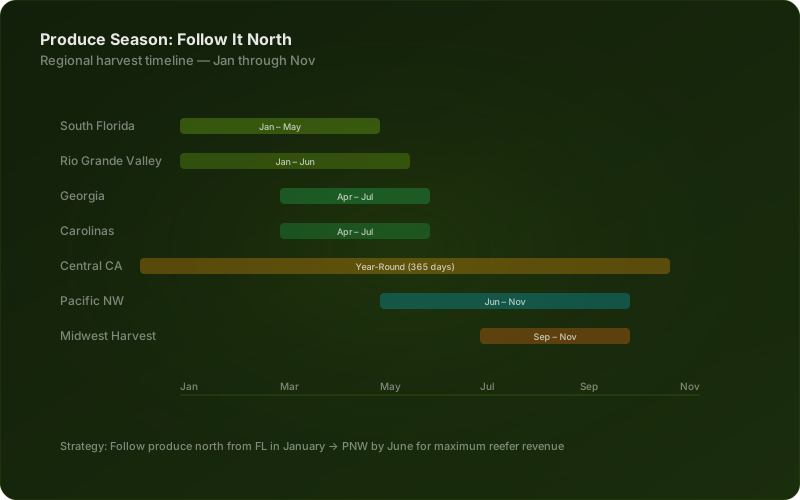
For reefer carriers, produce season is the golden window. Here's when each major agricultural region ships and what commodities drive reefer demand. Following this calendar from south to north is one of the most reliable revenue strategies in the industry.
South Florida
January - MayThe freight year begins here. Homestead, Immokalee, and Plant City are the epicenters. Reefer demand starts building in January and peaks in March-April. Miami and Fort Myers are the primary origin markets. Rates on northbound FL lanes (FL to ATL, FL to Northeast) reach annual highs for reefer during this window.
Rio Grande Valley, TX
January - JuneThe Valley ships overlapping with Florida, creating dual-source reefer demand in the first half of the year. McAllen, Weslaco, and Edinburg are key origins. Cross-border produce from Mexico also transits through Laredo and McAllen, adding to reefer demand. Texas-to-Midwest and Texas-to-Northeast lanes pay well during this period.
Georgia
April - JulyGeorgia bridges the gap between Florida winding down and the mid-summer produce season. Vidalia onions are a signature crop — the entire annual harvest ships in a compressed April-June window, creating intense short-term reefer demand. Georgia peaches follow immediately. Tifton, Vidalia, and Fort Valley are primary origin points. GA-to-Northeast lanes see premium reefer rates in April-May.
Central California
Year-round (365 days)The San Joaquin Valley and Salinas Valley are the most productive agricultural regions in the United States — and they ship every single day of the year. California accounts for over a third of all US vegetables and two-thirds of all US fruits. The Salinas Valley (the "Salad Bowl of the World") ships lettuce and leafy greens year-round. Stone fruit peaks in June-August. Grapes ship July-November. There is never a dead period for reefer in California, making it the most consistent produce market in the country.
Carolinas
April - JulyNorth Carolina is the top sweet potato producing state in the country, and while the harvest is in fall, sweet potatoes ship from controlled-atmosphere storage facilities year-round. The Carolinas also contribute peaches, blueberries, and watermelons during their spring-summer growing season. Eastern North Carolina (Benson, Clinton, Nashville) and South Carolina (Edgefield, Ridge Spring) are key origin markets.
Pacific Northwest
June - NovemberWashington state is the crown jewel of Pacific Northwest produce. Cherry season (June-August) creates some of the highest per-mile reefer rates in the country because cherries are extremely time-sensitive — they must be cooled and shipped within hours of picking. Washington apples have the longest harvest season, running from August through November, providing sustained reefer demand for months. The Yakima Valley, Wenatchee, and the Columbia Basin are primary origin markets.
Midwest
September - NovemberThe Midwest harvest is less of a reefer event and more of a dry van, hopper, and grain trailer event — but the sheer volume is staggering. Iowa, Illinois, Indiana, Ohio, Minnesota, and Nebraska produce billions of bushels of corn and soybeans that must move from fields to grain elevators, ethanol plants, feed lots, and export terminals. This creates massive demand for truck capacity in rural corridors from September through November, coinciding with the Q4 retail surge to create the tightest capacity of the year.
How to Position for Seasonal Peaks
Understanding the seasonal calendar is only half the equation. The real money comes from acting on this knowledge — positioning your truck in the right market before demand peaks, not after. Here are four strategies that consistently separate high-earning carriers from the pack.
Follow the Produce North
If you run reefer, this is the single most profitable strategy available to you. Start in South Florida in January. As Florida produce winds down in April-May, reposition to Georgia for Vidalia onions and peaches. By June, move to California for stone fruit and the Pacific Northwest for cherries. July through November keeps you in Washington for apples. This northward migration keeps your reefer in peak-demand markets for seven to ten months out of the year. The carriers who earn the most on reefer are the ones who plan this migration in advance rather than chasing loads reactively.
Pre-Position for Harvest Season
The Midwest harvest creates enormous demand in September through November, but the best rates go to carriers who are already in position when demand spikes. If you run dry van or hopper, plan to be in Iowa, Illinois, Indiana, or Nebraska by late August. Take a lower-paying load to get into the region if you have to — the premium rates from September onward more than make up for the repositioning cost. Grain elevators, ethanol plants, and agricultural processors often book capacity in advance with carriers they know are local and available.
Build Broker Relationships Before the Peak
When rates peak in October, every carrier is calling the same brokers for the same loads. The carriers who get preferred access to the best freight are the ones who built relationships during slower months. Use January and February to reach out to brokers in regions you plan to work during peak season. Move a few loads at decent (not great) rates to prove your reliability. When October arrives and that broker has ten carriers calling, you want to be the one they already trust. This strategy applies to every peak — produce, construction, and retail.
Use Slow Months Strategically
January and February are the slowest months for most equipment types, and most carriers view this as a problem. Smart carriers view it as an opportunity. Schedule your annual DOT inspection, replace worn tires, perform preventive maintenance, update your insurance, file your IFTA taxes, and renew your permits — all during the slow season when you are not giving up premium revenue to sit in a shop. Every day your truck is in the shop during October costs you significantly more than a day in the shop during January. Plan your downtime when the freight market pays you the least for your uptime.
Related Resources
- Regional Freight Guides — Deep dives into freight patterns for every major US region
- How to Avoid Deadhead Miles — Reduce empty miles between seasonal repositioning moves
- Deadhead Calculator — Calculate the true cost of repositioning to a seasonal market
- Rate Negotiation Tips — How to maximize your rate once you are in a peak market
Truck Dispatch Experts
Published March 1, 2026