What Is the Load-to-Truck Ratio?
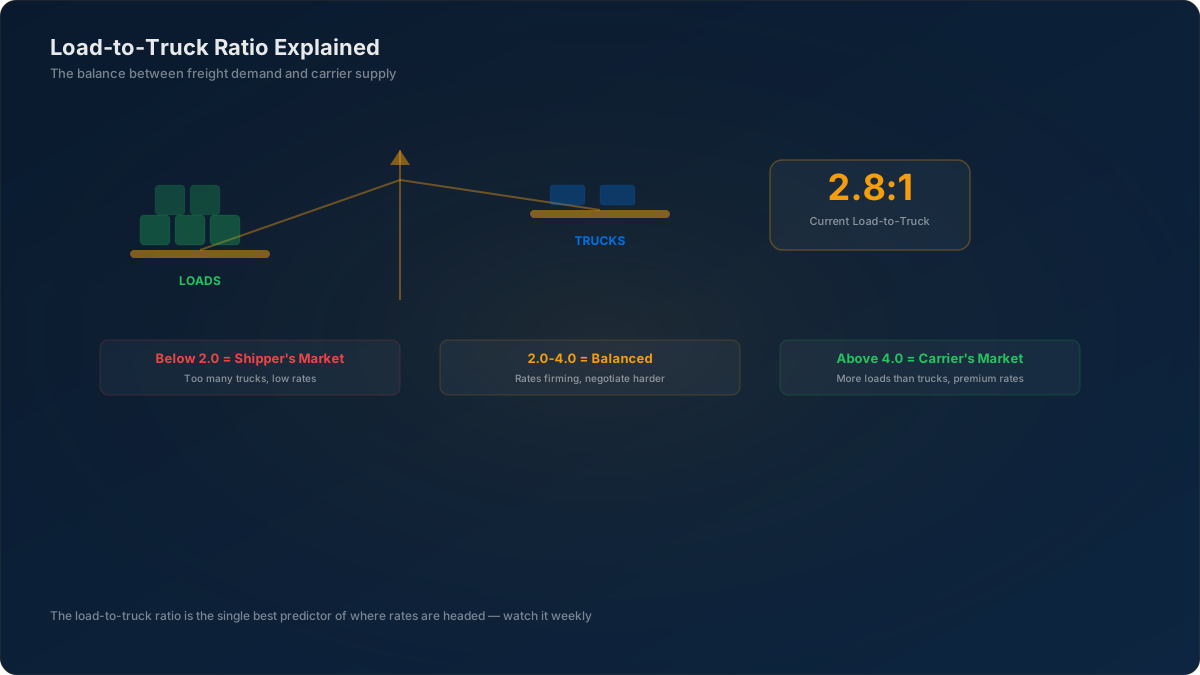
The load-to-truck ratio is the freight market's supply-and-demand scoreboard. It measures how many available loads exist for every available truck on freight matching platforms. When the ratio is high, there are more loads than trucks — carriers have leverage and rates go up. When it is low, there are more trucks than loads — shippers have leverage and rates go down.
In March 2026, the national load-to-truck ratio stands at 7.73 according to DAT Trendlines. That means for every truck posting availability, there are nearly eight loads looking for a carrier. For context, this ratio peaked at 9.9 in December 2025 — a level that created intense competition among shippers for available trucks and drove spot rates sharply higher.
If you only follow one number in the freight market, this is the one. Not fuel prices, not stock market indices, not GDP forecasts. The load-to-truck ratio tells you, in real time, whether you are in a position to negotiate aggressively or whether you need to take what you can get. Everything else is secondary.
7.73
Current Ratio (March)
Strong carrier market
9.9
December 2025 Peak
Highest in recent history
$2.41/mi
Spot Van Rate
Follows the ratio upward
How DAT Calculates the Load-to-Truck Ratio
DAT operates the largest freight matching network in North America. Their load-to-truck ratio is derived from the actual load postings and truck postings (equipment availability postings) across their platform, which processes millions of transactions daily.
The calculation is conceptually simple: divide the number of load postings by the number of truck postings for a given market, lane, or equipment type over a specific time period. A market with 7,730 loads posted and 1,000 trucks posted would have a ratio of 7.73. DAT publishes this data at the national level, by equipment type (dry van, reefer, flatbed), and by individual lane (origin-destination pair).
Important nuance: The ratio measures posted availability, not all trucks on the road. Many carriers operate on dedicated contracts or direct shipper relationships and never post on load boards. Similarly, many loads are covered through contracted capacity and never appear as a posting. The ratio captures the spot market specifically — but because the spot market is where marginal pricing happens, it is the best real-time indicator of market tightness and rate direction.
FreightWaves SONAR provides complementary metrics including the Outbound Tender Volume Index (OTVI) and the Outbound Tender Rejection Index (OTRI) that measure the contract market side. Together, DAT's load-to-truck ratio and FreightWaves' OTRI give you a complete picture of both spot and contract market conditions.
What Different Ratios Mean for Your Business
Not all ratios are created equal. The difference between a 2:1 market and an 8:1 market is the difference between scrambling for loads and choosing between them. Here is a practical framework for interpreting the ratio and adjusting your strategy:
| Ratio Range | Market | Rate Impact | Carrier Strategy |
|---|---|---|---|
| 1:1 - 2:1 | Oversupplied | Rates declining | Lock contracts, reduce spot exposure |
| 2:1 - 4:1 | Balanced / Soft | Rates flat to slight decline | 60/40 contract-to-spot split |
| 4:1 - 6:1 | Tightening | Rates climbing | 50/50 or shift toward spot |
| 6:1 - 8:1 | Tight | Strong rate growth | 60/40 spot-to-contract, push rates |
| 8:1+ | Very Tight | Carrier pricing power | 70/30 spot-to-contract, reject cheap loads |
At the current 7.73 ratio, the market is firmly in the "tight" zone. Carriers should be pushing rates aggressively, favoring spot freight over contract on premium lanes, and rejecting loads that fall below their target revenue per mile. For a detailed breakdown of how to capitalize on these conditions, see our guide on maximizing revenue when spot rates are up 20%.
Recent Ratio History: The Recovery in Numbers
The load-to-truck ratio tells the story of the freight market recovery more clearly than any other metric. Here is how the ratio has moved since the market bottom in August 2025, alongside corresponding spot van rates:
| Period | Load-to-Truck Ratio | Spot Van Rate | Context |
|---|---|---|---|
| Aug 2025 | ~3.5 | $2.03/mi | Market bottom |
| Oct 2025 | ~5.2 | $2.18/mi | Recovery begins |
| Dec 2025 | 9.9 (peak) | $2.35/mi | Holiday peak + capacity crunch |
| Jan 2026 | ~6.8 | $2.28/mi | Post-holiday + Storm Fern |
| Mar 2026 | 7.73 | $2.41/mi | Sustained tight market |
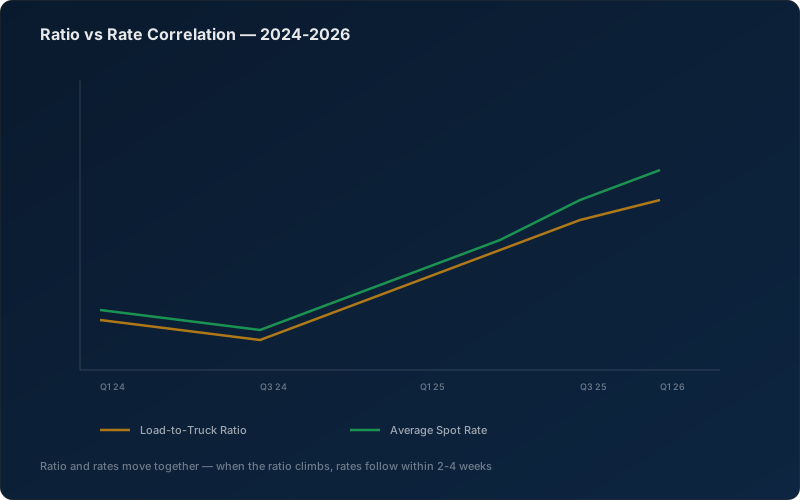
The pattern is unmistakable: as the ratio climbed from 3.5 to 7.73, spot van rates followed from $2.03 to $2.41 per mile. The ratio leads rates — when you see the ratio climbing, rates will follow within days to weeks. When the ratio peaked at 9.9 in December 2025, it set the stage for the rate acceleration we are seeing now in Q1 2026.
This is why the ratio is predictive, not just descriptive. If the ratio is climbing and you are not adjusting your rate expectations upward, you are leaving money on the table. If the ratio starts declining, it is a signal to lock in more contract freight before rates follow it down. For a full forecast of where rates are heading through the rest of 2026, see our 2026 trucking industry forecast.
Regional Variations: Why Lane-Level Data Matters
The national ratio of 7.73 is useful for understanding the overall market direction, but your revenue is determined by lane-specific ratios that can differ dramatically from the national average. A reefer lane from Lakeland, Florida to Philadelphia might show a ratio of 15:1 during produce season, while a dry van lane from Chicago to Kansas City might sit at 3:1 at the same time.
High-ratio regions (March 2026): Southeast outbound (produce season driving reefer ratios above 10:1), Texas cross-border northbound (manufacturing imports pushing ratios above 8:1), California outbound (CARB regulations limiting available trucks, ratios above 7:1), and Northeast during weather events (constrained capacity in winter months). These are the regions where the highest rates are available. For specific regional rate data, check our best and worst states for trucking guide.
Low-ratio regions (March 2026): Inbound Florida (everyone delivers to FL but fewer loads come out), inbound Laredo (trucks return empty from cross-border deliveries), and Midwest-to-Midwest short-haul (high truck availability, fragmented freight). These are markets where rates are depressed regardless of the national average. Delivering into these areas without a pre-booked outbound load is a common profit killer.
How to use lane-level ratios: Before accepting any load, check the ratio at your delivery point, not just your current location. A load paying $2.80 per mile that delivers you into a 2:1 market is often worse than a load paying $2.50 per mile that delivers you into a 9:1 market. The second load sets you up for a premium outbound, while the first strands you in an oversupplied zone where you might sit for a day or drive 200 empty miles to find freight. This is where thinking one or two loads ahead — something a good dispatch service does constantly — can be worth hundreds of dollars per week.
How the Ratio Connects to Other Market Indicators
The load-to-truck ratio does not exist in isolation. It is part of an ecosystem of freight market indicators that together tell you exactly where the market is and where it is heading. Here is how it connects to the other key metrics:
Tender Rejection Rate (OTRI): When the load-to-truck ratio rises above 5:1, carriers start rejecting contract loads because spot rates are more attractive. The current national OTRI of 14% corresponds directly with the 7.73 load-to-truck ratio. When OTRI stays above 12% for eight or more consecutive weeks, contract rate increases of 5-10% typically follow. Both metrics are saying the same thing right now: carriers have pricing power. See our detailed look at the 2026 freight rate recovery.
Spot Rates: The load-to-truck ratio is the leading indicator; spot rates are the lagging result. When the ratio climbs, spot rates follow — usually within one to two weeks. The seven consecutive months of rising spot van rates (from $2.03 in August 2025 to $2.41 in late February 2026) mirror the steady increase in the load-to-truck ratio over the same period. If you watch the ratio, you can anticipate rate changes before they show up in the published averages.
Diesel Prices: The load-to-truck ratio measures demand relative to supply, while diesel prices affect operating costs. A rising ratio with rising diesel prices means rates need to increase even more to maintain carrier margins. A rising ratio with stable or declining diesel prices is the best-case scenario for carrier profitability — rates go up while costs stay flat. For current diesel analysis, see our diesel price outlook.
Carrier Population: The load-to-truck ratio reflects the current capacity picture, but the carrier population trend tells you where capacity is headed. With 88,000 authorities revoked in 2023, 5,000-8,000 carriers exiting in 2025, and insurance barriers at record levels ($0.102/mile average premiums), the carrier population is not expanding anytime soon. This structural constraint means the load-to-truck ratio is likely to remain elevated through 2026 even if freight demand softens moderately.
How to Use the Ratio in Your Daily Operations
Knowing the load-to-truck ratio is useless if you do not act on it. Here is a practical daily workflow for incorporating ratio data into your business decisions:
Morning check: Before you start your day, check the national ratio and the ratio for your current market on DAT Trendlines. If the ratio in your market is above 6:1, you are in a strong position — set your minimum acceptable rate 10-15% above the lane average and hold firm. If it is below 4:1, you may need to be more flexible or consider repositioning to a tighter market.
Load evaluation: For every load you consider, check two ratios. First, the ratio at your current location (tells you how much leverage you have now). Second, the ratio at the delivery destination (tells you what your next load opportunities look like). A load that delivers you into a high-ratio market is inherently more valuable than one that dumps you in a dead zone, even at the same rate. Use our Deadhead Calculator to quantify the full-trip economics.
Weekly planning: At the start of each week, review the national trend. Is the ratio climbing, flat, or declining? If climbing, plan to run more spot. If flat, maintain your current mix. If declining, start locking in more contract freight. Use our spot vs contract guide for the optimal allocation framework.
Let your dispatcher do the heavy lifting. If this sounds like a lot of data to monitor while also driving a truck — it is. This is one of the core reasons why professional dispatch increases revenue by 10-30%. A dispatcher who monitors ratio data across all major lanes in real time can make faster, more informed booking decisions than a driver checking a phone between stops. They see the full market picture while you focus on driving safely and delivering on time. To see how our team uses market data to optimize your revenue, visit our dispatch services page or contact us for a consultation.
The Bottom Line
The load-to-truck ratio is not a complicated metric. It is a simple count of loads versus trucks. But that simplicity is its power — it cuts through all the noise and tells you exactly one thing: who has leverage right now, carriers or shippers?
At 7.73 in March 2026, the answer is clear: carriers have leverage. Spot van rates have climbed for seven consecutive months. The OTRI is at 14%. The carrier base is structurally thinner than it has been in years. And every disruption event — from Winter Storm Fern to seasonal demand surges — amplifies the tightness because there is no reserve capacity to absorb shocks.
If you are an owner-operator who survived the freight recession, the load-to-truck ratio is telling you that your perseverance is paying off. Use it. Check it daily. Let it guide your rate negotiations, your lane selections, and your spot-to-contract allocation. And if you want someone monitoring it for you around the clock, that is exactly what professional dispatch is built to do.
Frequently Asked Questions
What is the load-to-truck ratio in simple terms?
The load-to-truck ratio measures how many available loads exist for each available truck on load boards and freight matching platforms. A ratio of 7.73 — the current March 2026 reading — means there are approximately 7.73 loads posted for every truck looking for freight. The higher the ratio, the more demand exceeds supply, which gives carriers pricing power because shippers are competing for limited truck capacity. The lower the ratio, the more trucks are competing for limited freight, which pushes rates down. It is calculated separately for dry van, reefer, and flatbed equipment types, and varies significantly by region and lane. DAT, the largest freight data provider in North America, publishes this metric daily based on millions of load and truck postings across their network.
What is considered a good load-to-truck ratio for carriers?
For carriers, higher ratios are better because they indicate more freight demand relative to available truck capacity, which translates to higher rates and more negotiating leverage. A ratio above 5:1 generally means rates are climbing and carriers can be selective about which loads they accept. A ratio above 8:1 indicates strong carrier pricing power — shippers are struggling to find trucks and will pay premium rates. The current March 2026 ratio of 7.73 sits firmly in carrier-favorable territory. A ratio at or below 2:1 means capacity exceeds demand — this is a shipper's market where rates are depressed and carriers may need to accept lower-paying loads to keep their trucks moving. During the freight recession of 2023-2024, ratios on many lanes dropped below 2:1.
How often does the load-to-truck ratio change?
The load-to-truck ratio changes constantly — DAT updates their data in near real-time based on load postings and truck availability across their network. On a practical level, the ratio can shift significantly within a single day based on weather events, shipper activity patterns, day of the week, and seasonal factors. Monday mornings typically see higher ratios as shippers post weekend backlogs. Friday afternoons tend to see lower ratios as weekly freight is covered. Seasonal shifts are dramatic: produce season (March through June) drives reefer ratios sharply higher in the Southeast, while holiday peak season (September through December) elevates ratios across all equipment types nationally. The December 2025 peak of 9.9 reflected a combination of holiday demand and reduced carrier availability during the holiday shutdown period.
How does the load-to-truck ratio relate to tender rejections?
The load-to-truck ratio and tender rejection rates are closely correlated because they measure related dynamics from different angles. The load-to-truck ratio measures supply and demand on the spot market (load boards), while tender rejections measure how often carriers decline contracted freight. When the load-to-truck ratio rises above 5:1, carriers start rejecting contract loads because they can find better-paying freight on the spot market — which pushes tender rejection rates higher. In March 2026, the load-to-truck ratio of 7.73 corresponds with a national OTRI of 14%, the highest since mid-2022. Historically, when OTRI stays above 12% for eight or more consecutive weeks, contract rate increases of 5 to 10 percent follow within one to two quarters. Both metrics together give you a comprehensive picture of market tightness.
Can I check the load-to-truck ratio for specific lanes?
Yes, and you should. National ratios tell you the overall market direction, but lane-specific ratios determine your actual rate on a given load. DAT RateView and DAT Power provide lane-level load-to-truck ratios for specific origin-destination pairs, updated daily. Truckstop.com and FreightWaves SONAR also provide regional and lane-level capacity metrics. The difference between lanes can be enormous: a Southeast produce corridor might show a reefer ratio of 15:1 during peak season while an inbound Florida lane might show 1.5:1 at the same time. Checking lane-specific ratios before negotiating a rate ensures you are not accepting $2.20 per mile on a lane where the ratio supports $3.00 per mile. Your dispatcher should be checking these ratios on every load negotiation as part of their standard workflow.
How should owner-operators use the load-to-truck ratio daily?
Use the load-to-truck ratio as your primary market intelligence tool for three daily decisions. First, rate negotiation: before accepting or countering any rate, check the ratio for that lane. If it is above 5:1, push back aggressively — the broker likely needs your truck more than you need their load. If it is below 3:1, you may need to be more flexible. Second, lane selection: when choosing between multiple available loads, factor in the ratio at both your delivery point and origin. A load delivering to a market with a 10:1 outbound ratio sets you up for a premium next load, even if the initial rate is slightly lower. Third, spot vs contract allocation: when the national ratio is above 6:1, shift more capacity to spot. Below 4:1, lean heavier into contracts. A professional dispatch service monitors these ratios continuously across all major lanes to make data-driven booking decisions for your truck.