Why Your Choice of Dispatcher Matters
Your dispatch service directly controls your revenue, your miles, and your daily stress level. A great dispatcher can be the difference between grossing $12,000/month and $18,000/month. A bad one can burn through your cash reserves in weeks with low-paying loads and excessive deadhead.
The trucking dispatch industry has grown rapidly, and quality varies enormously. Some companies are run by veteran dispatchers with decades of experience. Others are startups with minimal freight market knowledge. This guide gives you a framework to tell the difference.
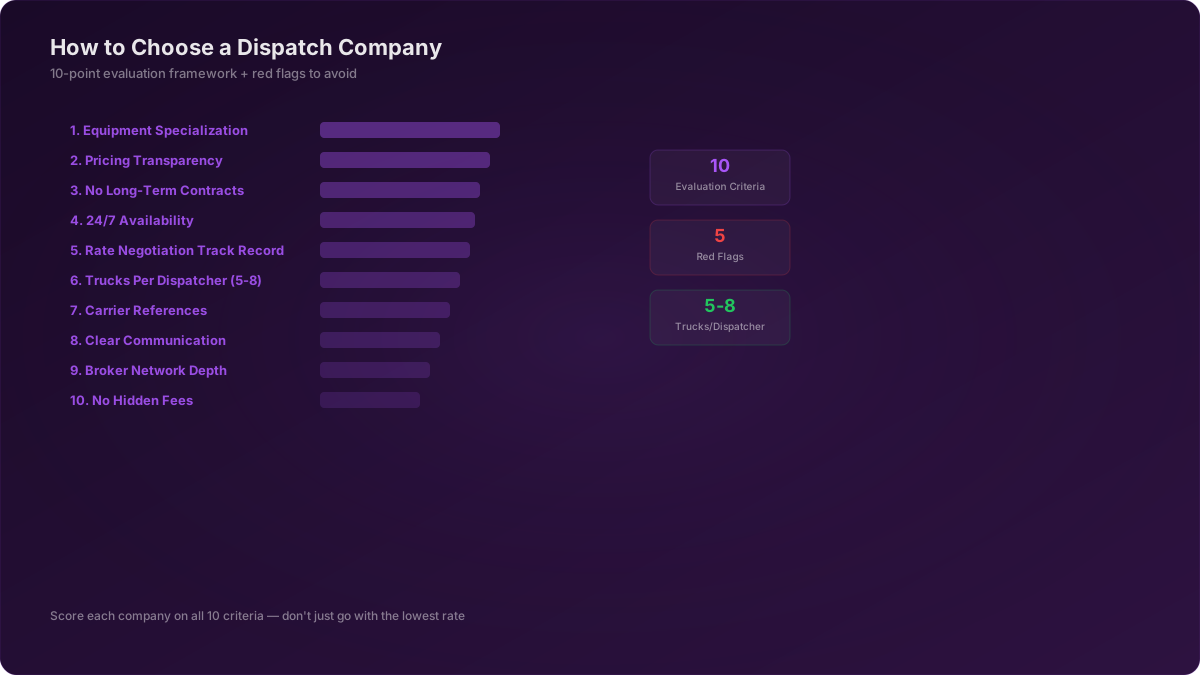
10 Criteria for Evaluating a Dispatch Company
Equipment Specialization
The most critical factor. Does the company have dispatchers who specialize in your trailer type? A dry van dispatcher who suddenly handles your reefer won't know temperature requirements, appointment windows, or which shippers pay premiums for temperature-controlled freight.
Pricing Transparency
Know exactly what you'll pay. Ask: Is it a percentage or flat fee? What percentage? Are there any additional fees (setup, technology, administrative)? When is payment due? Can charges change without notice? The best companies have simple, transparent pricing.
Contract Terms
Read every word. Beware of companies requiring 6-12 month contracts with early termination fees. Industry-leading services operate on month-to-month or no-contract terms because their performance speaks for itself. A 30-day notice period is standard and reasonable.
Communication & Availability
How will your dispatcher communicate with you? Phone, text, app, email? How quickly do they respond? Are they available on weekends and evenings? Test this during the evaluation — call their number at 8 PM on a Saturday. If no one answers, that tells you something.
Load Quality & Lane Expertise
Ask what load boards and shipper relationships they use. A company relying solely on one load board is limited. The best dispatchers use multiple boards (DAT, Truckstop, 123Loadboard) plus direct shipper contracts and established broker relationships.
Dispatcher-to-Truck Ratio
A dispatcher managing 5-8 trucks can give each one proper attention. More than 10 trucks per dispatcher means you're sharing attention with too many others. Ask specifically how many trucks your assigned dispatcher handles.
References from Similar Operations
Ask for references from carriers running the same equipment type in similar regions. A dispatch company might be excellent for dry van in the Southeast but terrible for flatbed in the Midwest. Relevance matters.
Track Record & Reputation
Check online reviews, trucking forums (Reddit r/Truckers, TheTruckersReport), and social media. But take online reviews with context — no company satisfies everyone. Look for patterns, not individual complaints.
Paperwork & Invoicing Support
Will they handle rate confirmations, BOLs, PODs, and invoicing? What about detention pay and accessorial charges? The best dispatch services handle all documentation and ensure you get paid for every billable service.
Technology & Reporting
Can you see your loads, rates, and performance metrics? Some companies provide dashboards or apps that give you visibility into your dispatch activity. This transparency helps you evaluate whether the service is delivering value.
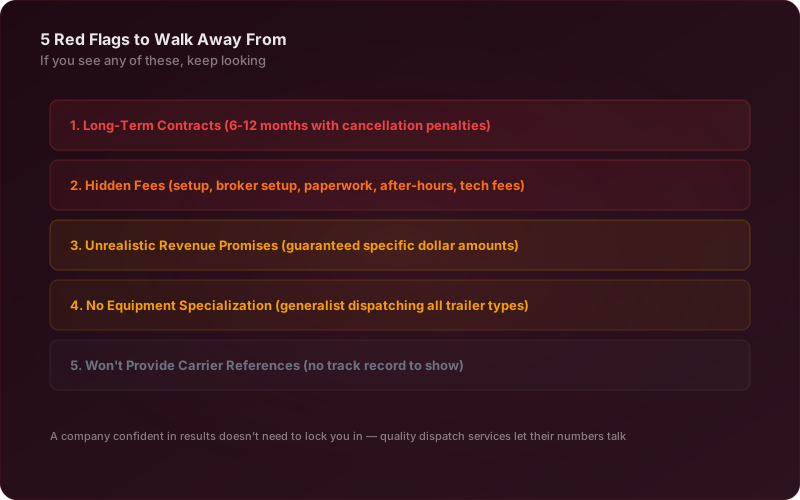
Red Flags to Watch For
- ✗Guaranteed income promises — No legitimate dispatcher can guarantee specific revenue. Markets fluctuate.
- ✗Upfront setup fees — Quality companies don't charge to start. They earn through performance.
- ✗No equipment specialization — "We dispatch everything" often means "We're not expert in anything."
- ✗Demanding MC authority access — Your dispatcher should never need your FMCSA login credentials.
- ✗Poor onboarding communication — If they're slow or unresponsive before you sign up, it won't improve after.
Questions to Ask Before Signing Up
Print this list and use it when evaluating any dispatch company:
- What is your exact fee structure? Any additional charges?
- Do you specialize in my equipment type?
- How many trucks does my assigned dispatcher handle?
- What load boards and shipper relationships do you use?
- What are your contract terms? Can I leave at any time?
- Who handles paperwork and invoicing?
- What are your hours of operation? Weekend coverage?
- Can I speak with current carriers as references?
- How do you handle detention pay and accessorials?
- What reporting or visibility do I get on my loads?
A company that answers all of these confidently and transparently is worth trying. One that dodges or deflects on multiple questions is one to avoid. Ready to evaluate us? Check our transparent pricing or get started with a free consultation.
Truck Dispatch Experts
Published Mar 5, 2025 · Updated Feb 1, 2026