The Numbers Behind the Shortage
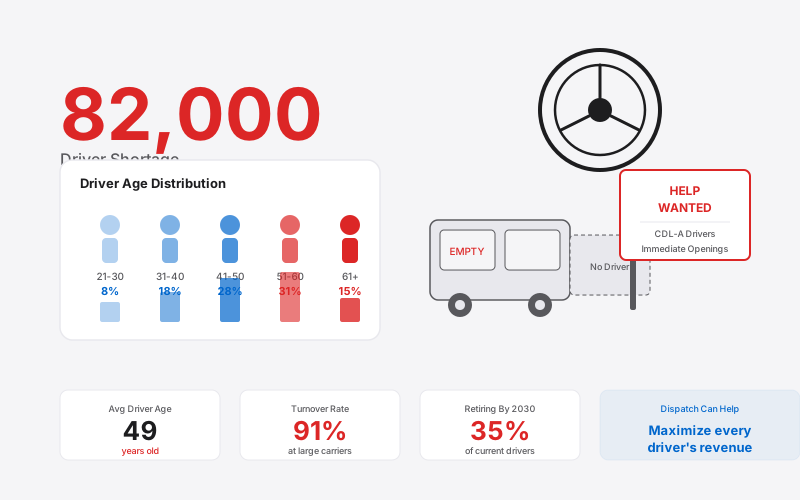
The American Trucking Associations' latest workforce report puts the 2026 driver shortage at approximately 82,000 — a number that has been climbing steadily since the pandemic disruption. But the raw number understates the operational impact. The shortage is not distributed evenly. It hits hardest in long-haul truckload, specialized flatbed and heavy haul, and routes that require extended time away from home.
According to the Bureau of Labor Statistics, the median age of heavy and tractor-trailer truck drivers is 57. That means a large portion of the workforce is within a decade of retirement, and the pipeline of replacements is not keeping up. The industry needs to recruit roughly 1.2 million new drivers over the next decade just to replace retirees and meet growing freight demand.
82,000
Driver shortfall
57
Median driver age
90%
Annual turnover (large carriers)
160K+
Projected shortage by 2031
Why the Shortage Keeps Getting Worse
The driver shortage is not a single problem — it is five problems stacked on top of each other. Understanding each one matters because they affect different freight segments differently.
1. Demographics. The average trucker is 57 years old. Baby boomers who entered trucking in the 1980s and 1990s are retiring in waves. The industry loses roughly 100,000 drivers to retirement annually, and new CDL holders number only about 50,000-60,000 per year.
2. Age restrictions. Federal law still requires drivers to be 21 to operate commercially across state lines. The FMCSA's DRIVE-Safe Act pilot programs allow limited 18-20 year-old interstate driving with enhanced training, but enrollment remains small. This creates a 3-year gap where potential drivers choose other careers.
3. Lifestyle demands. Long-haul trucking requires weeks away from home, irregular sleep, limited food options, and significant time sitting. Younger workers who grew up with gig economy flexibility are less willing to accept these tradeoffs. The result: retention is the industry's biggest challenge, not recruitment.
4. Insurance barriers. Most carriers and brokers require drivers to be 23+ with two years of CDL experience and a clean record. This effectively creates a two-year waiting period even after a new driver gets licensed, during which they can only work for training carriers at lower pay.
5. Drug testing disqualifications. Since the FMCSA Drug & Alcohol Clearinghouse launched, over 200,000 drivers have been placed in prohibited status. Many never complete return-to-duty requirements. This permanently removes drivers from the qualified pool.
How the Shortage Pushes Rates Up
The connection between driver shortage and freight rates is direct. When shippers post loads and fewer trucks are available to cover them, carriers gain pricing power. The key metric to watch is the Outbound Tender Rejection Index (OTRI) tracked by FreightWaves SONAR. When OTRI rises, it means carriers are rejecting a higher percentage of contracted loads — typically because they can find better-paying freight elsewhere. In March 2026, OTRI sits at 14.2%, up from 8.5% a year ago. That is a strong indicator of tightening capacity.
The rate impact varies by equipment type:
| Equipment | Avg Spot Rate | YoY Change | Shortage Impact |
|---|---|---|---|
| Dry Van | $2.65/mi | +18% | Moderate |
| Reefer | $3.15/mi | +22% | High |
| Flatbed | $3.35/mi | +25% | Very High |
| Heavy Haul | $5.50+/mi | +30% | Severe |
Source: DAT Trendlines, FreightWaves SONAR, March 2026 averages.
Where the Shortage Hits Hardest
Not every region or lane feels the shortage equally. The areas with the most acute driver scarcity in 2026 are:
Southeast (FL, GA, SC, AL) — Florida's produce season creates massive seasonal demand that the local driver population cannot fill. Owner-operators who can reposition to Florida in January through May command $0.50-$0.75/mile premiums on northbound produce loads. See our Southeast Freight Guide for detailed lane data.
Mountain West (MT, WY, ID, ND) — Low population density means few local drivers. Energy sector freight (oil field equipment, wind turbine components) requires specialized experience. Flatbed and step deck operators can earn $4.00-$5.50/mile on these lanes.
Cross-border (TX, MI, NY) — The tariff ruling has increased cross-border freight volume, but drivers with border credentials remain scarce. Laredo, El Paso, and Detroit crossings all face capacity constraints.
Specialized equipment nationwide — Heavy haul, tanker, and hazmat drivers require additional endorsements and experience. The qualified pool is 60-70% smaller than general truckload, making these segments structurally tight regardless of the broader market cycle.
How Owner-Operators Can Capitalize
The driver shortage is fundamentally good news for independent carriers. Here is how to position yourself to capture the maximum benefit:
1. Know your cost per mile. Higher rates only matter if you know your breakeven. Use our Cost Per Mile Calculator to establish your floor, then negotiate from a position of knowledge rather than desperation.
2. Target tight markets. Follow the capacity data, not just the load board. When OTRI spikes in a region, rates follow within 24-48 hours. A professional dispatcher tracks these shifts in real time and routes you into the highest-paying areas before load board rates catch up.
3. Consider specialization. If you have the experience and endorsements for flatbed, reefer, or heavy haul, lean into it. The rate premium for specialized equipment is 20-40% above dry van, and the shortage is more acute. Even within dry van, targeting specific freight niches (high-value electronics, medical supplies) commands premium rates.
4. Get dispatch support. The worst thing you can do in a tight market is self-dispatch from a truck stop, taking the first load that appears on a load board. When capacity is scarce, the spread between the worst and best available rate on any given lane widens to $0.50-$1.00/mile. A professional dispatch service captures that upside by negotiating every load while you drive.
5. Lock in contracts strategically. The spot vs contract decision matters more in a shortage. Consider locking 50-60% of your capacity into contracts at elevated rates, keeping the rest flexible for spot market peaks. Your dispatcher can help you find the right mix.
The Bottom Line
The 2026 driver shortage is structural, not cyclical. It is not going away. Every year, more experienced drivers retire than new ones enter, and no policy change on the horizon will reverse that math quickly. For owner-operators who are already in the game, this is the tailwind you have been waiting for — higher rates, more load options, and greater leverage with brokers.
The carriers who benefit most are the ones who combine the market tailwind with smart execution: knowing their costs, targeting the right markets, and having a dispatch team that turns market data into dollars per mile. If you want to talk through how to position your operation for a tight freight market, reach out to our dispatch team. No contracts, no pressure — just a conversation about where the opportunities are right now.
Related Resources
- 2026 Freight Rate Recovery — Detailed rate trends by equipment and region
- Highest Paying Trucking Jobs 2026 — Salary rankings across every category
- Spot Market vs Contract Freight — Which strategy wins in a tight market
- Dispatch ROI Calculator — See if professional dispatch pays for itself with your numbers
- Company Driver vs Owner-Operator — Is now the time to make the jump?
- Amazon Relay Review 2026 — Is Amazon Relay a viable alternative for carriers?
- Truck Parking Crisis 2026 — How the parking shortage impacts driver retention
Truck Dispatch Experts
Published Mar 6, 2026