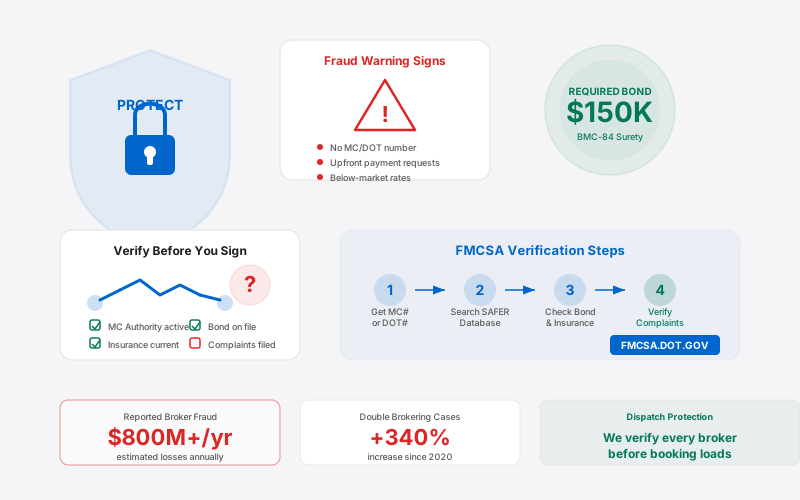
The Broker Fraud Problem
If you have been in trucking long enough, you know the drill. You book a load, haul it 800 miles, deliver on time, and then the broker vanishes. No payment, no returned calls, just a disconnected phone number and a worthless rate confirmation. Or worse: you get paid $1,200 for a load the shipper paid $2,800 for, because two middlemen clipped the rate before it reached you.
Double brokering and broker fraud have exploded in recent years. The FMCSA received over 8,000 complaints in 2025 — a 4x increase since 2021. The Transportation Intermediaries Association estimates the total cost to carriers at $700 million to $1 billion annually. These are not just statistics. Each complaint represents a carrier who did the work and did not get paid.
The good news: 2026 brings the most significant regulatory response to broker fraud in a decade. Here is what is changing.
$150K
New minimum bond
$50K
Per-violation penalty
8,000+
FMCSA complaints (2025)
$700M+
Annual carrier losses
Three New Rules That Change the Game
1. Doubled Surety Bond ($75K → $150K) — Effective July 2026, all property brokers must maintain a minimum $150,000 surety bond or trust fund. The current $75,000 requirement, unchanged since 2013, was routinely exhausted in fraud cases, leaving most affected carriers with no recovery. The doubled amount provides a larger pool for claims, though it still may not cover large-scale fraud. Critically, the new rule requires real-time bond status transparency: carriers will be able to verify a broker's bond balance before booking.
2. Double Brokering Prevention (Load Tracking) — Effective January 2027, brokers must use load tracking technology that verifies the carrier actually performing transportation matches the carrier on the bill of lading. This eliminates the primary double brokering mechanic where a middleman broker accepts a load and secretly reassigns it to a different carrier at a lower rate. The tracking requirement also creates an audit trail that makes fraud prosecution significantly easier.
3. Enhanced Penalties — Civil penalties for double brokering increase from $16,000 to $50,000 per violation. Repeat offenders (3+ violations in 12 months) face mandatory operating authority revocation. FMCSA is also hiring 150 additional investigators specifically for broker fraud enforcement, more than tripling the current enforcement team.
How to Protect Yourself Right Now
The new rules are coming, but they are not fully in effect yet. Here is what you should be doing today:
Verify every broker. Before accepting any load from a broker you have not worked with before, check their MC number on FMCSA SAFER. Verify active authority, bond status, and operating history. Use our Broker Vetting Checklist for a complete verification process.
Get rate confirmations before loading. Never pick up freight without a signed rate confirmation that includes the broker's MC number, rate, pickup/delivery details, and payment terms. This is your primary legal document if a payment dispute arises.
Watch for red flags. Loads priced significantly above market, pressure to book immediately without paperwork, new MC numbers with no history, and brokers who cannot provide a direct office phone number are all warning signs. Our article on double brokering protection covers 15 specific red flags.
Use professional dispatch. A dispatch service that works with a vetted broker network significantly reduces your exposure to fraud. Dispatchers who book hundreds of loads monthly know which brokers pay and which ones do not — that institutional knowledge is worth more than any verification tool.
Factor your invoices. Freight factoring companies advance 90-97% of your invoice immediately. If the broker later fails to pay, the factoring company absorbs the loss (on non-recourse factoring). This does not prevent fraud, but it protects your cash flow. See our Freight Factoring Guide for details.
The Bottom Line
The FMCSA's 2026 broker fraud rules are the strongest response the industry has seen. Doubled bonds, tracking requirements, and real penalties create meaningful deterrents. But regulations alone will not eliminate fraud — they raise the cost and risk of getting caught. You still need to protect yourself with verification, documentation, and trusted relationships.
The carriers who avoid broker fraud are not lucky — they are disciplined. They verify before loading, they document everything, and they work with dispatchers who know the broker landscape. If you want that protection without doing all the verification yourself, talk to our dispatch team. We vet every broker before booking a single load for your truck.
Related Resources
- Double Brokering Protection — 15 red flags and complete prevention guide
- Broker Vetting Checklist — Interactive verification process
- All FMCSA Rules 2026 — Complete regulatory changes guide
- Freight Factoring Guide — Protect your cash flow from broker failures
- Dispatch Scams Red Flags — Protect yourself from bad dispatch companies too
Truck Dispatch Experts
Published Mar 6, 2026