West Coast & Pacific Freight Guide
America's import gateway — 40% of US goods enter through Pacific ports. Year-round agriculture, CARB compliance, and explosive AZ warehouse growth.
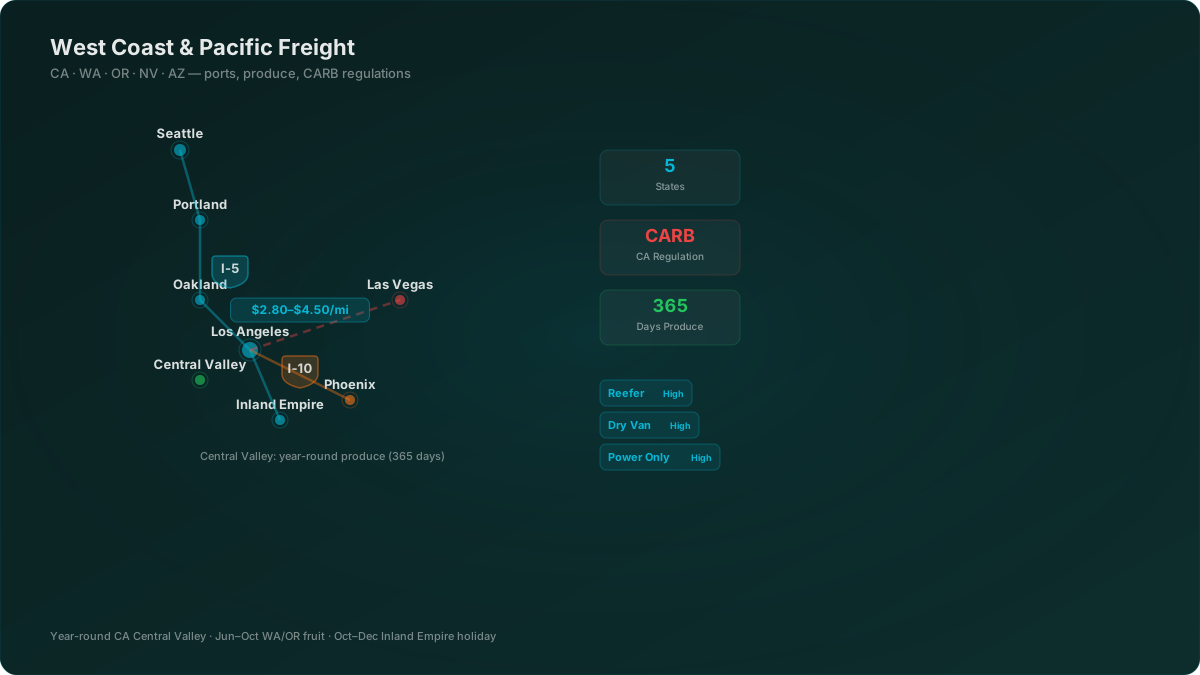
40% of US imports enter through West Coast ports. California's Central Valley feeds the nation year-round. CARB compliance adds complexity but also premium rates for compliant carriers. Arizona's explosive warehouse growth is reshaping Pacific freight patterns.
Top Freight Lanes
Los Angeles, CA → Phoenix, AZ (I-10)
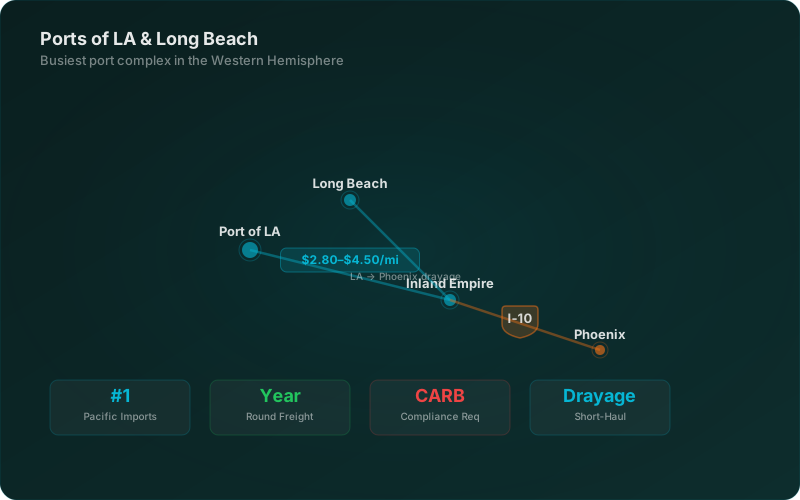
$2.80–$4.50/miPort imports from LA/Long Beach feeding Arizona's booming distribution center market. Phoenix is now #2 nationally for new DC construction.
Central Valley, CA → Los Angeles (CA-99/I-5)
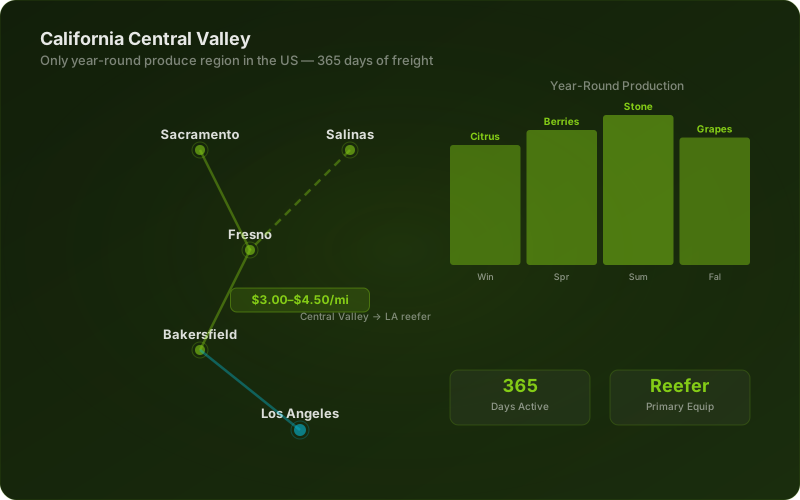
$3.00–$4.50/miThe agricultural heartbeat of America. Fresh produce from Fresno, Bakersfield, Salinas to LA distribution. Premium reefer rates for temperature-controlled loads.
Seattle/Tacoma, WA → Portland, OR (I-5)
$2.50–$3.50/miPacific Northwest corridor — port freight from Puget Sound, tech industry supply chain, and Oregon agricultural products.
Los Angeles, CA → Las Vegas, NV (I-15)
$2.50–$3.50/miConsumer goods to Las Vegas. The return trip can be tough — Vegas generates limited outbound freight. Hotel/casino supply inbound, empty outbound.
Oakland, CA → Reno/Salt Lake City (I-80)
$2.80–$4.00/miPort of Oakland imports heading to Nevada and Utah distribution hubs. Tesla Gigafactory in Reno creates some specialized freight.
Seasonal Freight Calendar
Deadhead Traps to Avoid
⚠️Las Vegas, NV
The trap: Vegas consumes freight but produces almost none. Trucks delivering consumer goods, food, and hotel supplies have very limited outbound options. The nearest load clusters are 270 miles (LA) or 430 miles (Phoenix).
How to avoid it: Price inbound Vegas loads to cover deadhead back to LA or Phoenix. Some construction loads exist outbound (Nevada is building constantly), but don't count on them. Best strategy: LA → Vegas as part of a longer circuit.
⚠️Pacific Northwest (north of Portland)
The trap: Seattle has solid freight, but deliveries to rural Washington and Oregon (east of the Cascades, northern WA) leave you far from outbound loads. The Yakima/Tri-Cities area has harvest-season fruit but limited off-season freight.
How to avoid it: During apple/cherry season (Jun–Nov), run eastern WA for harvest loads. Off-season, stay on I-5 corridor between Seattle and Portland where consistent port and tech-industry freight keeps loads available.
⚠️Southern Arizona / New Mexico border
The trap: South of Tucson, freight options dwindle. Border crossings at Nogales generate some produce but the volume is much lower than Laredo, TX.
How to avoid it: Target Nogales produce during winter months (Nov–Mar) when Mexican vegetables head north. Otherwise, stay in the Phoenix metro where DC development keeps loads flowing.
Equipment Demand
State Regulations Comparison
| State | Max Weight | Tolls | State Tax | Permits |
|---|---|---|---|---|
| California | 80,000 lbs | Minimal (bridges only) | Income tax (1–13.3%) | Caltrans oversize + CARB compliance required |
| Washington | 105,500 lbs (with permit) | Yes (Tacoma Narrows, SR-520) | No income tax | WSDOT oversize |
| Oregon | 105,500 lbs (with permit) | No toll roads | Income tax (4.75–9.9%) + weight-mile tax | ODOT weight-mile tax + oversize |
| Nevada | 80,000 lbs | No toll roads | No income tax | NDOT oversize |
| Arizona | 80,000 lbs | No toll roads | Income tax (2.55–2.98%) | ADOT oversize |
Region at a Glance
Run This Region?
Our dispatchers specialize in West Coast & Pacific freight — every lane, every season, every rate.
Route Planning Tools
Frequently Asked Questions
The California Air Resources Board (CARB) requires trucks operating in California to meet emission standards. Trucks must be 2010-model-year or newer engines to meet current requirements. CARB-compliant trucks command premium rates in California because non-compliant carriers can't legally operate there — reducing competition and keeping rates higher for compliant equipment.
Together, the San Pedro Bay ports (LA and Long Beach) handle about 40% of all US containerized imports. They're the largest port complex in the Western Hemisphere. For truckers, this means massive drayage volume — containers need to be moved from port terminals to Inland Empire warehouses (60–90 miles), rail yards, and distribution centers. Port congestion creates both opportunity (surge rates) and frustration (long wait times).
Yes. Phoenix is now #2 nationally for new distribution center construction. Companies are building massive DCs in the West Valley (Goodyear, Buckeye, Surprise) to serve both California overflow and growing Southwest demand. Amazon, Microsoft, Intel, and TSMC are building major facilities. This means consistent dry van and flatbed demand — Arizona is no longer just a pass-through state.
California's Central Valley (Fresno, Bakersfield, Salinas, Modesto, Stockton) produces over 50% of US fruits, nuts, and vegetables. Something is always in harvest — 365 days a year. This makes Central Valley the most consistent source of reefer freight in the country. Carriers running temperature-controlled equipment can find loads year-round.
Yes. We dispatch all equipment types across California, Washington, Oregon, Nevada, and Arizona. Our dispatchers understand CARB compliance routing, port drayage operations at LA/Long Beach and Seattle/Tacoma, Central Valley produce scheduling, and the growing Phoenix distribution market.
Get Dispatched in the West Coast & Pacific
Our dispatchers know the West Coast & Pacific freight market — every lane, every season, every rate. Tell us your equipment and preferred corridors.