Texas & South Central Freight Guide
The highest-volume freight region in America — I-35 NAFTA corridor, Permian Basin energy, Gulf Coast ports, and year-round cross-border trade.
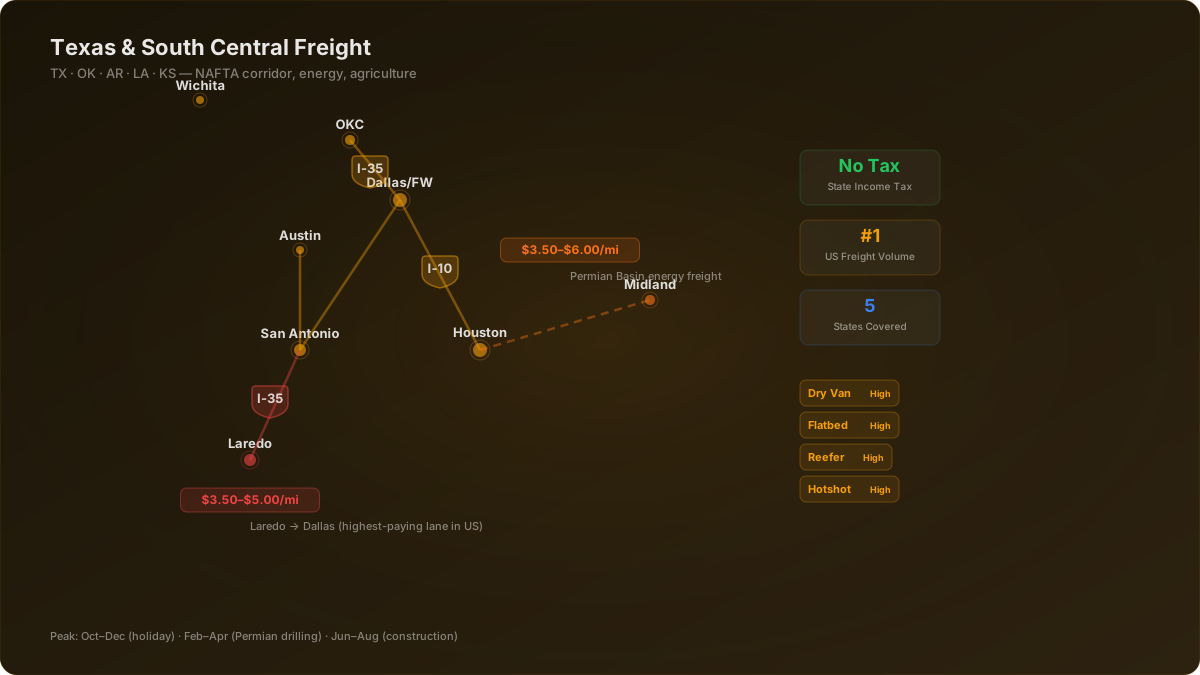
The I-35 NAFTA corridor, Permian Basin oilfield freight, Gulf Coast petrochemicals, and year-round cross-border trade make this region the single highest-volume freight zone in America. Texas alone moves more tonnage than any other state.
Top Freight Lanes
Laredo, TX → Dallas, TX (I-35)
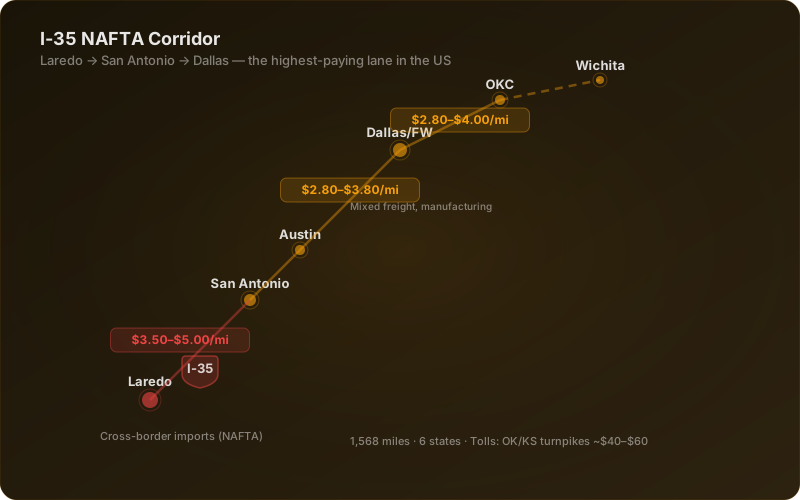
$3.50–$5.00/miNAFTA corridor — cross-border imports surge during holiday retail season. Consistent backhaul from DFW distribution hubs.
Houston, TX → Atlanta, GA (I-10/I-20)
$2.80–$4.20/miPetrochemical outbound from Houston refineries meets consumer distribution in Atlanta. Rarely run empty on this lane.
Dallas, TX → Chicago, IL (I-35/I-44)
$2.50–$3.80/miTwo of the three largest US freight hubs connected by I-35. Retail restocking drives fall surge.
Oklahoma City → Dallas, TX (I-35)
$2.80–$4.00/miOil & gas equipment moves south, consumer goods move north. Short lane but high-rate when energy demand spikes.
Houston, TX → Midland/Odessa, TX (I-10/I-20)
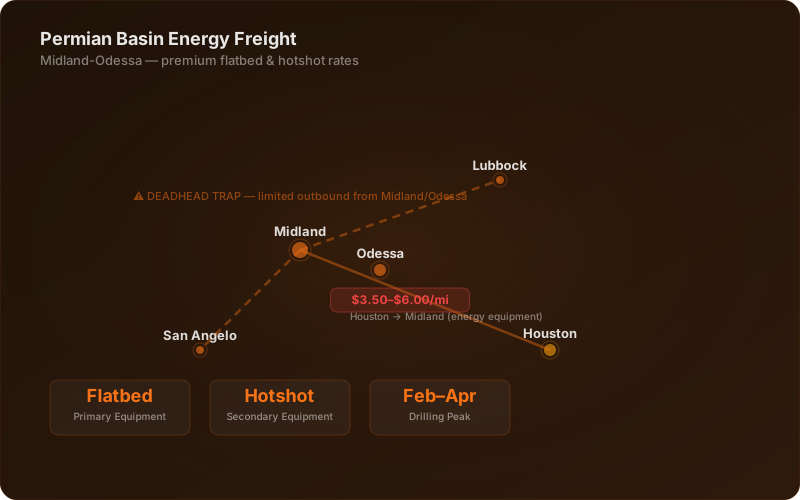
$3.50–$6.00/miOilfield freight corridor — drilling equipment, pipe, frac sand. Rates spike with crude prices.
Seasonal Freight Calendar
Deadhead Traps to Avoid
⚠️West Texas (Midland/Odessa)
The trap: High inbound rates for oilfield freight, but very few outbound loads. Trucks delivering equipment to the Permian Basin often run 300+ miles empty back to DFW or Houston.
How to avoid it: Plan Permian loads as part of a round-trip circuit. Book your outbound from DFW/Houston before accepting the inbound oilfield load. Or target short-haul oilfield repositioning loads between well sites.
⚠️Southern Arkansas / Northern Louisiana
The trap: Low freight density between metro areas. After delivering to small-town distribution points, the nearest load clusters are 150–250 miles away in Little Rock, Shreveport, or Dallas.
How to avoid it: Position toward I-30 (Little Rock–Dallas corridor) or I-20 (Shreveport–Dallas). Avoid accepting deliveries deep into rural AR/LA unless the inbound rate covers deadhead out.
⚠️South Texas (below San Antonio)
The trap: Northbound loads from the border are plentiful, but trucks positioned south of SA without a cross-border load can sit idle.
How to avoid it: If you're not set up for cross-border freight, avoid positioning south of San Antonio. Focus on the I-35 corridor where Laredo northbound freight is abundant.
Equipment Demand
State Regulations Comparison
| State | Max Weight | Tolls | State Tax | Permits |
|---|---|---|---|---|
| Texas | 80,000 lbs | Moderate (TX Tollways) | No income tax | TxDMV oversize/overweight |
| Oklahoma | 80,000 lbs | Yes (turnpikes) | Income tax (0.25-4.75%) | ODOT permits |
| Arkansas | 80,000 lbs | No toll roads | Income tax (2–4.4%) | ARDOT oversized |
| Louisiana | 80,000 lbs | Minimal | Income tax (1.85–4.25%) | DOTD oversize |
| Kansas | 80,000 lbs | Yes (turnpike) | Income tax (3.1–5.7%) | KDOT oversized |
Region at a Glance
Run This Region?
Our dispatchers specialize in Texas & South Central freight — every lane, every season, every rate.
Route Planning Tools
Frequently Asked Questions
Texas has the highest freight volume of any US state — driven by 5 major metro areas, the busiest US-Mexico border crossings, Gulf Coast ports, and diverse industries (oil & gas, agriculture, manufacturing, retail). More freight means more load options, better rates, and less deadhead.
The I-35 corridor from Laredo through San Antonio, Dallas, and Oklahoma City is one of the highest-volume freight lanes in North America. Cross-border trade with Mexico keeps northbound rates consistently strong — especially for dry van and reefer carrying consumer goods and produce. Rates typically peak October through December during holiday retail season.
Yes, but rates track closely with crude oil prices. When oil is above $70/barrel, flatbed and hotshot rates in the Permian Basin can hit $5–6+/mile for time-critical loads. The challenge is deadhead — once you deliver to Midland/Odessa, outbound loads are scarce. Plan round-trip circuits from DFW or Houston.
The Rio Grande Valley is one of the earliest harvest regions in the US. Citrus (grapefruit, oranges) ships January through April, followed by onions, peppers, melons, and vegetables through June. Reefer carriers can earn premium rates on northbound produce loads, especially to Midwest and Northeast markets.
Yes. We dispatch all equipment types across Texas, Oklahoma, Arkansas, Louisiana, and Kansas. Our dispatchers have deep knowledge of I-35, I-10, I-20, and I-44 corridors, plus Permian Basin oilfield lanes and Gulf Coast petrochemical routes.
Get Dispatched in the Texas & South Central
Our dispatchers know the Texas & South Central freight market — every lane, every season, every rate. Tell us your equipment and preferred corridors.