Northeast Corridor Freight Guide
America's densest freight corridor — 60M consumers, massive warehouse clusters, premium rates offset by tolls, congestion, and tight windows.
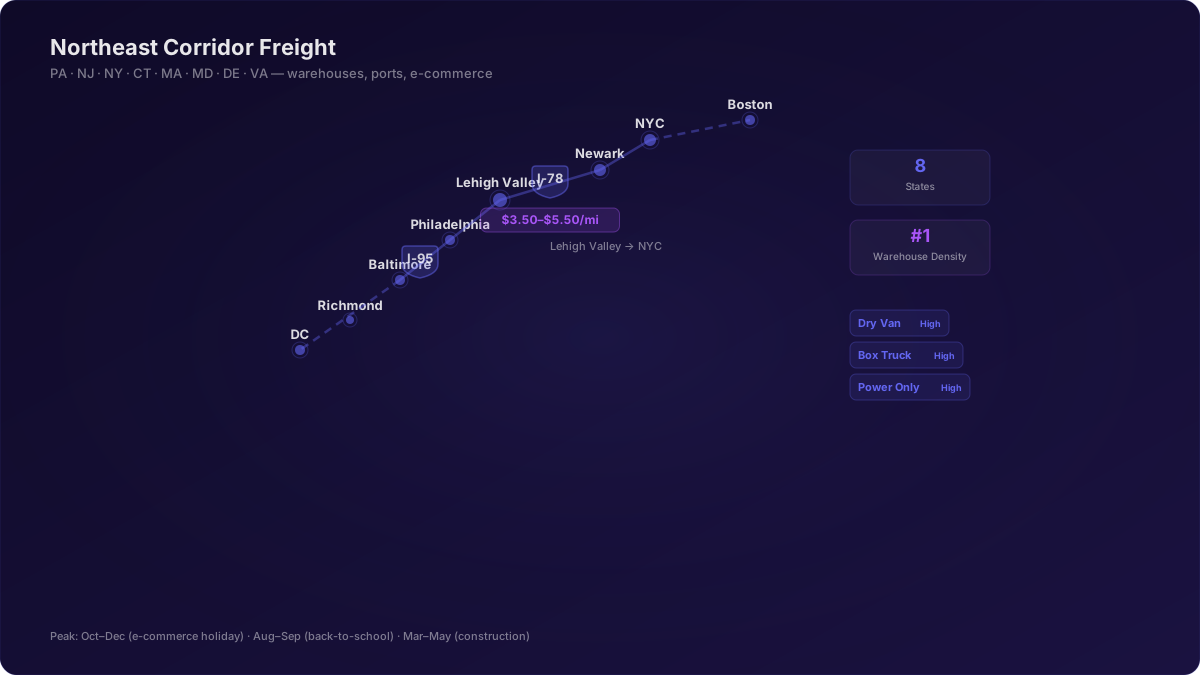
The densest freight market in the US — 60 million consumers packed into a 500-mile corridor. Warehouse clusters in the Lehigh Valley and central New Jersey handle goods for 20% of America. Tolls and tight delivery windows are the trade-off for premium rates.
Top Freight Lanes
Lehigh Valley, PA → New York City (I-78)
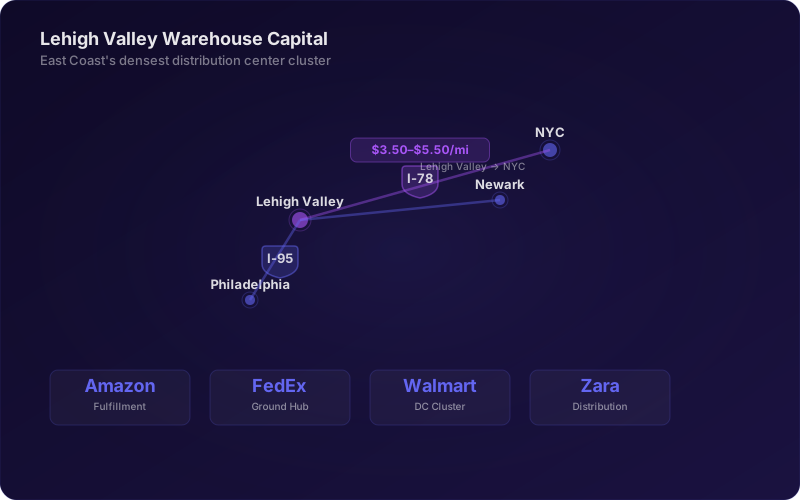
$3.50–$5.50/miWarehouse-to-retail corridor. Amazon, FedEx, UPS mega-hubs in Lehigh Valley feed NYC metro. Tight appointment windows.
Port Newark, NJ → Lehigh Valley, PA (I-78)
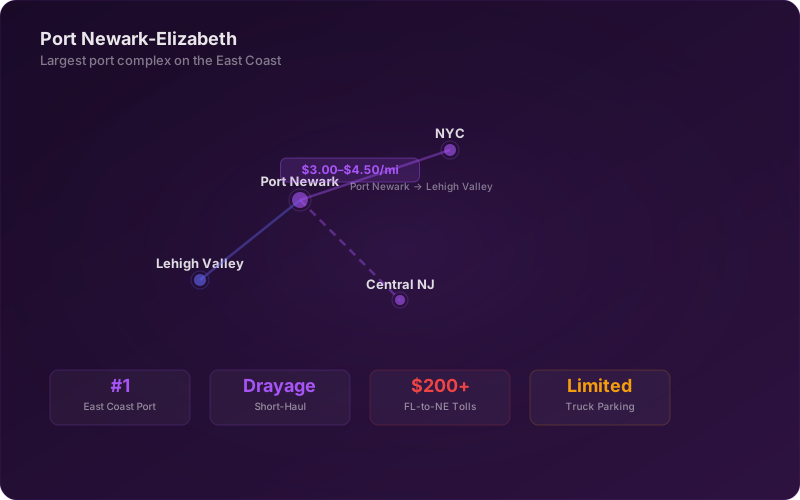
$3.00–$4.50/miContainer drayage from Port Newark/Elizabeth to Lehigh Valley transload facilities. Short but high-volume.
Baltimore, MD → Philadelphia, PA (I-95)
$2.80–$3.80/miPort of Baltimore imports plus regional distribution. I-95 corridor toll costs cut into margins — price accordingly.
Richmond, VA → Washington, DC (I-95)
$3.00–$4.50/miFood distribution and government-related freight. DC metro delivery is challenging — plan for traffic delays and limited loading zones.
Harrisburg, PA → Boston, MA (I-81/I-84/I-90)
$2.80–$4.00/miMajor distribution corridor — Central PA warehouses serve New England retail. Tolls on Mass Pike and NY Thruway add $80–120.
Seasonal Freight Calendar
Deadhead Traps to Avoid
⚠️New England (north of Boston)
The trap: Freight density drops dramatically north of the I-90/Mass Pike corridor. Deliveries to Vermont, New Hampshire, Maine, or rural Connecticut often mean 100–200+ miles empty back to the I-95 corridor.
How to avoid it: Price your inbound loads to cover the deadhead out. Target spring/summer runs to northern New England when tourism and construction create some outbound. In winter, avoid positioning north of Hartford unless the rate justifies it.
⚠️Western Pennsylvania (outside Pittsburgh)
The trap: Rural western PA between Pittsburgh and the Lehigh Valley has sparse freight. Trucks delivering to small towns along I-80 or Route 6 often run empty 150+ miles to the nearest load cluster.
How to avoid it: Stay near I-76 (PA Turnpike), I-81, or I-78 corridors where warehouse density keeps loads available. Use Pittsburgh as a repositioning hub — strong outbound to Chicago, Cleveland, and Columbus.
⚠️Delaware / Maryland Eastern Shore
The trap: The Delmarva Peninsula has agricultural outbound during harvest but minimal year-round freight. Poultry processing creates some reefer loads, but volumes are limited.
How to avoid it: During summer, target produce and poultry loads. Off-season, avoid the Eastern Shore unless your delivery is near the I-95 corridor at Wilmington or the Bay Bridge.
Equipment Demand
State Regulations Comparison
| State | Max Weight | Tolls | State Tax | Permits |
|---|---|---|---|---|
| Pennsylvania | 80,000 lbs | Yes (PA Turnpike — expensive) | Income tax (3.07%) | PennDOT oversize |
| New Jersey | 80,000 lbs | Yes (NJ Turnpike, GSP) | Income tax (1.4–10.75%) | NJDOT oversized |
| New York | 80,000 lbs | Yes (Thruway, bridges, tunnels) | Income tax (4–10.9%) | NYSDOT oversize |
| Connecticut | 80,000 lbs | No (being considered) | Income tax (3–6.99%) | CT DOT oversize |
| Massachusetts | 80,000 lbs | Yes (Mass Pike) | Income tax (5%) | MassDOT oversize |
| Maryland | 80,000 lbs | Yes (I-95, Bay Bridge) | Income tax (2–5.75%) | MDOT oversize |
| Delaware | 80,000 lbs | Yes (I-95, Rte 1) | No income tax | DelDOT oversize |
| Virginia | 80,000 lbs | Yes (I-66, Dulles Greenway) | Income tax (2–5.75%) | VDOT oversize |
Region at a Glance
Run This Region?
Our dispatchers specialize in Northeast Corridor freight — every lane, every season, every rate.
Route Planning Tools
Frequently Asked Questions
Tolls are a significant expense. The NJ Turnpike (full length, 5-axle) costs $40–55. The PA Turnpike across the state runs $100+. The George Washington Bridge is $90+ for trucks. NYC crossings are among the most expensive in the country. Budget $100–200/day in tolls for regular Northeast corridor runs. Factor this into your rate negotiations.
The Lehigh Valley (Allentown/Bethlehem/Easton area) has become the largest warehouse cluster on the East Coast. Amazon, FedEx, Walmart, Zara, and dozens of major brands operate mega-facilities here because it's within one day's drive of 40% of the US population. Over 100 million square feet of warehouse space generates massive freight volume year-round.
NYC deliveries require planning: congestion pricing on Manhattan south of 60th Street, limited loading zones, strict noise ordinances (no deliveries in residential areas before 7 AM), height restrictions on many bridges, and tight streets that can't handle 53-foot trailers. Many carriers use 26-foot box trucks for last-mile NYC delivery. Rates are premium but delivery times can double.
Boston, Hartford, and Providence metros have solid freight. But north of Boston, freight density drops significantly. The best New England strategy is running southern New England (CT, MA, RI) where population density supports consistent loads, and only going to northern New England (VT, NH, ME) during peak seasons or when rates justify the deadhead risk.
Yes. We dispatch all equipment types throughout the Northeast from Virginia to Massachusetts. Our dispatchers understand toll routing, delivery window challenges, port drayage at Newark and Baltimore, and the warehouse cluster geography in Lehigh Valley and central New Jersey.
Get Dispatched in the Northeast Corridor
Our dispatchers know the Northeast Corridor freight market — every lane, every season, every rate. Tell us your equipment and preferred corridors.