Midwest & Great Lakes Freight Guide
America's intermodal capital — Chicago rail hubs, Detroit automotive corridor, heartland agriculture, and year-round distribution freight.
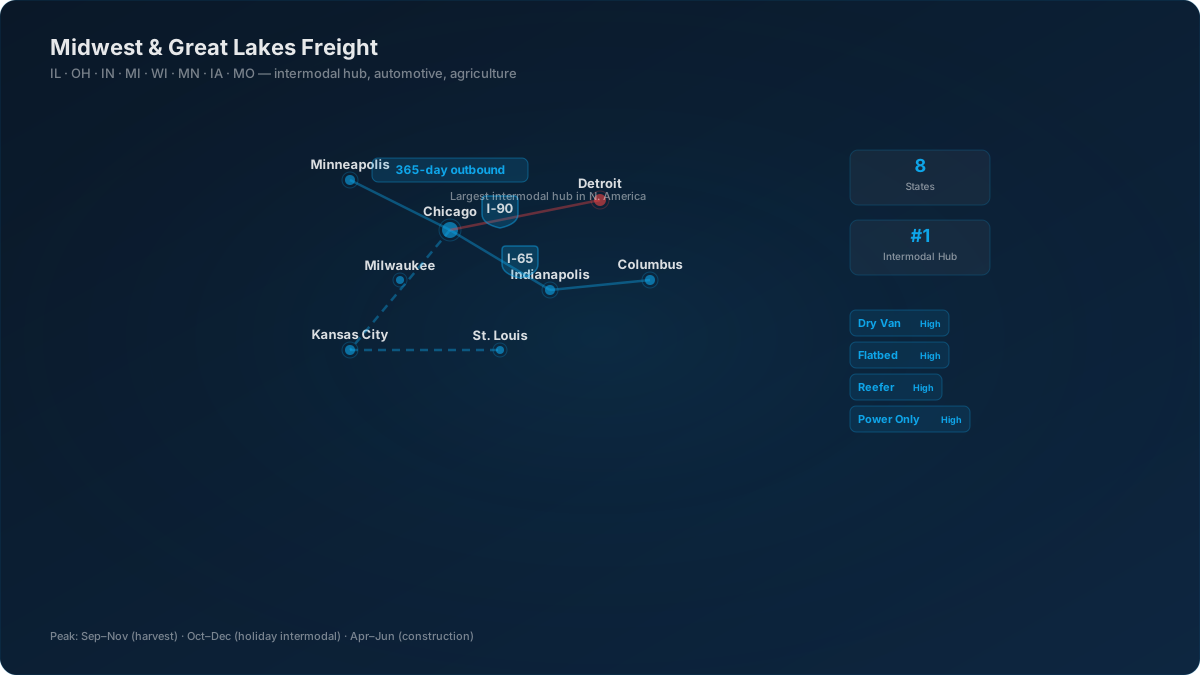
Chicago is the undisputed intermodal capital of America — more rail-to-truck transfers happen here than anywhere else. Add the Detroit automotive corridor, agricultural heartland from Iowa to Indiana, and distribution hubs in Columbus and Minneapolis, and the Midwest delivers consistent year-round freight.
Top Freight Lanes
Chicago, IL → Dallas, TX (I-55/I-44)
$2.50–$3.80/miTwo of the top 3 US freight hubs. Intermodal transloads in Chicago feed southbound retail distribution. Very competitive lane.
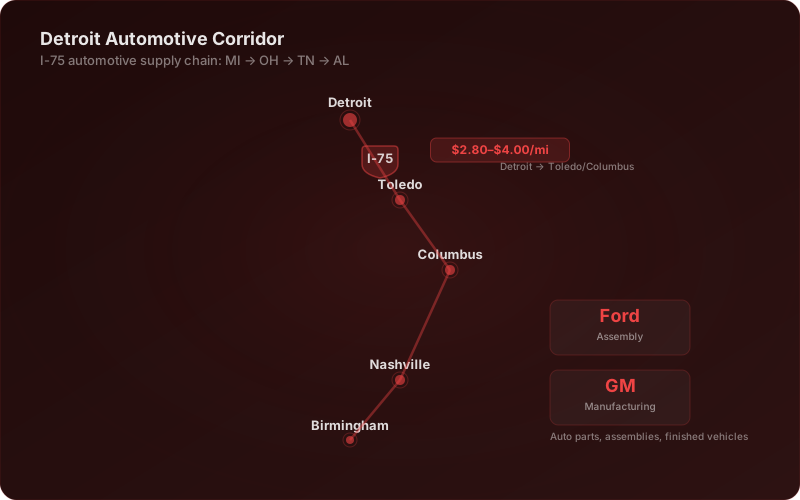
Detroit, MI → Toledo/Columbus, OH (I-75)
$2.80–$4.00/miAutomotive corridor — parts inbound, finished goods outbound. Shutdowns in July and late December create 2-week rate dips.
Columbus, OH → Atlanta, GA (I-71/I-75)
$2.50–$3.50/miDistribution hub to distribution hub. Ohio warehouses serving southern markets. Consistent volume, moderate rates.
Indianapolis, IN → Chicago, IL (I-65)
$2.80–$3.80/miShort but dense corridor — two massive distribution markets connected. Amazon, pharmaceutical, and consumer goods dominate.
Minneapolis, MN → Chicago, IL (I-90/I-94)
$2.50–$3.50/miAgricultural products and consumer goods. Target HQ in Minneapolis generates consistent retail freight southbound.
Seasonal Freight Calendar
Deadhead Traps to Avoid
⚠️Upper Michigan (Upper Peninsula)
The trap: Beautiful but freight-free. The UP has minimal industrial activity and very low population density. Trucks delivering to mining or paper mill operations run 200–300+ miles empty south across the Mackinac Bridge.
How to avoid it: Only accept UP loads if the rate covers round-trip miles. Target Marquette or Sault Ste. Marie loads during mining/paper production runs when occasional outbound exists.
⚠️Rural Iowa / Southern Minnesota
The trap: Between harvest seasons, outbound freight from rural agricultural areas drops dramatically. Small-town deliveries can leave you 150+ miles from the nearest load cluster.
How to avoid it: Stay near I-80 (Des Moines corridor), I-35 (Minneapolis–Kansas City), or I-90 during non-harvest months. During harvest (Sep–Nov), loads are plentiful even in rural areas.
⚠️Southern Missouri / Northern Arkansas
The trap: The Ozarks region between Springfield, MO and the Arkansas border has low freight density — mountains and low population make outbound loads scarce.
How to avoid it: Position toward I-44 (Springfield–St. Louis) or I-49 (Springfield–Kansas City). Springfield has some Walmart and Bass Pro outbound but not enough to rely on.
Equipment Demand
State Regulations Comparison
| State | Max Weight | Tolls | State Tax | Permits |
|---|---|---|---|---|
| Illinois | 80,000 lbs | Yes (I-Pass, extensive) | Income tax (4.95%) | IDOT oversize |
| Ohio | 80,000 lbs | Yes (Ohio Turnpike) | Income tax (0-3.5%) | ODOT oversized |
| Indiana | 80,000 lbs | Yes (Indiana Toll Road) | Income tax (3.05%) | INDOT oversize |
| Michigan | 164,000 lbs (with permit) | No (except Mackinac Bridge) | Income tax (4.25%) | MDOT — highest US weight limits |
| Wisconsin | 80,000 lbs | No toll roads | Income tax (3.54–7.65%) | WisDOT oversize |
| Minnesota | 80,000 lbs | No toll roads | Income tax (5.35–9.85%) | MnDOT oversize |
| Iowa | 80,000 lbs | No toll roads | Income tax (4.4–6%) | Iowa DOT oversize |
| Missouri | 80,000 lbs | No toll roads | Income tax (2–4.95%) | MoDOT oversize |
Region at a Glance
Run This Region?
Our dispatchers specialize in Midwest & Great Lakes freight — every lane, every season, every rate.
Route Planning Tools
Frequently Asked Questions
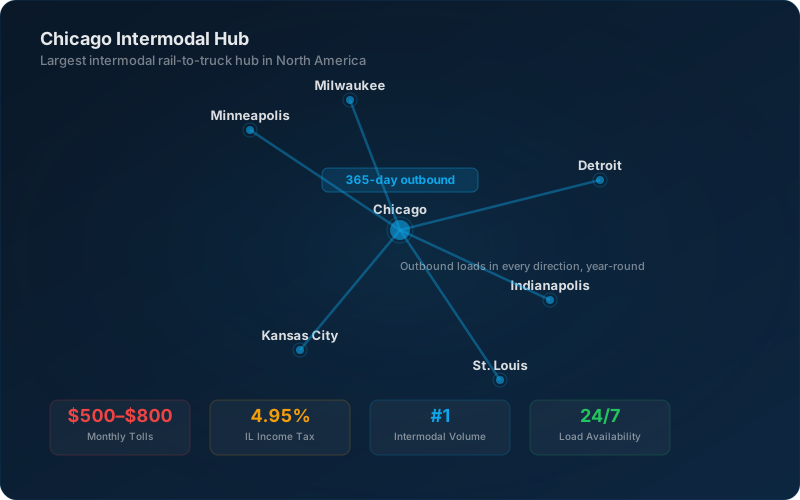
Chicago is where six of the seven Class I railroads converge — making it the intermodal capital of North America. More freight transfers from rail to truck in Chicago than anywhere else. Add O'Hare (freight airport), massive warehouse clusters in Joliet and Elwood, and the intersection of I-80, I-55, I-90, and I-94, and Chicago touches virtually every supply chain in America.
Many Midwest states (Michigan, Wisconsin, Minnesota especially) impose weight restrictions on secondary roads from mid-March through May or June while frozen ground thaws. Loads may be reduced 20–35% on affected roads. Carriers need to plan routes on unrestricted highways or accept reduced payload. State DOT websites publish restriction maps updated weekly.
The Detroit–Toledo–Columbus corridor is America's automotive heartland. Assembly plants need constant just-in-time parts deliveries (flatbed, step deck) and ship finished vehicles year-round. The industry has two predictable slowdowns: a 2-week shutdown in July and a 1-2 week shutdown between Christmas and New Year. Otherwise, automotive freight is remarkably consistent.
Corn and soybean harvest runs September through November — this is when Midwest reefer and dry van rates spike. Grain moves from farms to elevators to processing plants. Iowa, Indiana, and Minnesota are the heaviest corn states; Illinois and Iowa lead in soybeans. Hopper trailers see massive demand, and dry van rates increase on surrounding lanes as capacity tightens.
Yes. We dispatch all equipment types across Illinois, Ohio, Indiana, Michigan, Wisconsin, Minnesota, Iowa, and Missouri. Our dispatchers specialize in Chicago intermodal, automotive corridor logistics, agricultural freight timing, and distribution hub-to-hub lanes.
Get Dispatched in the Midwest & Great Lakes
Our dispatchers know the Midwest & Great Lakes freight market — every lane, every season, every rate. Tell us your equipment and preferred corridors.